
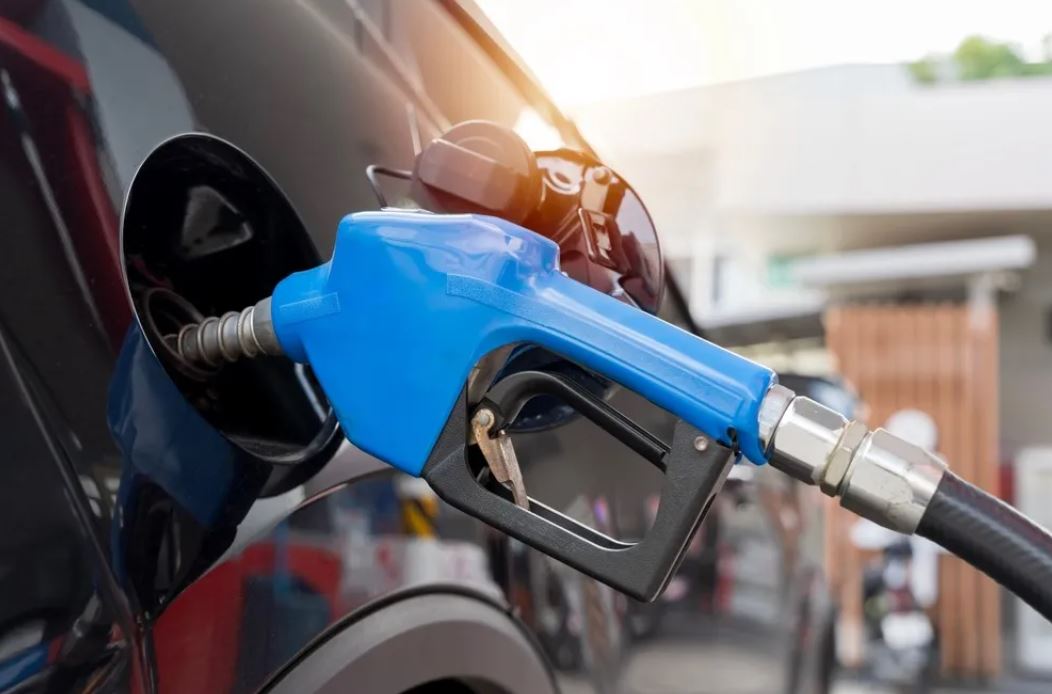
Given the escalation of fuel prices in the country and the search for options for a subsidy or financial contribution To mitigate its impact, financial experts were consulted about the options that may or may not be viable, and their effects.
The options explained range from rejecting the generalized subsidy to mentioning a targeted subsidy, monetary transfers or coupons for vulnerable people, eliminating the distribution tax on oil and its derivatives (IDP) or even not delivering the contributions directly to distributors or transporters.
They reject generalized subsidy
Economics and finance analysts from the National Economic Research Center (Cien), the Association for Research and Social Studies (Asies), the Central American Institute of Fiscal Studies (Icefi) and the Libertad y Desarrollo Foundation They agree that they do not support a generalized subsidy.
El Cien maintains its position issued three months ago by not supporting the subsidy nor any other type of economic support related to the high international prices of oil and its derivatives, explained Hugo Maul, economic analyst of the entity.
Both Maul and Érick Coyoy, economic analyst from Asíes; Paul Boteo, executive director of the Freedom and Development Foundation; and Ricardo Barrientos, executive director of Icefi, agreed when arguing that it is not justifiable to subsidize non-vulnerable populations.
They expressed their disagreement with covering urban areas with incomes that allow them to access one or several vehicles, since they are not the most vulnerable groups and, as it is a generalized subsidy, those who consume the most benefit more from having several vehicles.
With a general subsidy “A family that has four cars benefits more than a family that has one motorcycle,” said Coyoy.
Targeted subsidy
If you decide on a subsidy, it should be focused and directed exclusively to low-income households and workers, since that is the purpose of this type of social aid, considers Coyoy.
However, he considers that the main obstacle is the lack of a single registry of beneficiaries, which, according to Coyoy, the Ministry of Social Development (Mides) should have been implemented several governments ago.
CONTENT FOR SUBSCRIBERS
Furthermore, Coyoy points out that Mides should be the one to lead the support policy, derived from its powers, since it considers that a subsidy should be a social policy and that targeted assistance mechanisms should be designed and implemented. He adds that it should not be a measure administered by the Ministry of Energy and Mines (MEM), because its function is to govern fuel issues.
Barrientos indicated that the Government must implement palliative and temporary measures; In his opinion, it could be a subsidy, but temporary and focused.
Focused on cargo and public transportation of people
When asked about the idea that the former Minister of Energy, Víctor Hugo Ventura, had last May, that the MEM was analyzing a subsidy that was targeted For cargo transportation—mainly food—and collective transportation, Coyoy said that it could be another option, but that it would cover only diesel, because the majority of units of that transportation use that fuel. However, he warned that many vulnerable people also use motorcycles or vehicles for work, which use gasoline.
Boteo considers that, if the Government decides on other support, it is not advisable to give the resources to fuel distribution companies or transport companies, since it could present transparency problems and there is no guarantee that the benefit will reach the final consumer in its entirety.
Monetary transfers or coupons
Derived from his previous comment, Boteo mentioned that economic support could be delivered through monetary transfers directly to lower-income families, both urban and rural. This mechanism eliminates intermediaries and allows each household to use the support to face the increase in fuel or other products affected by inflation, he explained. However, he agreed on the difficulty of having a registry of beneficiaries.
Coyoy adds, for example, that there are vulnerable sectors, such as delivery people and couriers, whose income depends directly on the use of motorcycles. In these cases, he comments that there could be more specific mechanisms, such as coupons or vouchers delivered only to people previously verified as low-income.
Delete the IDP
The elimination of the tax on distribution of petroleum and its derivatives (IDP) is an option that Boteo and Maul mentioned. Although the latter clarifies that they do not recommend it, it does have the advantage that it would be easy to identify where the resources come from to keep the price relatively low, and the cost is paid in terms of public works on roads.
This tax is applied to the final consumer for Q4.70 per gallon of higher gasoline; Q4.60 for regular and Q1.30 for diesel.
Boteo considers that eliminating or suspending the tax would be an action with immediate effects and without intermediaries. Although it states that this would have an effect on tax revenues, it must also be taken into account that people do not receive welfare from this payment, which should partially be directed to road infrastructure.
However, Barrientos does not agree with the elimination or temporary suspension of the IDP, because tax revenue would no longer be received and the effect per gallon, especially on diesel, would be low.
Maul indicates that they are options that are uncomfortable, but that “the deputies can gather courage” and eliminate the tax. Or, if available resources are sought, school supplies, fertilizer distribution, or others can be analyzed.
How to apply it
When commenting on how to deliver the subsidy or support directly to certain specific beneficiaries, Maul indicated that it is an “art” in which deputies and Mides should work together to design the mechanism.
State Finance
Coyoy considers that, if other options are approved, such as a subsidy or financial contributions, these should be focused, but without affecting other important programs.
If it is a temporary subsidy or contribution, he believes that it does not represent a problem for public finances from a macroeconomic perspective, since the country has a budget of more than Q160 billion and that an amount similar to the already executed amount of Q2 billion could be handled without problems.
However, he warned that it should not be financed by cutting resources from other important institutions or programs, as happened with the Ministry of Agriculture (MAGA) for the issue of fertilizers and the General Directorate of Roads.
🚨 #Updated: Transporters announce a demonstration and ask for a temporary rate of up to Q7
Operators from the capital and Mixco await a response from the Municipality of Guatemala. If there is no agreement, they will mobilize about 200 buses on Friday, July 24 or Monday, July 27.
📲 Read more at:… pic.twitter.com/rBsLIgYQYQ
— Free Press (@prensa_libre) July 23, 2026
Considers that the most appropriate way to finance new support would be through a budget expansion, to avoid defunding other priority areas of public spending. He argues that, with the current collection of the SAT, the State has room to do so without generating greater fiscal imbalances.
Boteo points out that the increase in fuel prices responds to a global situation and that no Government can completely prevent consumers from facing this increase. In addition, he stated that maintaining the same previous subsidy scheme would compromise public finances.
The first program represented a cost close to Q2 billion, and an extension would imply another Q2 billion, which would raise spending to around Q4 billion, Boteo added. Resources that, in his opinion, not only represent a problem due to the amount, but also due to the opportunity cost, since they could be used to finance infrastructure projects that reduce dependence on individual transportation and improve the country’s competitiveness, such as a metro system for passenger transportation or a freight train that makes national logistics more efficient.
Meanwhile, Maul says that, in any case, if the political decision is made to grant a subsidy, it must be very clear about the origin of the funds to finance it and its execution. He commented that, if it is argued that it will favor vulnerable groups, then funds should be withdrawn from the Ministry of Social Development (Mides), to which these policies would correspond, since the objective of that institution is to expand the social rights of Guatemalans, with priority on segments of the population in poverty, exclusion and vulnerability.
Transitional and non-political
“In any case, if they are going to resort to this mechanism again, they should commit to making it temporary. Or, they should be honest and say that it will be permanent and that a public discussion should be opened about it. This ‘little bit’ subsidies is wanting to ‘make up’ a structural and permanent problem that the country faces with painkillers that do not go to the root of the problem,” added Maul, who mentioned that Another important aspect is the political times, since these problems have always been used by politicians “to bring grist to their mill,” especially during electoral times or close to electoral times.