
Some of the most striking astronomical phenomena will arrive in August, when the world will witness two eclipses, as well as a meteor shower and several alignments.
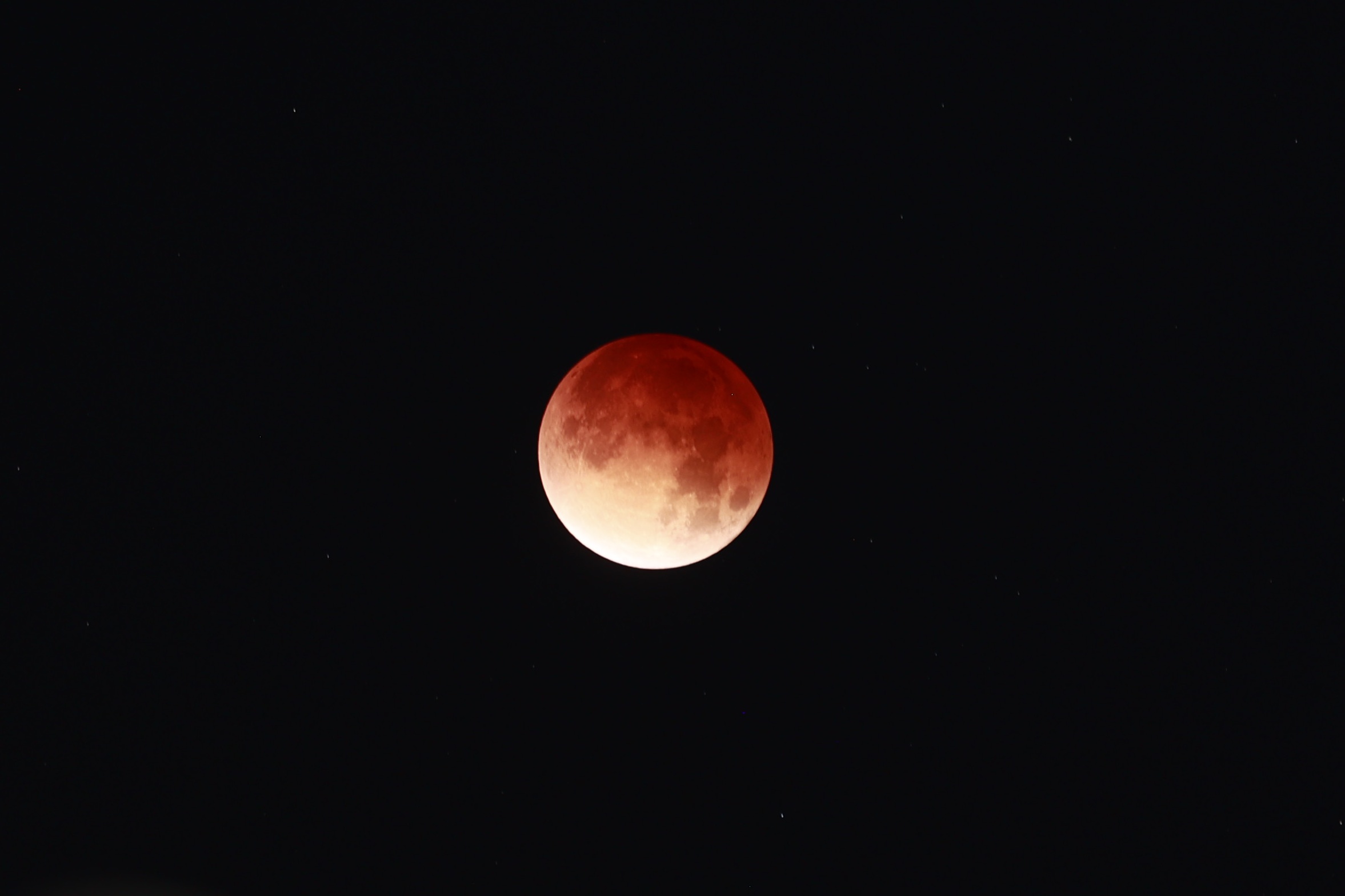
The sky of Guatemala will allow us to observe some of these phenomena, among them partial lunar eclipsewhich will change part of the Moon’s color and transform it from its bright white to an orange hue.
This phenomenon occurs due to the alignment of the Sun, Earth and Moon. However, this will not be completely centered; Therefore, not all of the Moon will change color.
It will be during the dark nights of August when several of the astronomical phenomena that amaze astronomers and universe fans occur, such as the Sturgeon Moon and the meteor shower.
Beyond Guatemala, part of the world will experience another astronomical phenomenon: a total solar eclipse which will darken the sky in the territories located in the center of the Moon’s shadow.
It will be when the Earth’s natural satellite completely blocks the visible side of the Sun that darkness will become present. This phenomenon will not be visible in the country, but it can be followed through NASA transmissions on August 12, 2026.
To find out what phenomena can be enjoyed from Guatemala, Prensa Libre consulted the director of the Institute of Earth Sciences and Astronomy of the Galileo University, Edgar Castro, who shared the following events.
meteor shower
Castro indicated that the Perseid meteor shower could be visible between August 11 and 12.
Although August is usually distinguished by being cloudy for much of the time, the expert highlighted that, if the sky remains clear, the new Moon will favor observation, since there will be no interference from lunar light.
Phases of the Moon
- Last quarter: August 5
- New Moon: August 12
- Waxing quarter: August 19
- New Moon: August 27
lunar eclipse
The alignment of the Moon, Earth and Sun will give the world one of humanity’s favorite astronomical phenomena: a lunar eclipse.
Although it will not be a total eclipse, this phenomenon will cause a high percentage of the Moon to change color during the process. The event will occur next August 27.
Conjunctions
Another phenomenon worth observing with a telescope are conjunctions, whether of the Moon with planets or with other stars.
Conjunction of Venus and the Moon
- Observation location: west
- Date: August 15
- Time: 7:30 p.m.
Mercury, Mars, Uranus and the Moon
These stars will align at dawn, specifically at 4:50 a.m. on August 15.