
The United States decided to establish a tariff for Guatemala of 10%, now under another legal basis: section 301 of that country’s Trade Law, regarding the lack of adoption and effective application of prohibitions on the importation of goods produced with forced labor. This measure replaces the temporary tariff with the same rate that was in effect under section 122.
The new provision maintains the 10% tariff conditions and exemptions for certain products. In addition, it incorporates other goods to which the tax will no longer be applied, according to the review carried out by the sectors.
According to the analysis carried out by the Guatemalan Association of Exporters (Agexport), with these additions the 75.8% of the products that Guatemala exports to the United States are exempt from the tariff, while 24.2% continue to be taxed with the additional tax of 10%, explained Amador Carballido, general director of the entity.
Agexport estimated that of the total exported to that country in 2025, which amounted to US$5,069 million, US$3,842.8 million (75.8%) remain without this tax. Meanwhile, US$1,226.2 million (24.2%) continue to be subject to the 10% tariff.
Exemptions improve by US$166 million with the new provision; That is, they represent 3.3% more in terms of product exports compared to the previous scheme, based on section 122.
With the previous provision it was estimated that 72.5% of the total exported to the US market, equivalent to US$3,676.6 million, was exempt from the tariff, while 27.5%, corresponding to US$1,392.4 million, remained taxed at 10%.
This new result combines the general exclusions granted to the investigated economies and specific exclusions granted to Guatemala, Carballido explained. The main products that went from paying 10% to being exempt (according to the amount exported in 2025) are:
- Solid cane sugar, US$39.6 million
- Cuttings and grafts, US$26.1 million
- Aluminum waste, US$22.4 million
- Fresh cut roses, US$20 million
- Sesame seed, US$13.3 million
- Herbaceous seeds, US$7.2 million
- Plant foliage, US$5.7 million
CONTENT FOR SUBSCRIBERS
Specific exclusions for Guatemala
Furthermore, within that total, Guatemala obtained specific exclusions that only benefit Guatemalan products compared to the rest of the investigated economies. According to the review carried out by Agexport, these represent US$32.6 million, mainly in the flowers and ornamental plants sector:
- Fresh cut roses, US$20 million
- Fresh foliage, US$5.7 million
- Fresh lilies, US$1.2 million
- Other fresh flowers, US$0.9 million
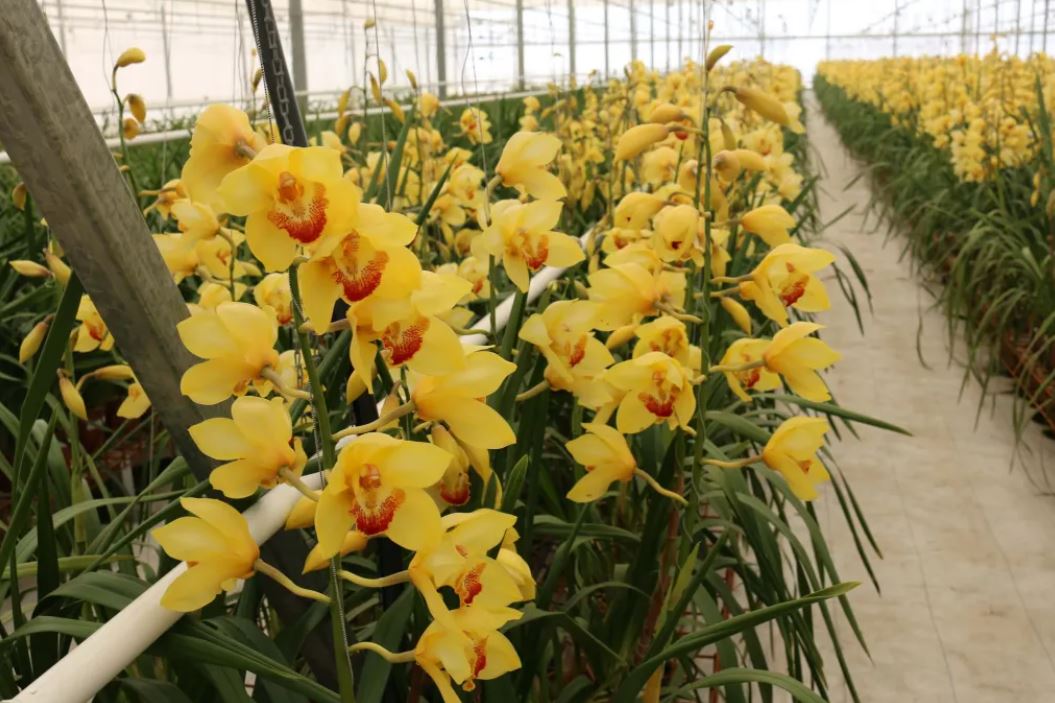
- Fresh orchids, US$0.6 million
- Vegetable juices and extracts, US$1.4 million
- Manufactures and other products
Carballido thought that Guatemala made an interesting move by issuing the ministerial agreement (377-2026) that establishes additional controls to prevent the importation of products manufactured through forced labor. He considered that this measure contributed to the country being placed in the group with a 10% tariff for the economies that showed progress, and not in the 12.5% group.
They remain at a disadvantage
“What was left without tariff is around 75%; it is progress, but there is still 25% pending, so work must continue with the United States to ensure that more products are exempt,” said Carballido, recalling that some sectors are already registering impacts.
Among the products that continue with a 10% tariff are:
- Agricultural: mini vegetables and some fruits, such as melon, watermelon, vegetables, peas, honey, soy and peanuts, among others.
- Manufactures: soups, drinks, leather straps, footwear, wood, furniture, soaps, cosmetics, among others.
Furthermore, he explained that Mexico had no changes. According to the authorities of that country, 85% of its exports to the United States continue to be exempt from the tariff.
Consequently, Guatemalan agricultural products that continue to be taxed at 10% face a double disadvantage: They maintain the tax and, at the same time, compete with Mexican products that enter with zero tariffs.
As a result, the minivegetable and some fruit sector continues to be at risk, since “it is exactly the group that is very complicated by this double circumstance of disadvantage,” said the general director of Agexport.
Carballido added that work has been done to ensure that these segments are exempt from the tariff and that arguments have been presented to the United States. However, he indicated that no other country, except Mexico, receives that benefit. In his opinion, that country seeks to supply itself, but also protect the limited local production.
Camagro and Vestex
For its part, the Chamber of Agriculture of Guatemala (Camagro) reported that when reviewing the official documents of the US authorities exclusions are maintained general provisions (Annex I), additional exclusions are incorporated for Guatemala (Annex II) and preserves the preferential treatment for clothing and textiles under the Free Trade Agreement between the United States, Central America and the Dominican Republic (CAFTA-DR).
According to the review carried out by Camagro, the exceptions include close to 70% of the products that Guatemala exports to the United States.
Exempt products include banana, plantain, pineapple, papaya, avocado, coffee, cocoa, hearts of palm, carnations, roses, orchids, foliage, palm oil, natural rubber, cardamom and some sugar products, among others, according to Carla Caballeros, executive director of the entity.
Clothing and textile items also continue to be exempt, and continue to benefit from the preferential treatment provided for in CAFTA-DR.
Alejandro Ceballos, vice president of the Clothing and Textile Industry Association (Vestex), indicated that the sector is once again on equal terms in access to products with zero tariffs, as long as they are of CAFTA-DR origin.
🇬🇹🤝🇺🇸 A stronger US–Guatemala trade partnership. We welcome the decision to keep certain agricultural exports excluded from additional tariffs. We must continue working to ensure all bilateral trade remains duty-free. pic.twitter.com/1PFpZUNKYC
— Chamber of Agriculture (@CamagroGuate) July 24, 2026
In addition, restrictions will be imposed on countries that do not respect labor rights or combat forced labor, according to their interpretation of the scope of section 301, which also carries non-tariff consequences. For this reason, the Vestex manager believes that these restrictions will help them compete with Asian countries, more than the issue of tariffs.
Said sector of the main exporters of the country and especially towards the market is the USA.
Regarding non-exempt products, Caballeros commented that “Although these exceptions significantly reduce the aggregate impact for Guatemala, products not included in them will be subject to the additional 10% tariff.”
Regarding which products are exempt or taxed with this tariff, the Ministry of Economy (Mineco) explained in a statement that the United States recognized the measures implemented by Guatemala to prevent forced labor and kept the tariff conditions for exports unchanged.
Mineco added that, as tariff conditions remain in place, the 10% tariff for Guatemalan exports remains in force under the new provision. In addition, he recalled that, within the framework of the Reciprocal Trade Agreement, around 72% of exports would remain exempt, while the remaining 28% would continue to be subject to the tariff.