
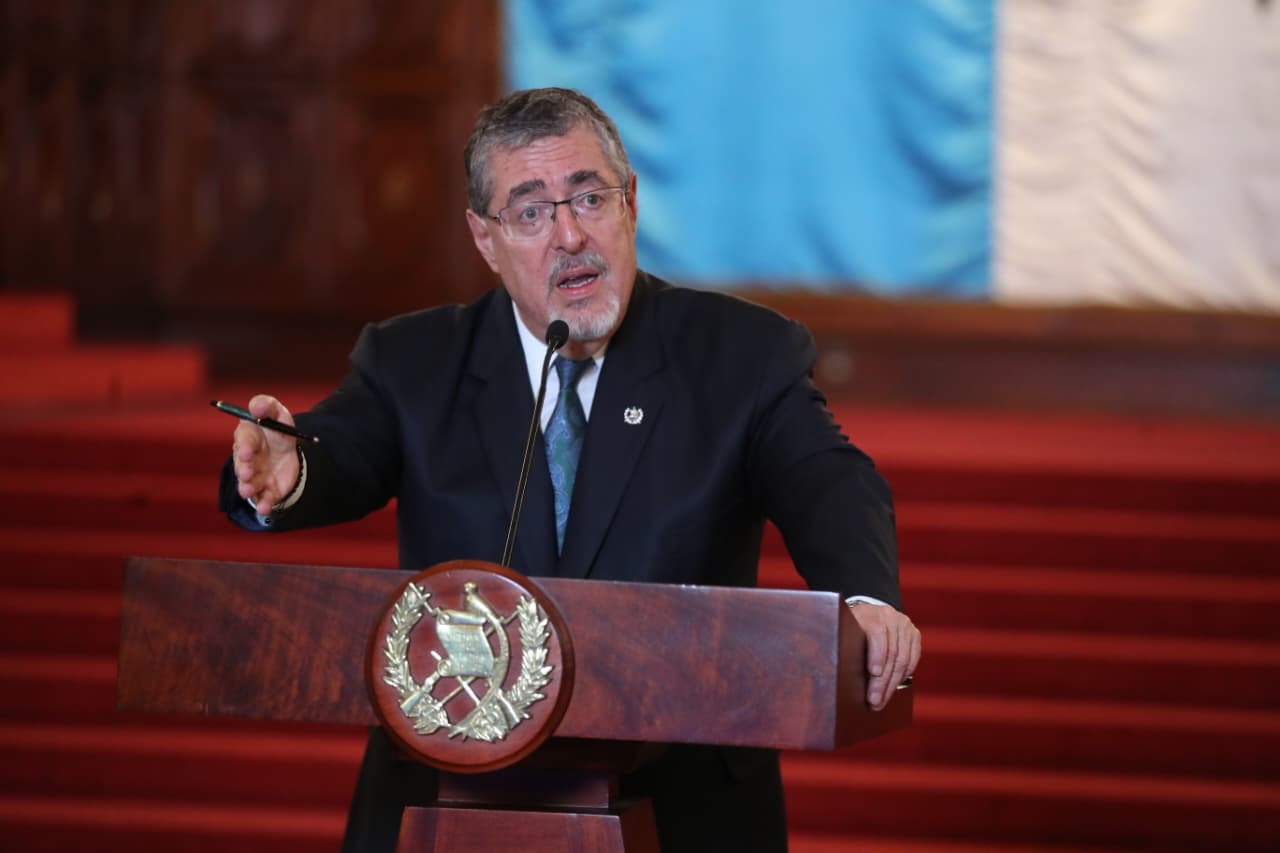
The president Bernardo Arevalo announced this July 27, 2026 three measures to mitigate the impact of the increase in fuel prices: reset subsidies for diesel and regular gasolinemaintain them until the end of the year and create a technical table to evaluate new actions if the international crisis persists.
The measures respond to the increase in international fuel prices, which, according to the president, derives from the crisis in the Strait of Hormuz and does not have a date for its completion.
As part of the actions, the Executive will send to the Congress of the Republic a bill to restore subsidies for diesel and regular gasoline.
What fuels would receive a subsidy?
The Executive will send to Congress a bill to restore the subsidy for diesel and regular gasoline.
If the proposal is approved, the support would be from:
- Q12 per gallon for diesel.
- Q3 per gallon for regular gasoline.
- Premium gasoline will not receive a subsidy.
“Support for diesel is much more effective than support for gasoline, because its impact is reproduced in the price of transportation, goods and, consequently, in the pockets of Guatemalans.”
Bernardo Arévalo, president of the Republic of Guatemala
During the press conference, the Minister of Energy and Mines, Erwin Barrios, took stock of the previous subsidy, in force from April 28 to July 2, and presented the results obtained, as well as the aspects that, in the Government’s opinion, should be improved in this new proposal.
Until when would it be valid?
The president indicated that, together with his work team, he seeks to ensure that the subsidy remains in force. for the rest of 2026although its entry into force will depend on the initiative being approved by the Congress of the Republic.
The Minister of Public Finance, Jonathan Menkosexplained that the measure will require a budget space of Q3 thousand 480 millionresources that will come from a reorganization of the current budget.
Menkos also indicated that sub-executions and funds that are not yet committed will be used, so A budget expansion or the contracting of new loans will not be necessary.
The Minister of Finance added that the budget readjustment will not affect the resources assigned to the ministries of Public Health and Social Assistance, Education and Communicationsnor will it compromise the payment of salaries, pensions, the service of the public debt or social security contributions.
RELATED READINGS


Likewise, he indicated that the resources will be obtained mainly from budgetary spaces identified in the Finance, Agriculture, Social Development, Government and Defense portfolios, although the final distribution is still under review.
Government creates a technical table to evaluate new measures
In addition to the subsidy, the president announced the creation of a technical table which will analyze alternatives if the international crisis continues beyond the period that this temporary aid would cover.
Arévalo acknowledged that the subsidy is an immediate measure to alleviate the impact of the increase in fuel prices, but stated that the Government will have to evaluate other options if international market conditions do not improve.
Among the alternatives that will be analyzed is the subsidy targetingthat is, directing the benefit only to certain sectors. However, he explained that implementing such a mechanism requires administrative adjustments that would take around two months, so it does not represent an immediate solution.
When would the new subsidy come into effect?
The entry into force of the subsidy will depend on consensus and approval by the deputiessince the initiative must be approved by Congress before the Executive can launch it.
Arévalo explained that the bill will be sent on Monday to the Congress of the Republic and expressed his confidence that the process will be faster than that of the subsidy former.
He recalled that the initiative approved in April took about two weeks between its approval and its implementation. However, he considered that on this occasion the deadline could be reduced because the Government will use practically the same legal and regulatory scheme.
The president added that the Executive holds meetings with representatives of the transportation sector to analyze other actions that will reduce the impact of the increase in fuel prices.