
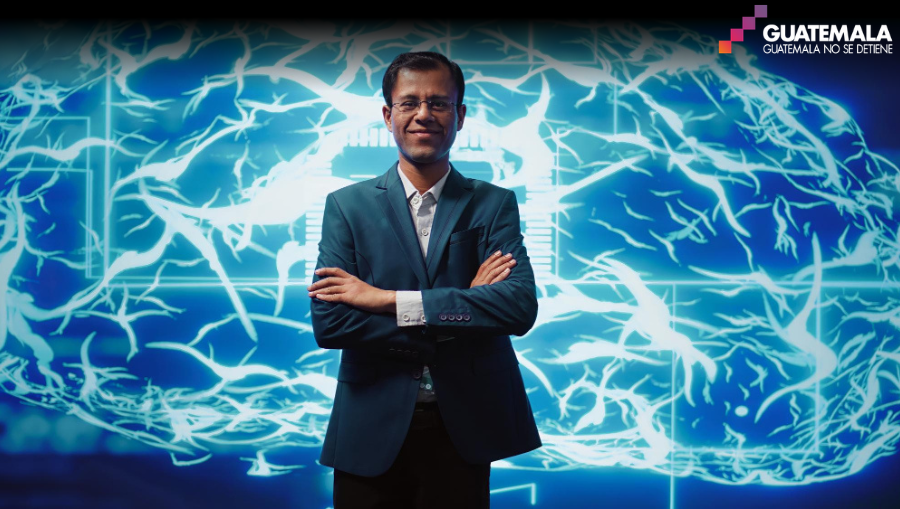
While many companies are wondering which artificial intelligence tool to implement, the really important question remains: what strategic challenge are they seeking to solve? Artificial intelligence is already transforming the way organizations operate, make decisions and compete. For Guatemala, the greatest challenge is not technological, but strategic.
Over the past two years, we have seen accelerated growth in the use of artificial intelligence tools in organizations. From assistants for writing documents to solutions to automate processes, analyze information or develop software, this technology is already part of the daily lives of thousands of professionals.
But there is an important difference between using artificial intelligence and transforming yourself through it.
The first occurs when an organization incorporates tools to increase individual productivity. The second involves rethinking entire processes, redefining operating models, strengthening data management and developing new capabilities to compete in an increasingly digital environment.
Most Guatemalan companies are still in the first stage. This does not necessarily mean that they are lagging behind. Many organizations are in a process of exploration and learning, something common in the adoption of new technologies. The challenge is that this incorporation often occurs in isolation, without a comprehensive strategy or a clear vision of how artificial intelligence will transform the business in the coming years.
This is precisely where one of the main risks appears. For decades, the business fear was being left behind in the face of technological changes. Today, the risk is beginning to be different: moving too quickly without a clear direction.
We see organizations incorporating artificial intelligence because they feel pressure from the market, because their competitors do so, or because there is a perception of urgency. However, few have clearly defined what problem they seek to solve, how they will measure the value generated or what capabilities they will need to develop to sustain that transformation.
One of the most common mistakes is starting with the technology, instead of the business. The question should not be which AI tool to buy, but rather what strategic challenge you want to solve. Organizations should ask themselves whether they are looking to increase sales, improve customer experience, reduce operating costs, optimize risk management or develop new products and services. From these answers, it will be possible to identify the most appropriate technological solutions.
Organizations that start from these questions usually find much more relevant opportunities than those that simply incorporate technology by trend.
The challenge of governance
Added to this is an equally relevant challenge: governance. Many companies already use artificial intelligence without having defined clear policies on data use, privacy, information security, validation of results or human supervision. This is relevant because artificial intelligence not only amplifies capabilities; It can also amplify risks.
The trust of clients, investors and regulators will depend on the ability of organizations to use these tools in a transparent, responsible manner and with adequate supervision mechanisms. Therefore, the conversation should no longer focus only on what artificial intelligence can do, but also on how it is governed, who monitors its results and what mechanisms are in place to manage the associated risks.
It is also important to overcome the mistaken perception that artificial intelligence is, primarily, a technological project. In reality, it is a process of organizational transformation.
The most successful organizations will not necessarily be those that have access to the most advanced algorithms. They will be those that manage to develop the capabilities, culture and leadership necessary to integrate these tools into everyday decision-making.
This involves investing in continuous training, strengthening digital skills, promoting adaptation to change and preparing teams to collaborate with increasingly intelligent systems. In other words, the true competitive advantage will not be in technology, but in people.
The fronts in the business
Therefore, companies that want to generate real value through artificial intelligence should advance simultaneously on several fronts: better understand the technology and its implications, define a long-term strategic vision, prioritize use cases with measurable impact, strengthen data governance, invest in talent and implement clear principles of responsible artificial intelligence.
The opportunity for Guatemala is enormous, especially in key sectors of the economy, such as manufacturing, agribusiness, commerce, banking, logistics, professional services and shared services centers. Artificial intelligence can become an accelerator of productivity, strengthen the competitiveness of companies in local and international markets and allow medium and small organizations to compete on equal terms with larger companies. However, this opportunity will not automatically materialize.
History shows that technologies transform markets, but it is business decisions that determine who captures the value.
Artificial intelligence will no longer be a competitive advantage but will become a basic requirement to participate in the markets. When that time comes, the difference will not be in who has acquired more technology, but in who has first developed the strategy, talent and leadership necessary to harness it responsibly and generate sustainable value.
The best investment that a Guatemalan company can make today in artificial intelligence is not to buy a tool; is preparing to transform your business.
Daniel Quezada Cujcuy, CEO of Technology Consulting, EY
Find more Guatemala Doesn’t Stop on our video channels Free press and Guatevision, alliance content focused on solutions journalism.