
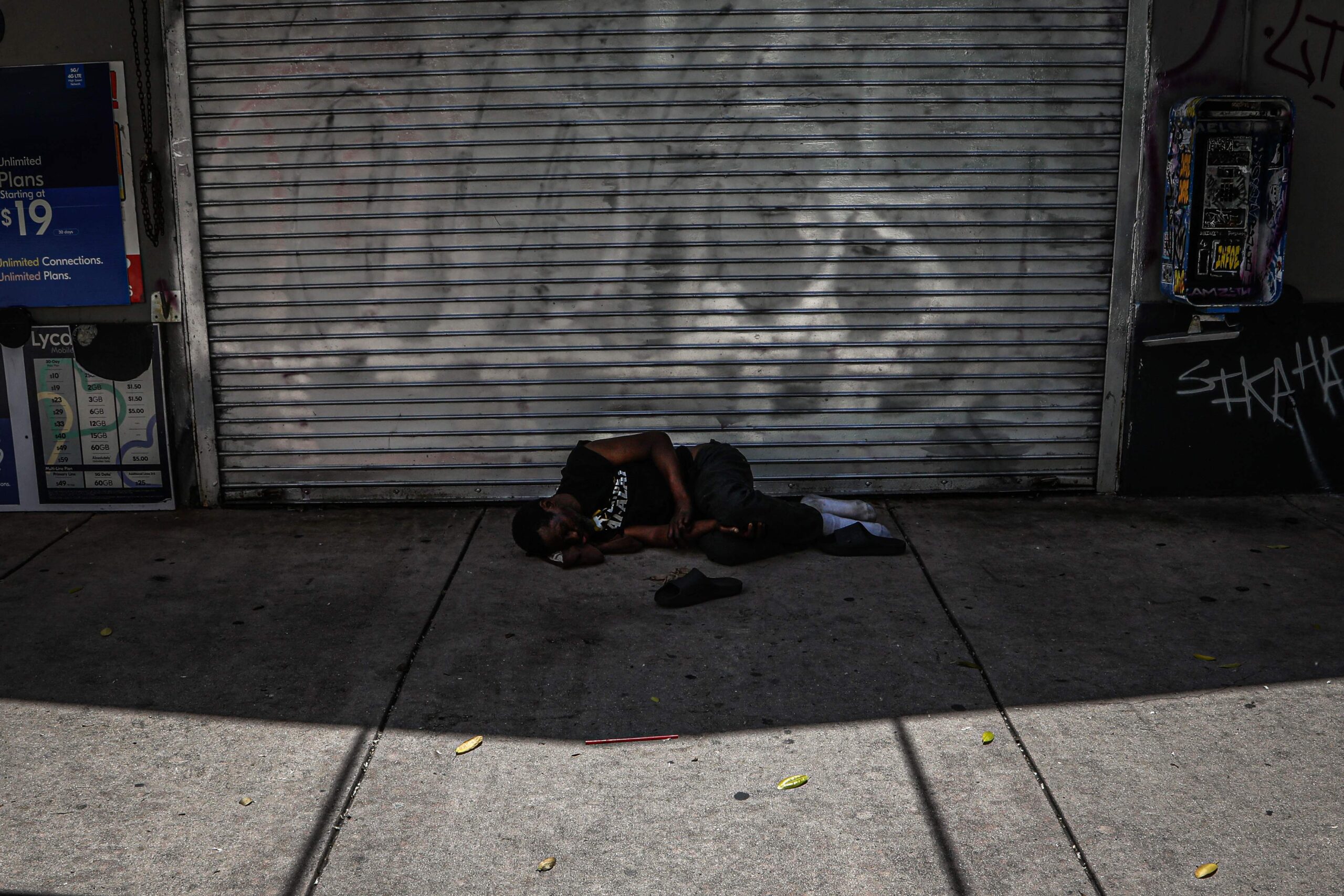
The Municipal Commission of Miami, United States, approved a rule that authorizes the Police to arrest people who sleep or camp in public spaces, after receiving a verbal warning.
The rule was endorsed by three votes to two and will come into force within ten days, unless Mayor Eileen Higgins decides to veto it.
The move reignited debate over whether the city is treating homelessness as a public policy issue, rather than addressing its root causes, related to access to housing and social assistance.
What changes with the new standard
The approved text eliminates two requirements that applied until now: the written warning and the 24-hour period that was given to people to remove their belongings before proceeding with an arrest. The option for officers to impose a fine instead of an arrest also disappears.
The proposal was promoted by Commissioner Rolando Escalona, whose district covers sectors of Little Havana and Brickell. As he explained, the goal is to connect homeless people with available help resources while maintaining the safety and cleanliness of the community.
In its final version, the rule requires that officers give a verbal warning and allow a “reasonable” time for the person to leave the scene and collect their belongings before taking action.
That time frame was not defined exactly in the document. The city’s attorney, George Wysong, explained that the criteria will depend on the number of objects each person has and acknowledged that it is difficult to specify what is meant by “reasonable.”
The rule defines camping as a situation in which a person sleeps on public property inside a tent, under cardboard or a blanket, or accumulates more belongings than can fit in a box. This municipal decision adds to a state law in force since last year that prohibits sleeping on public roads.