
Skyrocketing energy prices, rising US tariffsand the excessive spending on artificial intelligence are reviving investors’ inflationary fears. A week that began with an escalation of violence in the Middle East culminated with the price of oil surpassing $100 a barrel, which will raise costs in global supply chains. At the same time, President Donald Trump renewed his push for trade tariffs and there was new evidence of an unbridled boom in technology investment.
This triple confluence of phenomena that potentially inflate prices and affect the global economy simultaneously comes at a delicate time. Just when central banks were beginning to see some relief in the inflation outlook, the situation has worsened again. With decisions looming this week, from the Federal Reserve to the Bank of England, officials will need to make quick decisions about new dangers.
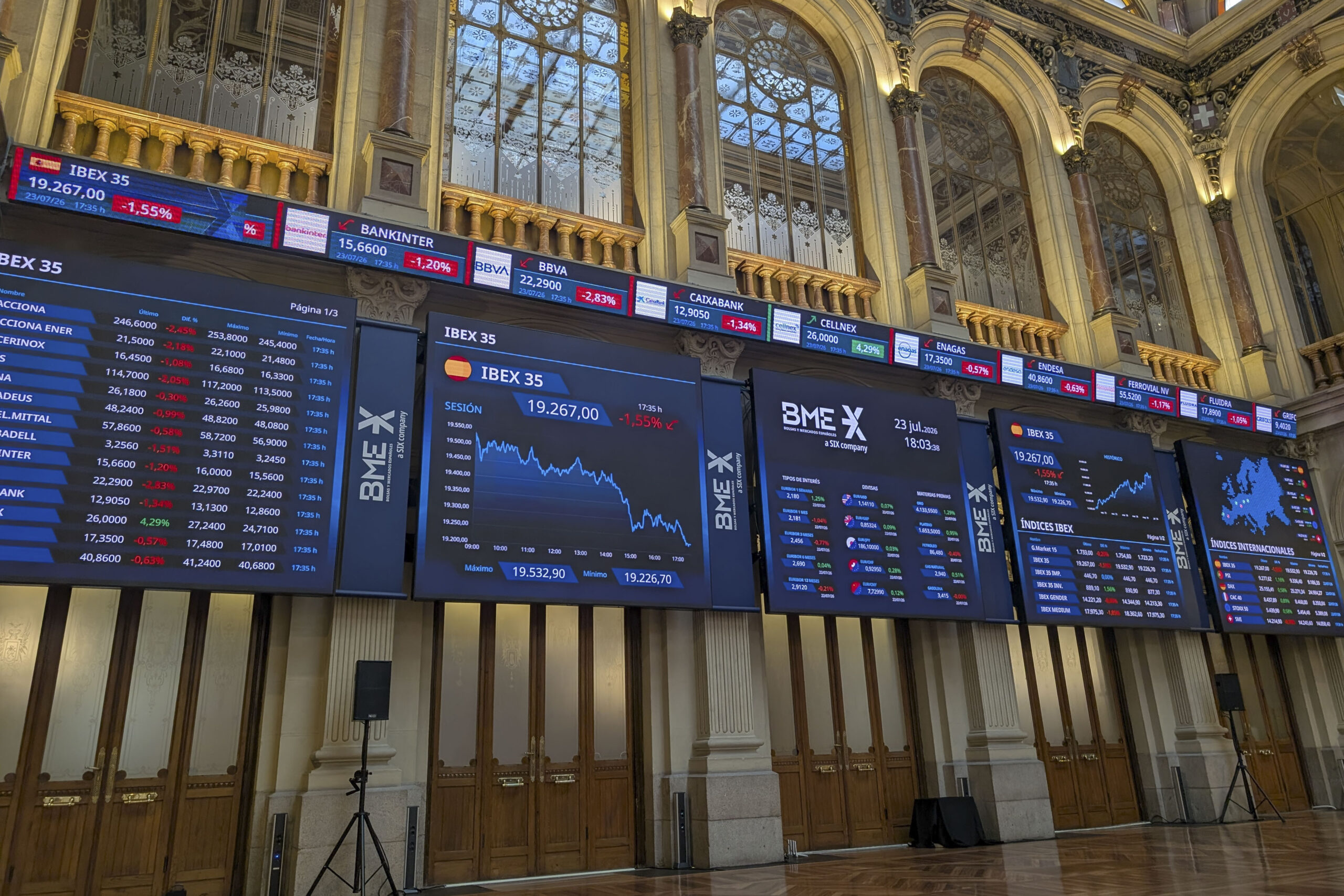
No immediate changes in interest rates are currently expected, but the inflationary concerns of the summer look set to persist in financial markets. Skyrocketing global bond yields are just one symptom of the alarm among investors over the risk of consumer prices spiraling out of control. In equity markets, the S&P 500 is heading for its second consecutive week of decline. ”Recent events remind us that geopolitics determine the economy, and not the other way around,” said Katharine Neiss, chief European economist at PGIM.
“Negative pressures from supply shocks on headline inflation will continue to reinforce the tendency of central banks to adopt a more restrictive stance.” The renewed media push comes after the escalation of the conflict in the Middle East, which has spread from the Strait of Hormuz to the Red Sea. Trump declared that he is considering a “massive attack” against Iran to pressure the country to negotiate a peace agreement. In that context, the price of crude oil exceeded US$100 per barrel last Thursday for the first time in two months, and gasoline prices also skyrocketed.
Inflation risks and resulting fiscal concerns are causing bonds to plummet. Among market moves, British government bond yields this week recorded their longest streak of daily closes above 5% in almost two decades. The yield on 30-year US bonds is slightly below its highest since 2007. The danger posed by the imoil and gas pact on the cost of living lies in that its effect on consumers is usually very immediate.
”The energy crisis could intensify further,” warned the president of the European Central Bank, Christine Lagarde, on Thursday. “The longer energy prices stay high, the more likely they are to drive headline inflation.” He admitted that some colleagues questioned whether they should raise interest rates immediately, before the ECB opted to wait. According to sources close to the matter, they are prepared to do so in September if inflation prospects do not improve.
But it’s not just about oil. The Trump administration presented investors with the possibility of new tariffs overnight, pledging to levy taxes of between 10% and 12.5% on imports from most of its major trading partners. This is the most important measure to date to rebuild the tariff barrier annulled by the Supreme Court. Meanwhile, evidence of the huge investment push towards AI continues to emerge. On Thursday, Alphabet Inc. raised its capital spending forecast to $205 billion this year.
Further stoking some fears is evidence of the pricing power of large corporations. Last month, Apple Inc. raised the price of all Macs, iPads, home devices and the Vision Pro to offset rising production costs caused by an unprecedented shortage of memory and storage chips. Kamakshya Trivedi, chief currency and emerging markets strategist at Goldman Sachs, told Bloomberg Television that she is more concerned the energy crisis and technology spending than tariffs.
“I’m much more concerned about the inflationary momentum that’s coming out of the energy sector right now; I think that’s the one we need to keep an eye on,” he said. “In the long term, the most important factor is investment in AI, and I think the changing perspectives in that area will be a key factor in the market response.” All of these new inflation considerations will influence upcoming deliberations among monetary policymakers in the Group of Seven and beyond.
The result of the Federal Reserve meeting will be announced on Wednesday, followed by that of the Bank of England and the Bank of Japan on consecutive days. According to sources close to the matter, as of early this week, Japanese monetary policymakers are open to accelerating interest rate hikes. Data released Friday showed the country’s inflation gauge picked up for the first time in three months.
In the United States, economists continue to expect that the Federal Reserve’s next action will be a rate cut, even though financial markets are betting on an increase in borrowing costs. For September, a rate hike has already been fully priced in. None of the central banks meeting next week will convene again until the second half of next month, meaning their messages could set the tone for the coming weeks.
“While the ECB decided to keep interest rates unchanged for now, the pressure to raise them further in the fall has increased considerably,” said Emanuel Moench, a professor at the Frankfurt School of Finance and former Bundesbank official. “The Federal Reserve is also likely to keep monetary policy on hold this week, but the case for rate cuts in the fall has all but disappeared.”