
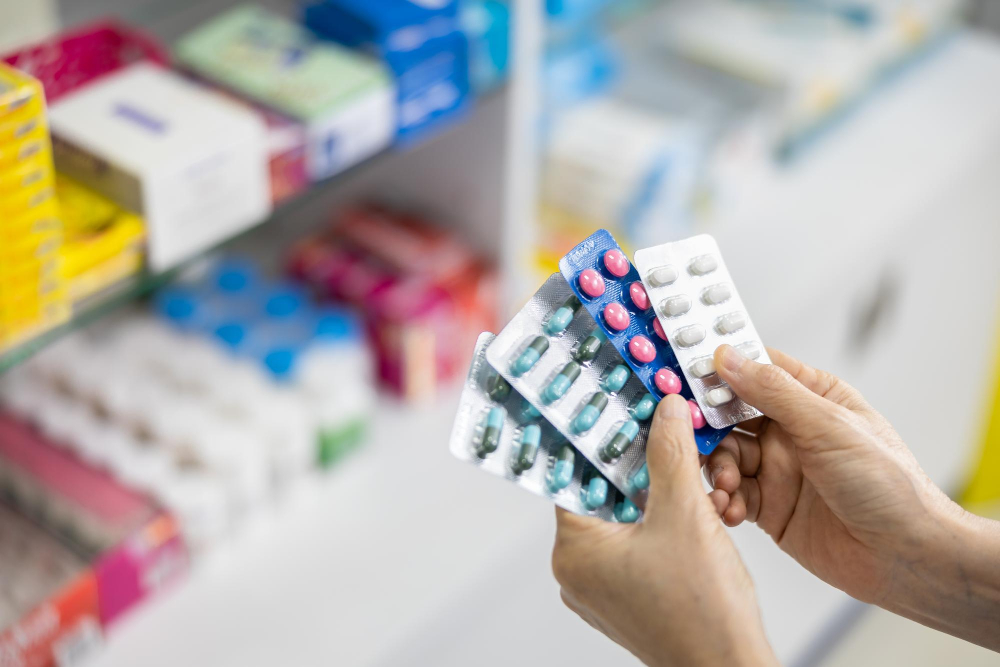
Counterfeit products put patients’ lives at risk, as they may contain incorrect doses, toxic substances or lack the active ingredient, generating ineffective treatments, hospitalizations and even deaths.
This is one of the alerts issued by Virginia González, coordinator of the Committee against illicit acts of the Central American and Caribbean Federation of Pharmaceutical Laboratories (Fedefarma) in an interview with Free press.
In addition to tax losses, he indicates, the illicit trade in medicines is linked to organized crime networks, which take advantage of regulatory loopholes and unauthorized digital channels to expand their business.
He adds that the most counterfeited products at these points are antibiotics, pain relievers, vitamins and nutritional supplements.
This is the complete interview with González.
How serious is the problem of counterfeit medicines in Guatemala currently and how has it evolved in recent years?
The problem of counterfeit medicines in Guatemala is serious and growing. According to data from the Superintendency of Tax Administration (SAT) and the Public Ministry, in the last three years illegal medications valued at more than Q10 million have been seized.
It is estimated that between 8% and 10% of medicines in circulation present some degree of falsification or adulteration. The most affected products are antibiotics, painkillers, vitamins and over-the-counter medications, although counterfeits have also been detected in specialized treatments such as oncology and diabetes products.
In 2025the operations seized illegal medications worth more than Q1 million (≈ US$132,000). As far as 2026shipments valued at more than Q4.5 millionwhich confirms an upward trend.
What are the main forms of counterfeiting that have been identified in the Guatemalan market?
Some of the modalities identified are:
- Medicines without active ingredient: Products that do not contain the necessary pharmacological ingredient, resulting in ineffective treatments and risk of serious complications.
- Insufficient or incorrect active ingredient: Batches with doses lower than those declared or with different substances, which can cause antimicrobial resistance or toxic effects.
- Formula adulteration: Partial replacement of ingredients with compounds of lower cost or quality, affecting the effectiveness and safety of the medicine.
- Counterfeit packaging and labeling: Use of fake packaging, labels and holograms to simulate original products. This includes copying trademarks and counterfeit lot numbers.
- Invented or non-existent products: Medications that do not correspond to any approved formulation, created solely to deceive the consumer.
- Regional smuggling: entry of products from neighboring countries without health registration.
- Diversification of affected products: In addition to OTC and antibiotics, counterfeits have been detected in high-cost treatments such as oncology and diabetes products.
Additionally, some important recent trends to consider are: greater sophistication in counterfeit packaging, making visual detection difficult, increase in digital sales through social networks and unauthorized platforms.
What risks do these medications pose to patients and what health consequences have you documented or monitored?
| Mode | Description | Detected example | Main risk |
| Without active ingredient | Product does not contain the declared pharmacological ingredient | Antibiotics” without active substance | Ineffective treatment, worsening of the disease |
| Insufficient or incorrect active ingredient | Contains lower doses or different substances | Pain relievers with reduced doses | Antimicrobial resistance, toxicity |
| Formula adulteration | Partial replacement with lower cost compounds | Vitamins adulterated with undeclared excipients | Adverse effects, loss of efficacy |
| Counterfeit packaging and labels | Copy of packaging, holograms and false lots | Blisters with counterfeit logos and lot numbers | Difficulty of visual detection, consumer deception |
| Invented or non-existent products | Medications that do not correspond to any approved formulation | “Miracle supplements” without health registration | Toxic risk, economic fraud |
| Expansion to biologics and medical devices | Counterfeit vaccines, diagnostic tests and devices | Fake influenza vaccines | Risk of epidemics, loss of institutional trust |
Have you identified patterns about where these counterfeit products are most frequently marketed?
The most frequent sites and modalities are informal markets and street sales. In these spaces there are stalls in cantonal markets and local fairs, as well as direct sales in streets and transport terminals. The products are offered without health registration or quality control.
Unauthorized stores and clandestine pharmacies are also identified. These are establishments that pretend to be pharmacies, but they lack a license from the Ministry of Health. These are concentrated in peripheral areas and border municipalities.
Another frequent modality is smuggling at land borders. Medicines enter from Mexico, El Salvador and Honduras without import permits. Its transportation is carried out in buses, trucks and parcels.
Digital platforms and social networks are also used for marketing. “Miracle” or low-cost medications are offered in closed groups on Facebook, WhatsApp and Instagram. In addition, fake profiles and international payment platforms are used to make tracking difficult.
Distribution is also recorded in rural and peri-urban areas, with a greater presence in communities with limited access to formal pharmacies.
Some points to highlight are that consumers are attracted by low prices and immediate availability. The physical informal market remains the main channel, but digital growth is the most worrying trend.
The most counterfeited products at these points are antibiotics, pain relievers, vitamins and nutritional supplements.
The common pattern is direct sales to consumers without traceability, which increases health risk and makes regulatory action difficult.
How does the circulation of counterfeit medicines affect the treatment of diseases and patients’ trust in the health system?
The illicit medicines market is not only marked by products without therapeutic effect, such as placebos. In various findings, other additional risks to therapeutic ineffectiveness may occur in combination, such as toxicity and dose imbalance.
This makes counterfeit medicines a direct and potentially deadly threat to patients, in addition to representing a structural problem for the health system.
The clinical impact of counterfeit medicines is serious and multifactorial, with direct consequences on public health and the sustainability of health systems.
Counterfeit medicines generate a vicious cycle of resistance, decompensation and avoidable mortality. This forces health systems to allocate more resources to second-line treatments and prolonged hospitalizations. Key findings include:
- Antimicrobial resistance: The consumption of counterfeit antibiotics with subtherapeutic doses has contributed to the increase in resistant strains in Central America and the Caribbean. This complicates the treatment of common infections and increases hospital costs.
- Decompensations in patients with chronic diseases: Patients with hypertension, diabetes or cardiovascular diseases who consume counterfeit medications have suffered acute crises due to lack of control of the disease. Such is the case of antihypertensives without active ingredients, whose consumption can carry the risk of stroke.
- Therapeutic failure in oncological and antiviral treatments: The presence of counterfeit products in critical therapies, such as chemotherapy and antiretrovirals, has generated a loss of effectiveness, which accelerates the progression of the disease.
- Acute poisoning: Cases of liver and kidney damage have been reported due to the consumption of medications adulterated with solvents or heavy metals. In some patients, the outcome has been fatal. Contaminants such as bacteria, fungi and molds have also been detected, which can cause serious gastrointestinal problems.
- Impact on maternal and child health: Counterfeit vitamins and supplements have led to nutritional deficiencies in pregnant women and children, which increases the risk of anemia and malformations.
What is the economic impact that this practice generates for the formal pharmaceutical industry and for the State?
The trade in counterfeit medicines represents a direct threat to public health and the country’s formal economy.
In Guatemala, this practice generates losses greater than Q150 million annuallywhich affects both the formal pharmaceutical industry and the State. Companies in the sector face a reduction in sales and their margins, in addition to assuming additional costs in traceability and control, while the State stops receiving millions in taxes and tariffs due to smuggling and informality.
“Every quetzal lost by the industry and the State is one less quetzal for innovation, employment and access to safe treatments.”
The impact is not limited to the economic sphere. Counterfeit medicines cause ineffective treatments, hospitalizations and antimicrobial resistance, which increases public spending on health and weakens the population’s trust in formal pharmaceutical channels.
At Fedefarma we reiterate that combating drug counterfeiting is a national priority, which requires inter-institutional coordination between the MSPAS, the SAT, the MP and the National Civil Police, as well as education campaigns aimed at the population to promote safe and responsible purchasing.
From Fedefarma’s perspective, do the authorities have the necessary legal and operational tools to combat this crime or are there gaps that facilitate its persistence?
Guatemala has laws and regulations, including the Medicines Law, the Penal Code and customs regulations, that classify and punish counterfeit medicines. Inter-institutional operations are also carried out in which the Ministry of Public Health and Social Assistance, the Superintendency of Tax Administration, the Public Ministry and the National Civil Police participate, which have allowed important seizures to be made.
However, the application of these provisions is limited and gaps persist that favor the permanence of the crime.
Among the main gaps identified are slow judicial processes, which generate impunity and recidivism. There is also insufficient traceability, due to the lack of robust systems to track batches and distribution chains.
Added to this are the permeable borders, which allow the constant entry of unregistered medicines from neighboring countries. An unregulated digital environment also persists, due to the absence of specific regulations to control sales on social networks and online platforms.
Another problem is the limitation of resources, reflected in the shortage of specialized personnel and laboratories with the capacity to verify the authenticity of medicines.
Among the proposed solutions is to strengthen law enforcement through faster and more effective sanctions. It is also proposed to implement digital traceability systems, such as QR codes, blockchain and electronic records.
Likewise, it is recommended to strengthen border control through the use of technology and regional cooperation, as well as update regulations to include electronic commerce and digital platforms.
It is also necessary to invest in technical capabilities, by enabling more laboratories, hiring more inspectors and strengthening training.
Finally, it is proposed to promote citizen education campaigns to promote the purchase of medicines through formal pharmaceutical channels.