
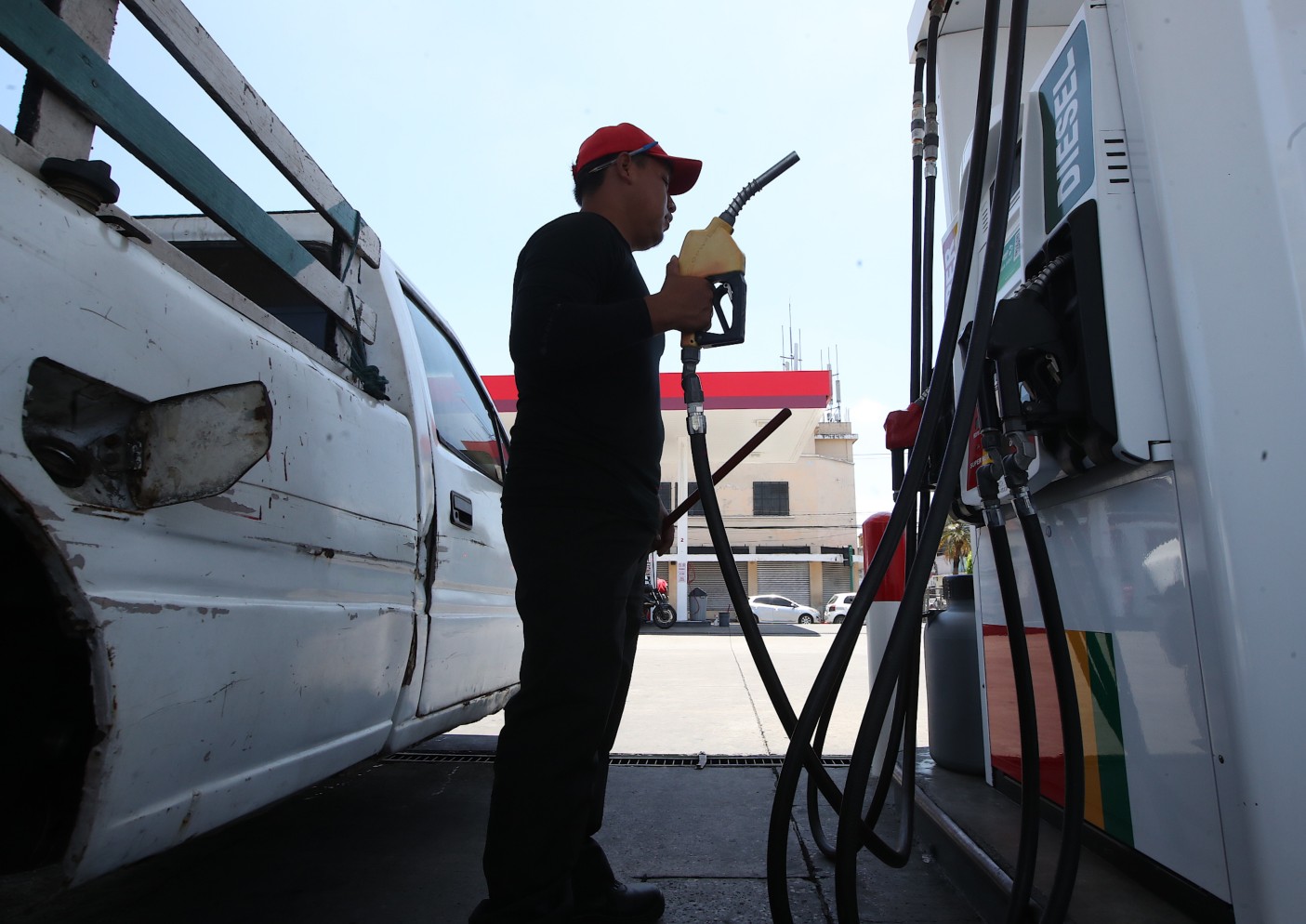
The new fuel subsidy proposal presented by the Executive not only seeks to provide temporary support of Q12 per gallon of diesel and Q3 per gallon of regular gasoline, but also to reinforce control mechanisms to avoid irregularities detected during the application of the previous program.
The Minister of Energy and Mines, Erwin Barrios, explained that the initiative incorporates changes derived from the experience obtained between April and July, when the subsidy approved by Congress was in force. Among them is the possibility of suspending the benefit early if international prices decrease, as well as new measures to combat subsidized fuel smuggling.
“If there is a drop in international prices, and hopefully that will be soon, then we would be having an end to this temporary support,” the official said.
Likewise, he pointed out that The proposal incorporates an article to strengthen border control and prevent subsidized fuel from leaving for neighboring countries.
Barrios explained that during the validity of the previous subsidy the Ministry of Energy and Mines (MEM) detected an increase in fuel consumption, a situation that was also warned by deputies and the Superintendence of Tax Administration (SAT).
“We have not verified it. It is not a truth on my part, but it is a theory that we are verifying,” The minister stated when referring to the possibility that part of the subsidized fuel has been transferred out of the country.
He added that the MEM works together with the SAT to determine if this situation occurred.
If a case of illegal departure of subsidized fuel is confirmed, The initiative establishes the express prohibition of exporting it and provides for the intervention of the Public Ministry and the Ministry of the Interior to investigate and prosecute these facts.
More price controls
The head of the MEM indicated that the inspection scheme used previously, in which several institutions participate, will also be maintained.
As explained, the SAT sends the MEM the information on the shipments made by the importers. Subsequently, the Ministry validates these data and transfers them to the Ministry of Public Finance to make the corresponding payments, while The Directorate of Consumer Care and Assistance (Diaco) verifies that the discount reaches the final consumer. The Comptroller General of Accounts also exercises control functions.
Furthermore, the new proposal contemplates the publication of reference prices by the MEM, which must be displayed at service stations to facilitate supervision and provide consumers with a parameter that allows them to verify that the subsidy is applied correctly.
Barrios added that The payment of the subsidy will continue to be made directly to the importers when the fuel is delivered from its terminals, so that the discount is already incorporated when the product arrives at the service stations.
The initiative continues in Congress
The minister’s statements come while Congress analyzes bill 6801, Temporary Emergency Support Law for Diesel and Regular Gasoline Consumerspresented by pro-government deputies.
The project proposes a subsidy of Q12 per gallon of diesel and Q3 per gallon of regular gasoline, with a total estimated cost of Q3,480 million, financed through a combination of budget expansion, cost reduction and use of surplus resources.
The proposal began its discussion at the level of block heads and has yet to obtain the necessary consensus to be known by the full Congress.
Meanwhile, some deputies are already proposing modifications to the project, among them reducing the subsidy for diesel and increasing the subsidy for regular gasolinearguing that more than half of the country’s vehicle fleet is made up of motorcycles that use this latter fuel.
As background, Barrios recalled that, after finishing the previous program, The MEM presented 15 complaints to the Public Ministry against service stations that increased their prices despite maintaining inventories acquired with a subsidy. In addition, he transferred other cases to the Diaco due to possible irregularities.
Design by marlon boryo
How the subsidy would be financed
Law proposal 6801 establishes that the new temporary support program would have a cost of Q3 thousand 480 million. The resources would be transferred to the budget of the Ministry of Energy and Mines (MEM) to cover the subsidy for diesel and regular gasoline.
According to the initiative, financing would come from three sources: a budget increase by Q1 thousand 754 milliona reduction in expenses by Q474 million in different entities of the State and Q1 thousand 280 million in surplus resources, which together would complete the Q3 thousand 480 million required for the measurement.
Among the proposed cuts are Q216 million of the Emissions Reductions Payment Agreement (Erpa); Q170 million from the Ministry of Agriculture, Livestock and Food; Q50 million from the Ministry of the Interior; Q9 million from the Ministry of National Defense; Q5 million of the Ministry of Culture and Sports, and Q4 million of the Ministry of Environment and Natural Resources.
In addition, the project contemplates reducing Q400 million assigned to the Directorate of Priority Road Projects (Dipp) and use other unexecuted balances to support the budget expansion.