
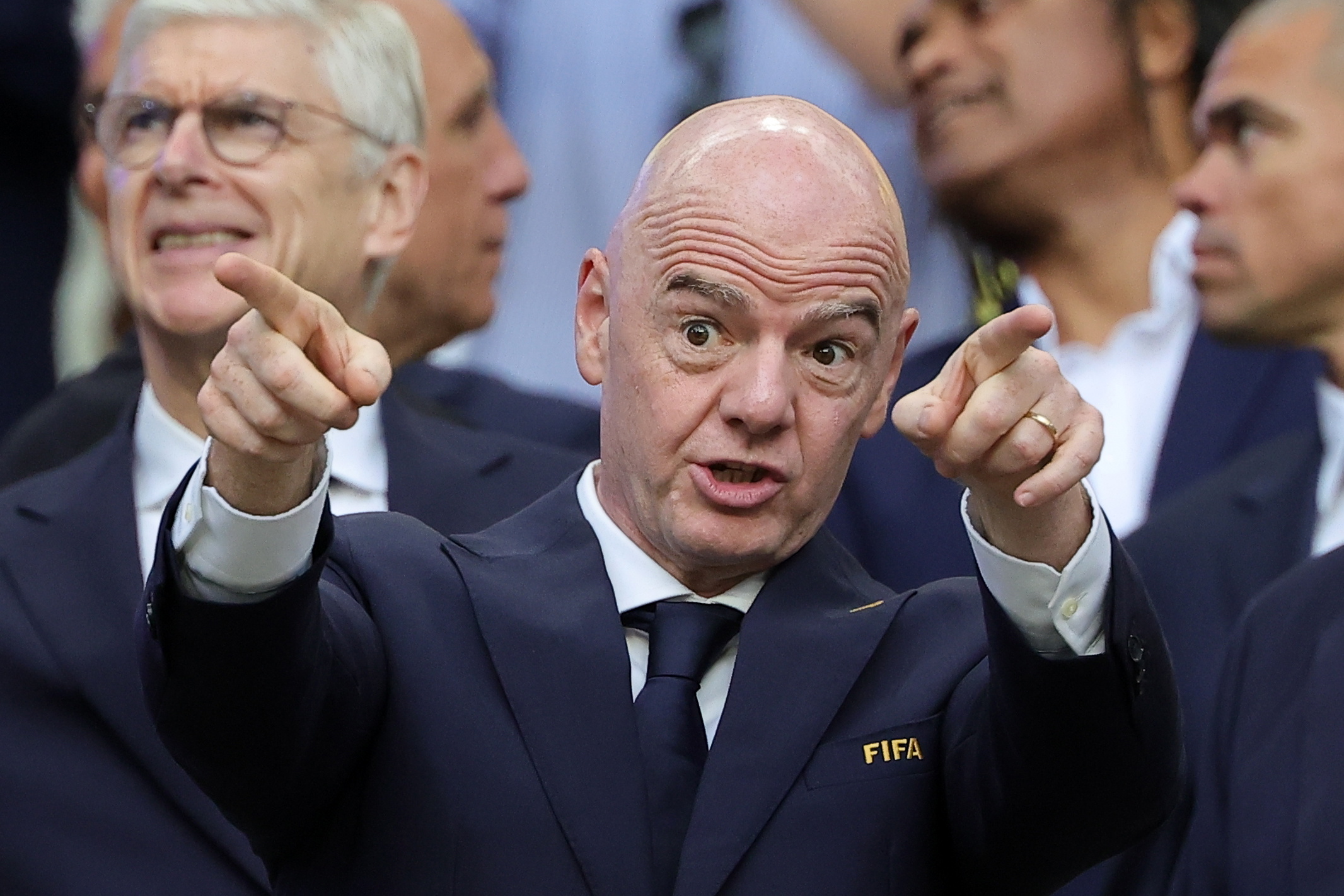
FIFA made official this Tuesday, July 28, a project to create FIFA Forward Enterprise (FFE)a commercial subsidiary with which it seeks to strengthen financing for the development of football by incorporating minority investors.
The initiative contemplates capturing up to US$4.2 billion in a first stage and must still be approved by the 211 member associations of the organism.
Hours after the official announcement, the proposal unleashed rejection from UEFA and opened a new front of tension between the two main organizations in world football.
From a journalistic exclusive to the official announcement
The project gained notoriety after British newspapers The Times and Financial Times will reveal FIFA’s plans to create a new commercial structure and open it to minority investors.
Subsequently, FIFA officially confirmed the initiative through a statement, in which it explained that FIFA Forward Enterprise (FFE) It will be a subsidiary owned and controlled by it, responsible for consolidating the organization’s commercial and event operations.
According to the entity, the creation of this company will increase the resources allocated to the development of football without modifying the governance of the sport.
“FIFA will retain exclusive control over football governance, competitions, the international calendar and all regulatory and sporting decisions,” the organization said.
More resources for associations
The focus of the proposal is to reinforce the program FIFA Forwardwhich finances development projects in national federations.
The plan contemplates granting up to US$20 million per association in extraordinary financing for special projects of the new program FIFA Fast-Forwardin addition to progressively increasing the funds of the FIFA Forward program during the cycles between 2027 and 2038.
FIFA indicated that these resources will be allocated to infrastructure, training of coaches, national teams, competitions, grassroots football and women’s football.
Likewise, he reported that he works with JP Morgan as a financial advisor and that, once the corresponding authorizations have been obtained, the company Thrive Eternal would lead the group of investors proposed for the new subsidiary.
UEFA’s rejection
The announcement sparked a swift reaction from UEFA, which expressed its opposition to the project and questioned the incorporation of private investors into FIFA’s commercial structure.
In a statement, the European body maintained that the governance and future of football should not be subject to external commercial interests and defended that decisions on the main competitions should remain under the control of sporting institutions.
The European rejection fueled a debate that began after the publications of The Times and Financial Timeswhose reports placed the project at the center of the discussion on the future of the commercial exploitation of the tournaments organized by FIFA.
Faced with these criticisms, FIFA insisted that the new structure does not imply changes in the organization’s control over competitions or over sporting and regulatory decisions.
A proposal pending approval
Although FIFA has already made the project official, its implementation will depend on the approval of the 211 member associationswho must analyze the proposal before authorizing the creation of the new subsidiary.
While the body chaired by Gianni Infantino maintains that the model will significantly increase resources for the development of football around the world, the initiative has already opened a new debate on the role that private investors could play in the commercial exploitation of the competitions organized by FIFA.
What does FIFA propose?
- Create FIFA Forward Enterprise (FFE) as a wholly owned business subsidiary.
- Capture up US$4.2 billion through minority investors.
- Increase funding for the 211 member associations.
- Maintain exclusive control over governance and competitions.
- Allocate more resources to infrastructure, grassroots football, coach training, national teams and women’s football.