

Scenery
In the Huipil of the Mayan clothing suit of Chajul, Quiché, which is part of the series “Maya Textile Tradition”, which is published in Magazine D, different brocades are observed, which have prevailed for many decades.
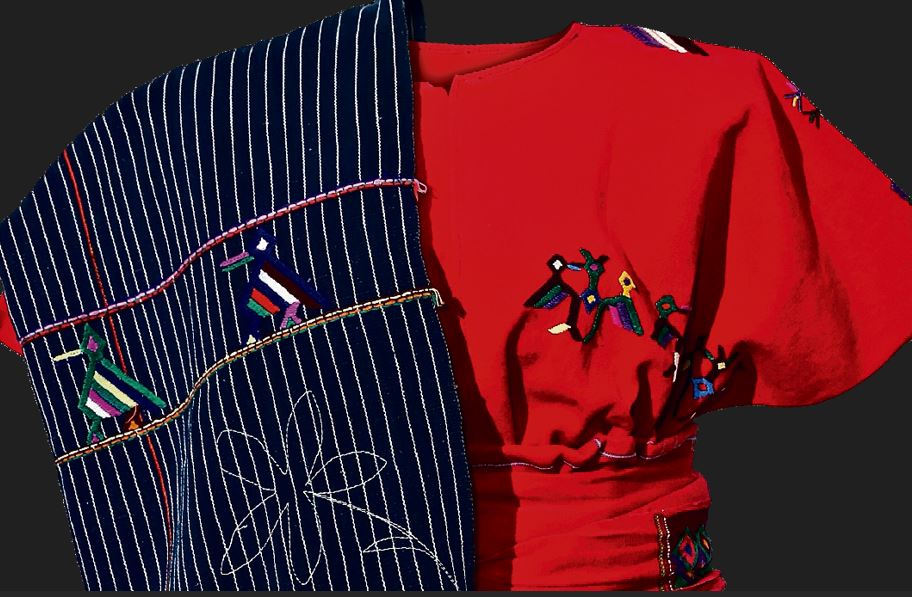
In the Mayan clothing suit of Chajul, Quiché, different brocades are observed, which have prevailed for many decades. (Photo Press Libre, Juan Diego González)
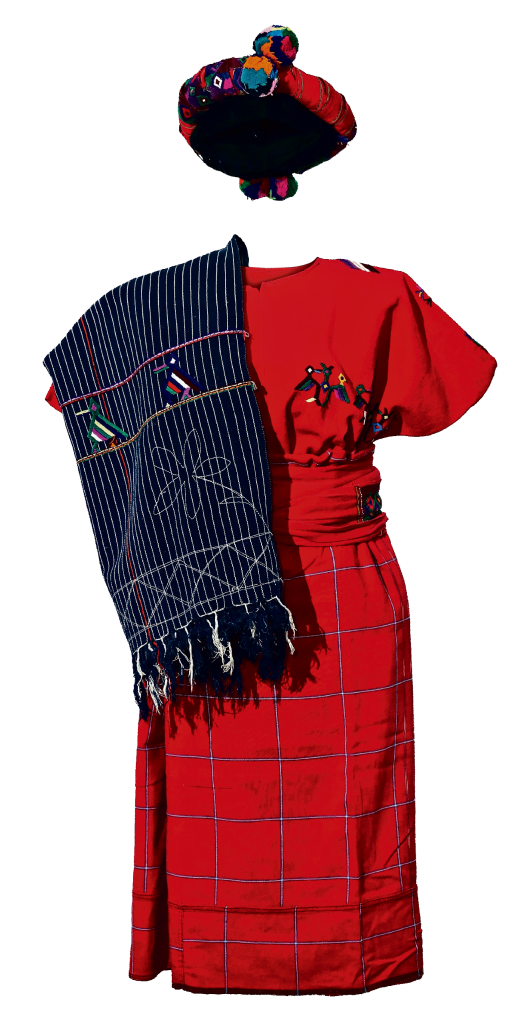
The huipil, the crack and the girdle of this suit are woven in waist loom. The first two have geometric designs and zoomorfyou.
The dog has dark blue background with warp stripes, very narrow and white. On this there is a colorful strip with supplementary plot brocades in the form of “arrow points”.
The cut is woven in looming. The tape tape is weaved with cotton threads and Distinctive pompons of handmade acrylic fibers are placed at its ends. Two are seen in front, when assembling the headdress, and two in the back.
Designs
- Linguistic community: Ixil
- Daily use suit or festive activities
Related readings


Related readings

In the huipil, different brocades are observed, which have prevailed for many decades. In more recent years it has been seen that these reasons are larger than those placed in older versions such as those we see in this publication.
In the cut, red predominates and a pattern of very narrow and horizontal lines that form a grid. It also presents slight past of jaspeadic threads.
In this community there are still some women who carry a type of distinctive art, which is made with wool threads, generally, fuchsia or magenta, from which old coins hang.
Subscriber content
This is one of the costumes that belong to The collection of IXCHEL Museum of the indigenous suit, whose support for the publication of this series is fundamental, especially that of its director and curator, Violeta Gutiérrez.
- The information on Mayan clothing costumes presented in this space depends on the temporality and context of the documents and people consulted by the Ixchel Museum.
- In the Mayan textile tradition, elements such as trends in each community influence the personal taste of the bearers and creators of this tradition. In some cases, the data is scarce or vague.