

Some gastronomic traditions, such as those of Thailand, China and Mexico, have been incorporated into their recipes for centuries.
An ally against hunger
Since 2014, when the United Nations Food and Agriculture Organization (FAO) published the book “Edible Insects, Future Prospects for Food and Feed Security“, The discussion about insect consumption has been increasing.
Different studies have contributed to the debate where it is indicated that raising insects has a lower environmental impact than producing cow meat, pork and chicken.
For example, for 1 kilo of consumable chicken meat – the least contaminates of the three – 4.5 kilos of equivalent (measure used to compare the emissions of several greenhouse gases, making them its equivalent of carbon dioxide) are emitted, while 1 kg of anebrium or worm of edible flour generates 2.8 kg of co₂ equivalent.
To this we must add low water consumption and land use.
With regard to this last parameter, 1 kg of chicken meat uses 12.48 m² of soil, compared to the 3.07 m² necessary to produce 1 kg of tenebrio.
With data from 2021, it is estimated that a healthy diet costs US $ 3.66 per person a day, which means that 42.2 % of the world’s population could not have access to it.
In this context, the consumption of edible insects can become an ally to reduce hunger thanks to what is known as “microns”, self -consumption systems in which infrastructure and production costs are easier to cover.
However, the use of insects as an ingredient remains a challenge for many cultures.
High protein content
Worldwide are around 2,250 species of insects and arachnids, among which beetles, butterflies, wasps and bees stand out.
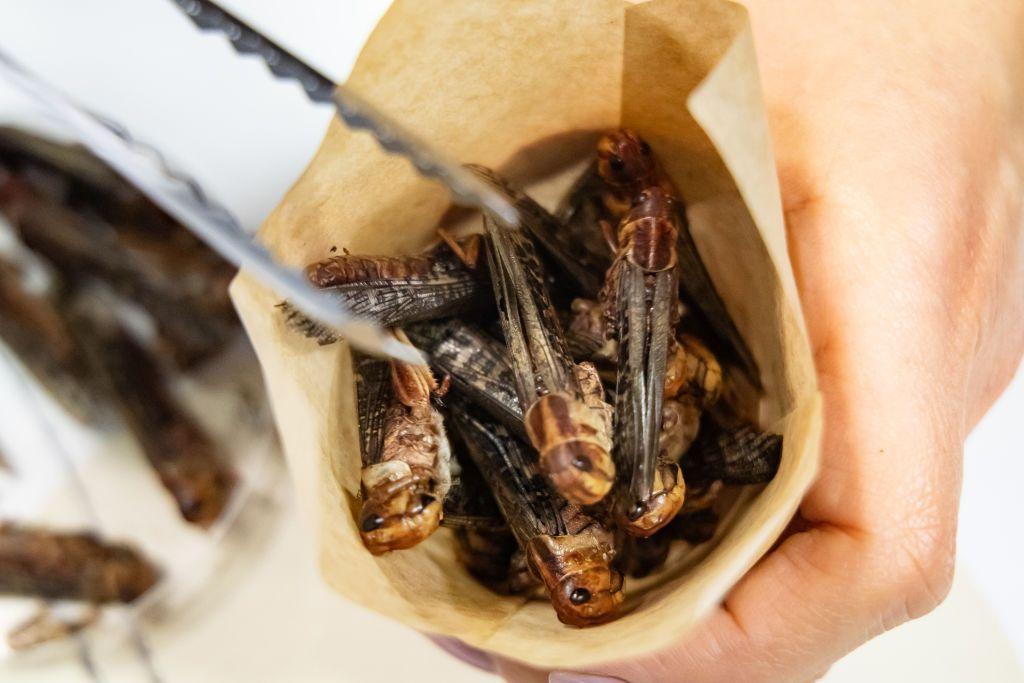
In Europe, the legislation authorizes the production of 4 species for human consumption: the larvae of the flour worm (Tenebrio Molitor), the migratory lobster (migratory locusta), the domestic cricket (Act 50.79 % protein, respectively.
As a comparison term, the proportion in protein content of cow meat, pork and chicken reaches 24.1, 22.2 and 21 %, respectively.
So how many insects should be consumed to replace the meat? Although it is not easy to calculate it, we will try to explain it in a simple way.
The recommended dietary intake (RDA) suggests that 0.83 grams of protein per kg of body weight per day must be ingested. That is, a 70 kg person must take 58.1 grams of daily protein.
If we account, a person with a body mass index of between 18.5 and 24.9 and 70 kg of weight would need to eat 277 grams of beef compared to 93 grams of dry cricket, if those were their only sources of protein.
Another example: for someone who weighs 80 kg, the recommended daily contribution would be 276 grams of chicken compared to 131 grams of dry lobster.
If there are other protein sources, such as milk, egg, fish and legumes, insect consumption must be adjusted.
And here it should be remembered the need to combine various food groups (fruits, vegetables, cereals, fish, etc.) and nutrients (healthy fats, carbohydrates, vitamins, minerals, etc.) to follow a varied and healthy diet.
Sustainable and healthy
In conclusion, covering protein needs requires less food if we get them from insects.
Without forgetting the environmental benefits of the micasadería, as well as a lower investment against industrial livestock.
Likewise, it is important to highlight that the use of the animal is higher in the case of insects (from 70 to 100 %), compared to fish (65 %), chicken and pork (55 %), and beef (between 40 and 50 %).
Additionally, insects contain around 60 % of monounsaturated fatty acids, which makes them a cardiosaludable consumption option.
And if we look at the sensory aspect, it is possible to assemble their flavors with many of the known and accepted western ingredients, such as pumpkin seed, pinion, chicken, powdered shrimp, caviar and avocado, among many others.
The dishes made with edible insects not only provide a sense of belonging to those who consume them in a traditional way: they also have the ability to live a unique gastronomic experience … and nutritious.
*Edgar Pulido Chávez. Professor-investigator. Center for Studies for Agriculture, Food and Climate Crisis (CEAACC), University of Guadalajara.
Alejandro Corona Mariscal. PHD Student, University University of Valencia