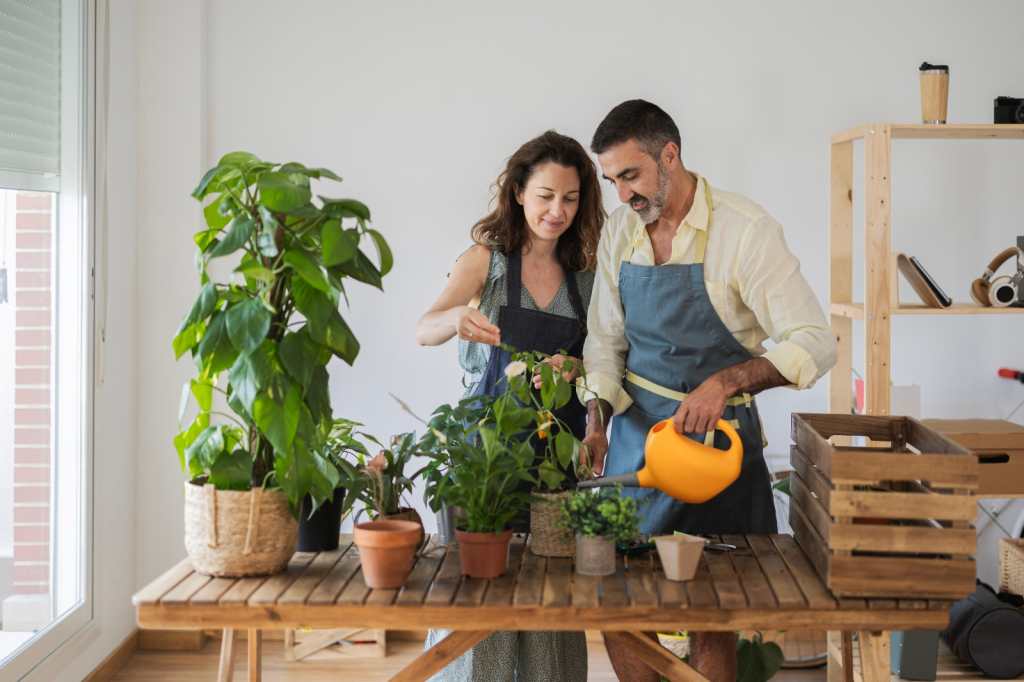
From psychology, the gardening It is recognized as therapy due to its multiple benefits for mental health. Contact with nature, trees and plants can generate in people a feeling of tranquility and well -being.
And with the aim of transferring these feelings to our spaces, Plants have become increasingly present in homes.
The interest in “green” decoration in indoor has experienced an boom in recent years. This trend ranges from small and minimalist plants to complete arrangements in which plants are the protagonists.
In addition to contributing to a better quality of life, plants remind us that everything in existence follows rhythms and stages. Several studies claim that this phenomenon goes beyond the aesthetic, since It becomes a way of expressing feelings and somehow create a symbolic refuge full of life.
However, psychology also explains the meaning of having many plants at home and its benefits.
What does psychology say about having many plants at home
Various studies indicate that People who fill their plant home have several personality traits. As explained by psychologist Regina Villagrán, for a note from Free press about How trees help us improve our quality of life, Those who have many plants at home are usually more empathic, patients and sensitive, especially with their surroundings.
Besides, Those who enjoy decorating their spaces with plants value the leisure care processes required by gardening and usually yearn for deep linkseven with living beings who do not respond immediately to their gestures.
This behavior is also linked to a need for balance, aesthetics and organization of the environment, which reveals a personality that values the structure and seeks to build quiet and protected environments.
What are the benefits of having many plants at home?
We live immersed in an accelerated rhythm, and Face natural processes that demand constancy, time and patience – such as sowing and caring for plants – can help us decelerate and reconnect with the present. “Contact with Nature significantly reduces stress and anxietywhich allows us to enjoy the environment and experience a feeling of well -being, ”explains psychologist Nisselly Herrera.
Another of the benefits offered by plants is that They make us aware that everything in life is cycles and processesand that many times we only need patience and time to grow and flourish ourselves.
According to Herrera, The care of a plant implies getting involved in the process and cultivating patience, which can unexpectedly lead us to greater personal knowledge.
In addition, being surrounded by plants, Our senses connect and become more receptive to natural stimulifavoring contemplation and connection with the present.
Villagrán points out that, in some therapies, he resorts to the use of plants as a tool to establish analogies and metaphors with his patients.
Take care of a plant from its initial stage, he explains, It can be an effective way to help people reconstruct their self -confidence, while promoting responsibility, serenity and well -being. “We feel good to know that we are giving life,” he says.
It also argues that The contact with plants and the natural environment anchor us at the present time. This connection with the cycles of nature helps to reduce, for example, the anxiety related to death, since it teaches us that everything in life has a beginning and a closure, and that each stage, however difficult it is, fulfills its purpose before concluding.
Plants as a personality reflection
Plants, in addition to helping people relax, also reflect some personality traits.
According to the medium The reasonplants at home or in spaces such as study or work can:
- Improve concentration
- Release tensions
- Promote a harmonic environment
- Stimulate responsibility
- Generate a feeling of peace, energy and happiness
- Foster a clean and minimalist environment
In addition, according to Villagrán, based on color psychology, the green of plants can make us feel more comfortable and calm, while the target of some flowers can stimulate emotions such as calm, which positively impacts people’s emotional well -being.