

Roads
In the new episode of Vamos to the grain, the need to establish public-private alliances and the payment of the toll for the correct maintenance of the roads is highlighted.
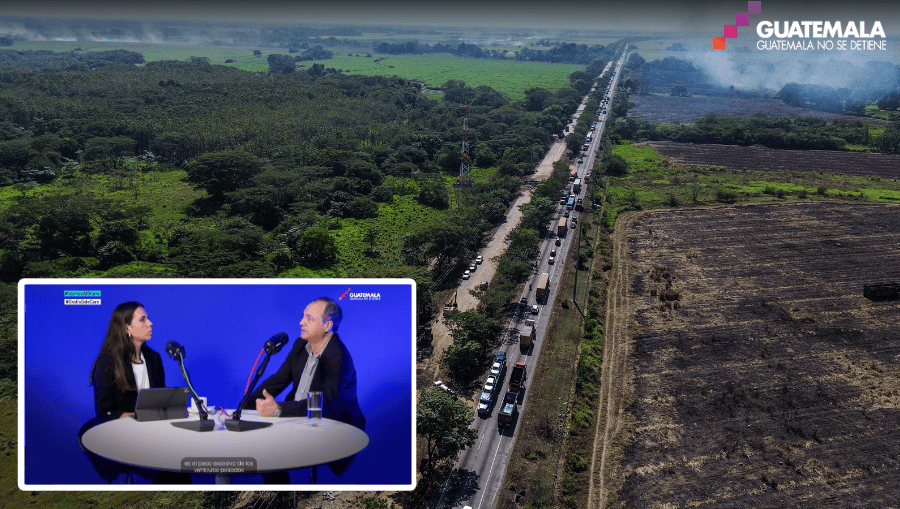
Escuintla-Puerto Quetzal Highway will have 42 kilometers from North to South to South to North. (Free Press Photo: Juan Diego González)
When the toll of the Palín-Squintla highway was removed, the 39 km road trip increased from 2.5 hours to 7 hours, due to three sections that had to repair simultaneously and that cost together until Q98.5 million.
To avoid these long -term problems, during this new episode of We go to the pointthe new Videopodcast of Guatemala does not stopconducted by Laysa Palomo, the director of the Consortium Convía, Sandro Testelli highlighted the need to establish public-private alliances for the development of new projects, such as the Escuintla-Puerto Quetzal highway.
Why is the toll not bad for road maintenance? These issues developed during conversation.
The 5 points of the episode: We go to the grain in the Escuintla highway project – Puerto Quetzal
- Public-private alliances generate additional tools for governments: Testelli says that, following these alliances, it is possible to release certain government budgets. This does not mean that they replace the government, but that they provide it with mechanisms that allow complementing the state infrastructure processes.
- Puerto Quetzal mobilizes more than 50% of the cargo throughout the country: The Escuintla-Puerto Quetzal highway is an infrastructure that will allow trade, industries and investors to have a service tool to complement logistics movements for 25 years in optimal conditions.
- The completion of the work is projected in July 2026: Testelli mentions that more than 100 km/h can be circulated. In addition, it will have security, lighting and collection devices. He also added that services such as gas stations and hotels will be available in the area.
- The Escuintla-Puerto Quetzal highway will have 42 kilometers of road From north to south and from south to north: it will also have four distributors, about 19 cattle steps, more than 200 hydraulic works, as well as garitas and administrative areas.
- 20 thousand direct jobs could be generated in the next 25 years From the development of the project: this, according to Testelli, due to the economic elements that arise around an asset of these characteristics.
It can reproduce here In video the complete conversation:
Or in our channel Spotify:
We go to the point It is a VideoPódcast produced In alliance between free press and Guatemala it does not stop.