

Wuhan’s pneumonia, as COVID-19 was initially known, seemed a disease concentrated in that Chinese city, where the first case was detected in December 2019. It was rapidly spread to the rest of the world and, on January 30, 2020, the World Health Organization (WHO) declared the situation as An international health emergencywhich then reached the level of pandemic.
On March 13, 2020, in a public activity, then President Alejandro Giammattei received a phone call. In front of the cameras that transmitted the moment, announced that the dreaded virus had arrived in the country.
The first case was confirmed, a 27 -year -old Guatemalan who had returned from Madrid, Spain. Two days later, it was reported The first death, An 85 -year -old patient who had also been in Europe.
After five years, one million 304 thousand 695 accumulated cases, 20 thousand 323 deaths and 7 million 145 thousand 739 people vaccinated with complete scheme -tid doses-,, In Guatemala, COVID-19 is considered an endemic disease.
1.5 meters away
Those first cases triggered a series of sanitary measures and restrictions to contain the virus. The use of mask was mandatory. The borders and airports were closed, They began the touches and confinement in households. The streets were deserted. The face -to -face classes in educational establishments were suspended and teleworking was adopted.
The alarm led to the hoarding of food and other essential products. To stock up, families had to adjust to restricted schedules in markets and points of sale. One was established Mandatory distance of 1.5 meters between people.
The overflowing hospitals were the daily stamp and the infections increased, just like deaths. A fractured health system was evident, with insufficient and unbalanced infrastructure to serve the population. Meanwhile, doctors and nurses faced an unknown virus without sufficient resources.
Five temporary hospitals were created to address cases of COVID-19 and give a break to the hospital network, but failed to relieve the crisis, as personal, equipment and medicines were missing.
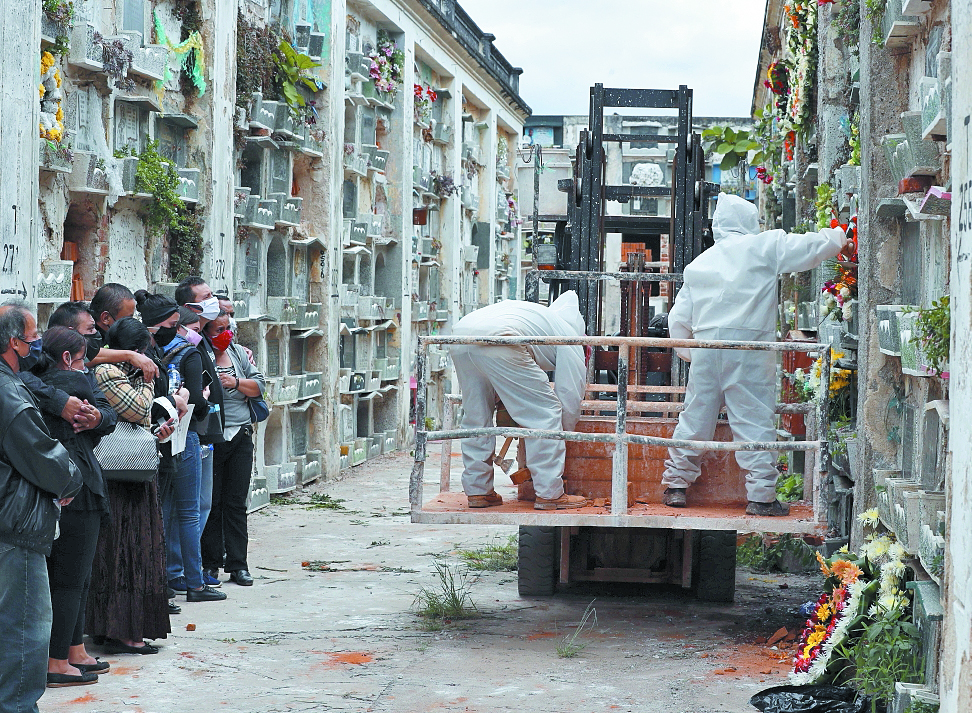
During the first year of the pandemic, 609 thousand 672 were made in the country and 136 thousand 363 cases were detected. 5,951 Guatemalans dieda figure that was counted on the Covid-19 situation board in Guatemala, of the Ministry of Health.
The rapid dispersion of the virus raised the demand for tests to detect the disease. Before the lack of test in public services to cover it, private laboratories began to carry them out. Rapid test prices (antigen) reached Q600, and molecular (PCR), Q5 thousand.
To date, the three municipalities with less infections reported are Concepción, with 15 cases; San Marcos La Laguna, with 16; and San Pablo La Laguna, with 20. The three are located in Sololá.
Hope in a road
In a counterreloj race, several laboratories developed a vaccine against COVID-19, which spread at an accelerated pace. On December 2, 2020, a vaccine created by Biontech and Pfizer was approved for emergency use in the United States, where it began to be applied.
More biological were approved, but Guatemala was late. It was until February 25, 2021 that 5 thousand donated doses arrived By Israel, destined to First -line health personnel.
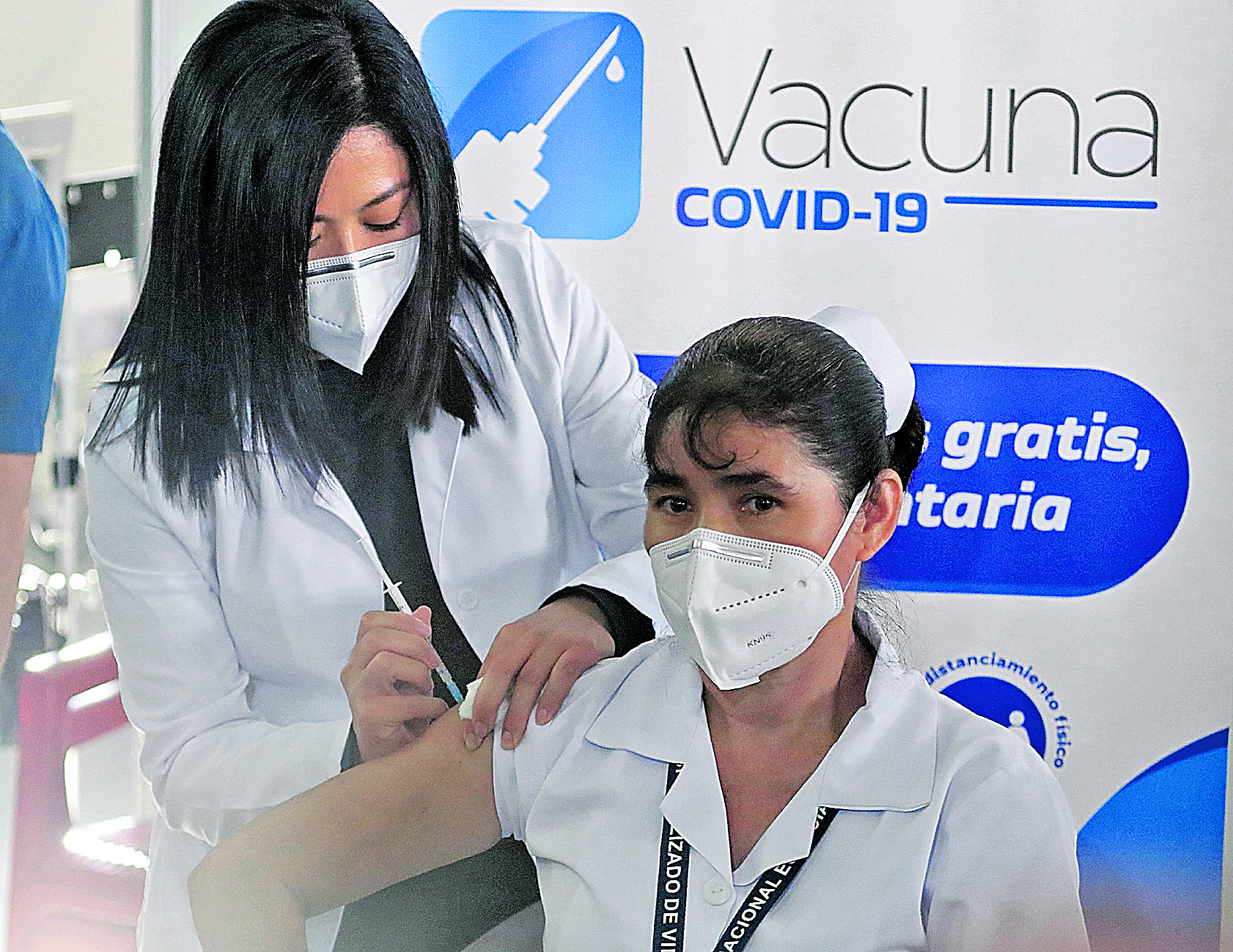
The vaccines began to enter the country at droppers, and the health portfolio developed the National Vaccination Plan to immunize the population in phases. Priority were vulnerable groups, such as doctors and nurses, senior citizens and pregnant women. However, the process was marked by discretion.
As of December 31, 2022, The country had received 27.8 million doses And, according to the inequality and vaccines report in Guatemala, of the data laboratory, 44.73% were donated by Israel, the United States, Spain, Switzerland, Korea, Canada, Dominican Republic, Mexico and India.
15.4 million doses were bought. 48.7% was acquired through the COVAX mechanism and 51.23% negotiated with Russia: 8 million doses of Sputnik V, for which Q614.5 million was paid.
On December 24, 2023 entered the last lot of donated vaccines made up of 100,000 doses granted by Switzerland.
According to the COVID-19 situation board in Guatemala, the doses administered to date are 20.4 million. Only 48.11% of the population has the complete scheme (two doses), and the greatest coverage was achieved in the group of 60 to 69 years. It only reached 19.2% of minors between 6 and 11 years.
The municipality With less vaccinated is San Lorenzo, Suchitepéquez, where only 5% of people has the complete scheme.
1,524 vaccination posts distributed in different parts of the country were enabled, mainly concentrated in the capital and urban areas, which the data laboratory described as an unequal coverage.
In Guatemala, 7.7 million doses of the COVID-19 vaccine were lost, of which 4.8 million were Sputnik V. The unit price of the Russian vaccine was Q76.80 – without freight -, so the country lost Q370. 5 million.
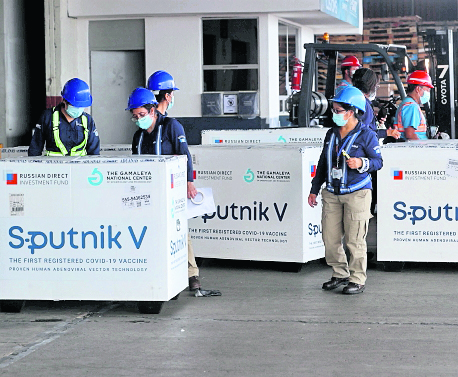
For irregularities in the purchase of the Russian biological, the Public Ministry (MP) opened an investigation in May 2020. 47 months have passed and the Prosecutor’s Office reported that “it is in development.”
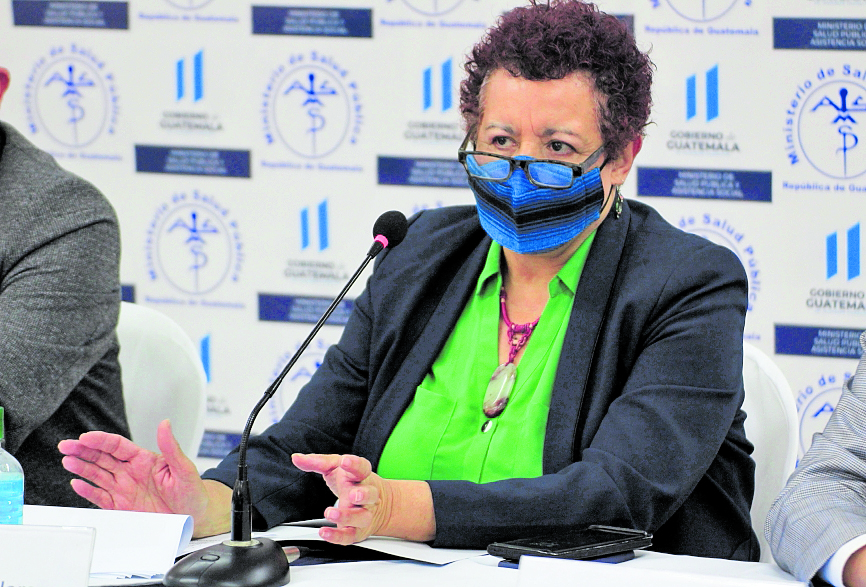
In April 2024, the Ministry of Health, the Attorney General’s Office (PGN) and the commission against corruption filed a Complaint against the former health minister, Amelia Flores, for doubts in the negotiation to acquire 16 million doses of Sputnik V. The MP added it to the 2020 investigation process.
COVID-19: A seasonal virus
In May 2023, the World Health Organization (WHO) declared that COVID-19 had become an endemic disease, which accepted the end of the world health emergency and confirmed that the virus became seasonal, with greater presence in cold times. Guatemala joined that statement in December of that year.
The health portfolio no longer considers COVID-19 as a threat, as it is an endemic disease, and points out that it is a respiratory infection that must be kept under surveillance.
“The Covid came to stay and there will be sporadic outbreaks. It is no longer the one we saw at the beginning, now it is a less aggressive and contagious strain, whose treatment is less aggressive; However, it continues to monitor. It is not the same Covid that locked us or we are going to reach those extremes, ”said Joaquín Barnoya, Minister of Health.

The positive case report during 2025 has decreased. From January 1 to March 9, the accumulated is 502, according to the COVID-19 Situation Board. There are no deaths. The demand for swabs to detect the disease also descended. The portfolio reported that on March 11, 28 thousand people had been sifted, an average of 400 daily.
Health indicates that it has 173 thousand tests available distributed in different departments of the country and in the central winery.
There are no vaccines since the last ones won in May 2024. Minister Joaquín Barnoya does not rule out the purchase of more and indicated that before it should be established what strain of the virus currently circulates in the country and ensure that the vaccines available protect against said variant.
173 thousand tests to detect COVID-19 are available in the country, according to the Ministry of Health
According to the National Health Laboratory, the omicron variant currently circulates, and the predominant sublinations are LF.7.2.1 and LF.7, with a low capacity to get sick or spread, so they are not of interest or monitoring.
Barnoya has indicated that COVID-19 is a seasonal disease and that there will be cases. An example of this is that in the Roosevelt hospital two weeks ago an outbreak was detected among the staff. Therefore, the authorities of the health center maintain the use of a mask between doctors, nurses and other human resource that has contact with patients, to prevent transmission.
Concern for postcovid
The doctor Iris Cazali, head of infectology of the Roosevelt hospital, indicates that currently the manifestations of COVID-19 are similar to a flu painting, such as body discomfort, headache, cough, sneezing and nasal secretion. However, what worries is “Postcovid “whose symptoms may last months or years.
“It is an entity that is affecting the people who had Covid, even those who did not present a severe demonstration. It is a syndrome that can affect the heart – it speaks of arrhythmias and infarcts – the lungs and cause changes at the brain level. ”
Iris Cazali, Chief of Infectology of the Roosevelt Hospital,
The infectologist said that there is no laboratory diagnosis that allows identifying if a person has postcovid; However, when “inexplicable” paintings are presented and there is the antecedent of having had COVID-19, it is feasible to think that these are sequelae of the infection.