

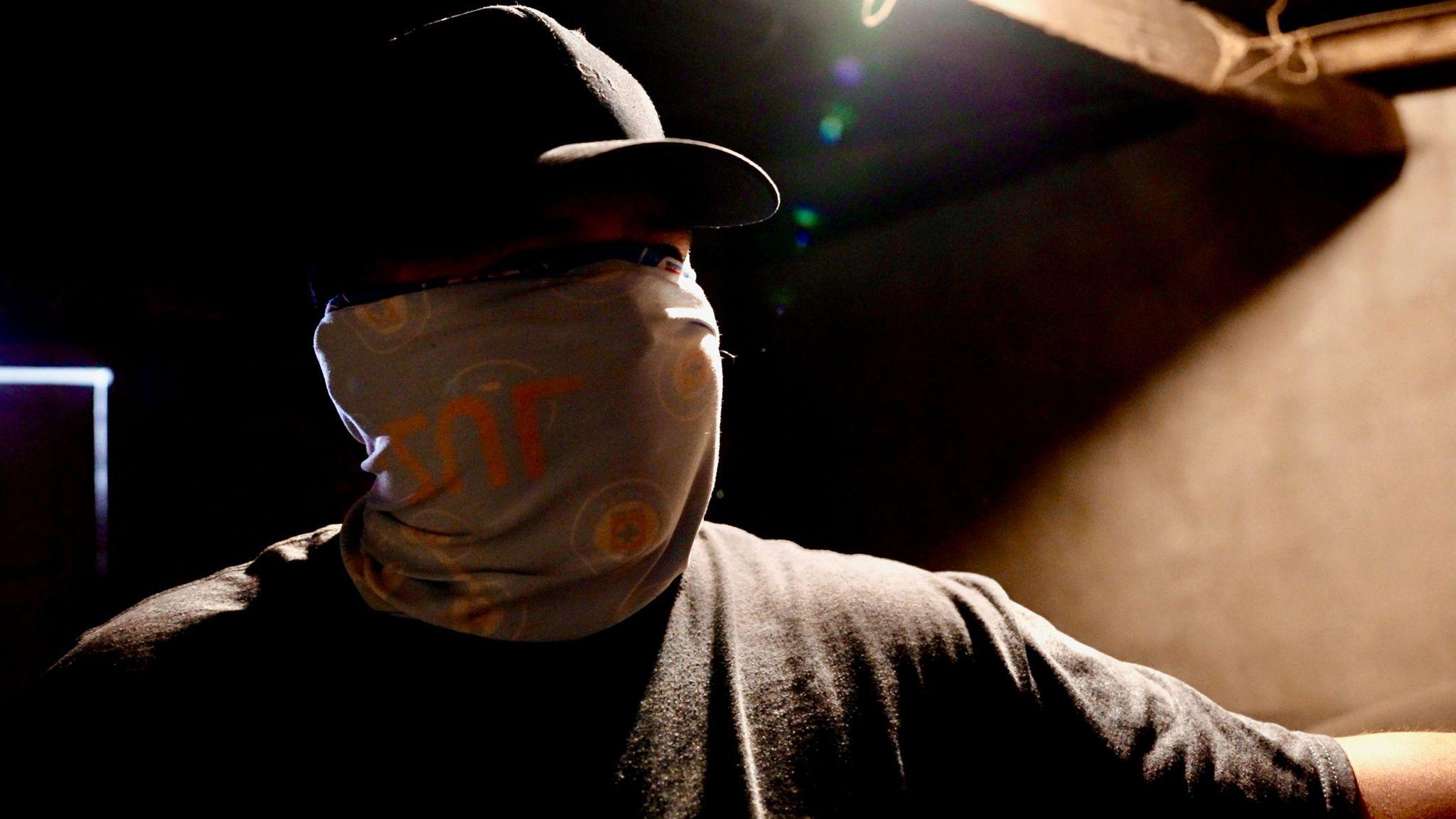
Jay (fictitious name) had crossed earlier from the US to get to this house controlled by the poster on the Mexican side of the border. The house looks like any other in this neighborhood.
They tell us that we enter quickly and an iron door closes firmly behind us. They do not cook the drug here, but they still are careful not to attract attention. All men speak quietly and work quickly.
Its lethal business became the center of a commercial dispute that caused a shake in the global economy after the White House used fentanyl smuggling through the US borders as a justification to increase tariffs to Mexico, Canada and China.
President Donald Trump also promised to “make war” to drug cartels.
The BBC obtained exclusive access to the operation of a poster along the border and traveled to the United States to meet with its end customers to see if the international controversy was serving to stop the illegal flow of narcotics.
The men we know in the house are shaped soldiers of a well -known poster. Two of them, who are carrying the car, admit having fleeting moments of remorse. But when I ask the man who is getting drugs in the fuel tank if he feels guilty about the deaths that cause the pills, he laughs dissimulated:
“We also have family. Of course we feel guilty. But if I stop, he will continue. It is not my problem, ”he tells me shrugging.
Men keep their faces covered while remove the back seat from the car to access the tank, careful not to spill gasoline. The smell inside the car could alert customs agents to the other side of the border that the fuel tank has been manipulated.
Light green pills, 5,000 in total and marked with a m, are compactly packed. They are just a fraction of what Jay says he sells every week in Los Angeles and throughout the northwest of the United States.
“I try to sell 100,000 pills a week, every week,” says the trafficker in a soft voice. “I don’t send them in a single vehicle. I try to distribute them in several. In this way it minimizes the risk of losing all my pills. ”
Fentanyl and tariffs
In response to what he described as an unacceptable flow of illegal drugs and illegal immigrants to the United States, President Donald Trump imposed a 25% tariff on all products from Mexico. Some of those tariffs were postponed until April 2.
Defeating Fentanyl Traffic is one of President Trump’s main objectives, but Jay does not believe he has many possibilities.
“The last time he was in office, he tried to do the same and failed. There will always be demand. And where is there more demand? In the United States, luckily for us, we are here, on the border, ”says Jay with a smile.
The drug enters the United States in such large quantities – the most part of Mexico – that, according to Jay, the price at which it sells it in Los Angeles has dropped from about US $ 5 or US $ 6 per pill a year ago to US $ 1.50 now.
The Mexican police states that the posters were largely passed to the fentanyl, which is 50 times more powerful than the heroin, because, unlike other opiates (which are obtained from the poppy), it is completely synthetic and much easier to manufacture and transport.
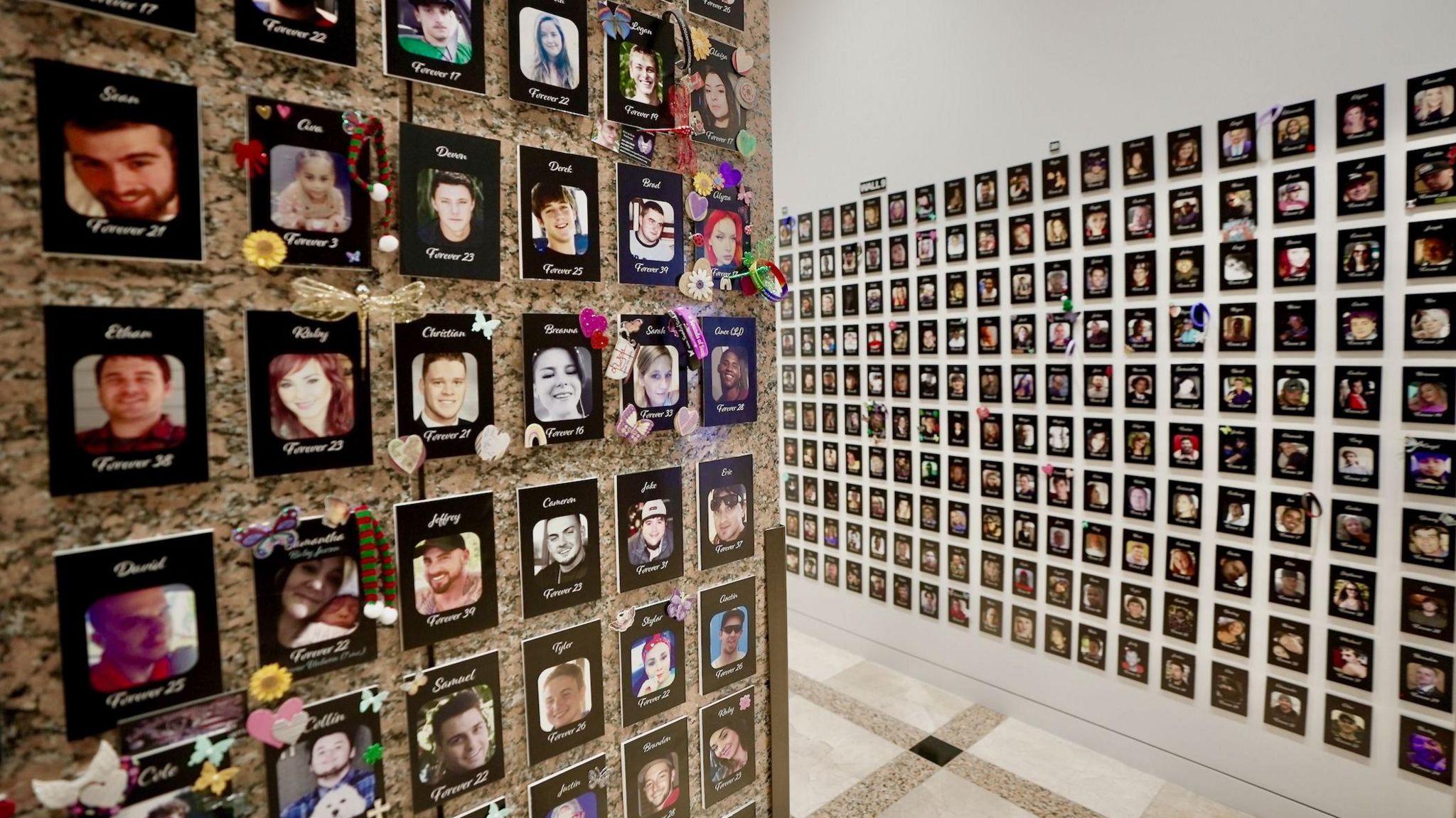
The powerful and addictive of fentanyl has left a deep scar in American society: drug overdose kill more people in the US than weapons or traffic accidents.
Deaths have begun to decrease, perhaps in part because it is now easier to get naloxone, a drug that reverts the effects of opioid overdose. But the last figures remain alarming: 87,000 deaths due to overdose (mostly by opioids) between October 2023 and September 2024, compared to 114,000 of the previous year.
In an attempt to avoid the punitive tariffs of the White House, Mexican president Claudia Sheinbaum promised to send 10,000 national guard members to the border.
His government has made more than 900 arrests since October in Sinaloa, an important drug trafficking center. In December, Mexico announced the greatest seizure of Fentanil in its history in that state: more than one ton of pills. In fact, the country has seized more fentanyl in the last five months than throughout the previous year.
Mexico has also hindered the importation of a key ingredient of the fentanyl that comes from China, which has led posters to reduce the power of each pill and, incidentally, make them less lethal.
And at the end of February, 29 high posters of drug cartels were delivered to the United States, including members of five of the six Mexican criminal organizations that the administration of President Trump recently designated as terrorist organizations.
President Sheinbaum also said that she had accessed the CIA to increase drone surveillance operations on Mexican territory to seek fentanyl laboratories, after the media revealed the undercover missions.
Supply and demand
Jay acknowledges the dangers of his trade for him and his clients, but does not worry.
“They always try to blame us, saying that it is we who poisons American citizens. But they are the greatest consumers. ”
It is isolated coldly with the responsibility and guilt of the deaths that cause their drugs. He claims not to know anyone who has died for consuming their product. “I only interact with other distributors,” he tells me.
The posters mainly use US citizens to transport their drugs across the border, since they are less likely to be arrested by the US Customs and Border Protection Office.
The driver, who calls himself Charlie, has an American passport. He is also quite indifferent to the suffering caused by the fentanyl epidemic.
“I need money,” he says. When I ask how many times the drug has passed, he replies: “Too many” (later I find out that the 5,000 fuel tank pills crossed the border without incident).
President Sheinbaum has recently emphasized the demand for fentanyl, stating that the crisis in the US began with the legal but “irresponsible” approval of analgesics such as Oxycontin in the late 1990s.
“The US government must assume responsibility for the opioid consumption crisis that has caused so many deaths,” he said in one of his daily press conferences.
Save lives from overdose
In the Kensington neighborhood of Philadelphia, known as the largest outdoor drug market on the east coast of the United States, Rosalind Pichardo, of Operation Save Our City, is immersed in its second Bible. It records in the last pages of the book the number of times that has reversed an opioid overdose using the fast action drug.
In the last six years, the figure amounts to 2,931. Leave the pages and that number written in red comes alive with the memories of the people who saved and those who died.
It begins to list: “Man of about 60 years … man of about 30 … woman of about 30, very thin, without hair” …
Along with each name of this list of fentanyl victims, it puts the dose number of naloxone (sold under the name Narkcan) that she used to try to revive people.
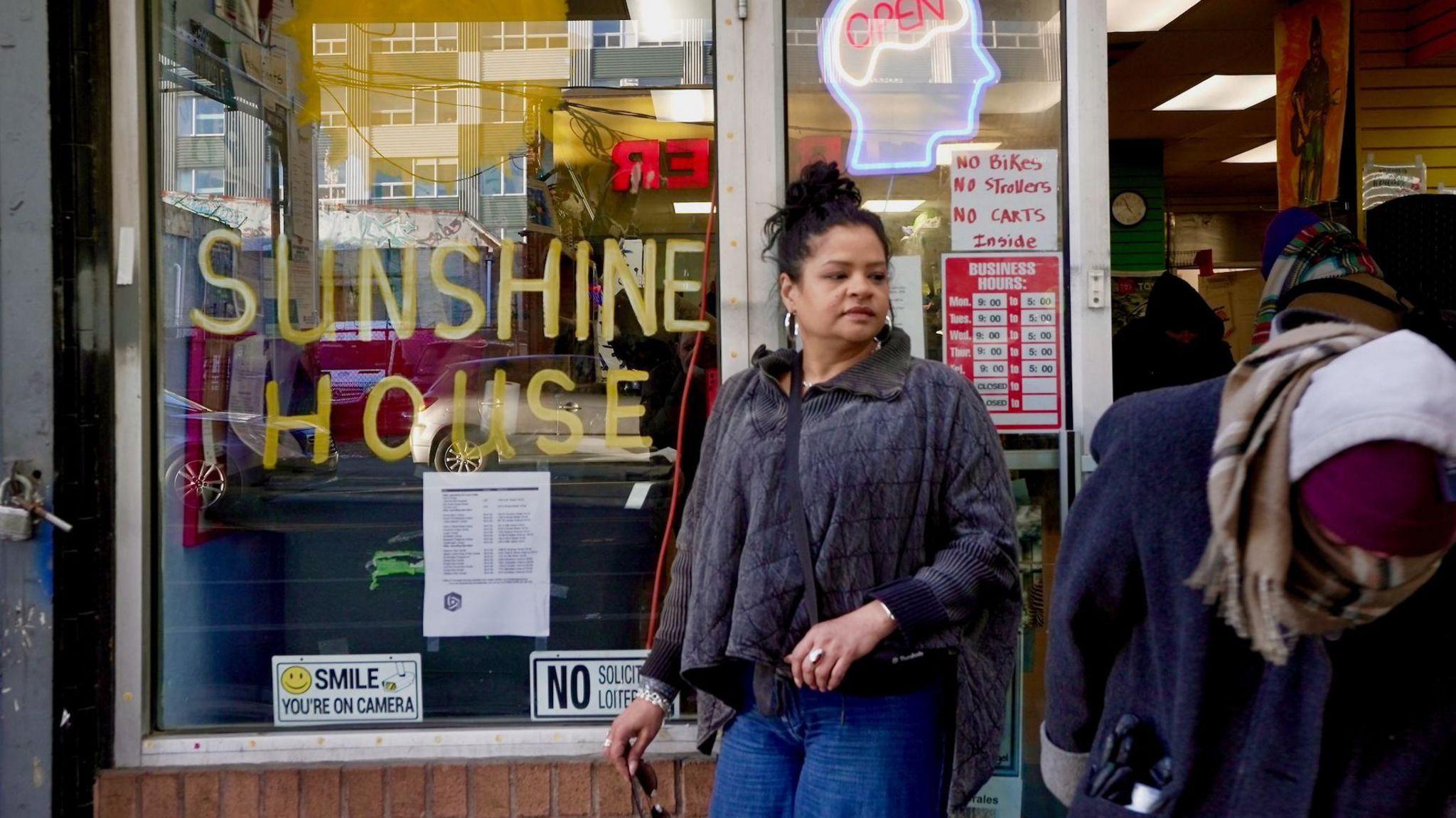
Pichardo, who directs a reception center called Sunshine House, operates what she calls an “area without judgments.” It is irritated with terms such as “addict”, “Yonqui” or “zombie”, which are used to describe the people in their neighborhood. Instead, everyone calls “sunbeam.”
Of some do not remember; others will never forget.
“Look at this: seven years old, two drugs,” he says. Pichardo remembers that he had to go to the house of a neighbor where a woman held in his arms a girl who had put on blue. Pichardo entered and the girl was put on the ground. Just then, the girl’s father climbed the stairs with a bag. “I think that if it were my daughter, I would run to help her,” he recalls.
At first, he thought it could be epilepsy, but saw drug balances and plastic bags at a nearby table. The girl’s father was a drug trafficker; The 7 -year -old girl had poisoned with her merchandise and suffered an overdose. “I was enraged,” he says.
Those two doses of drugs were enough to save the girl’s life.
On another page it is written “Six -month pregnant woman, two doses of Narcan.” She also survived.
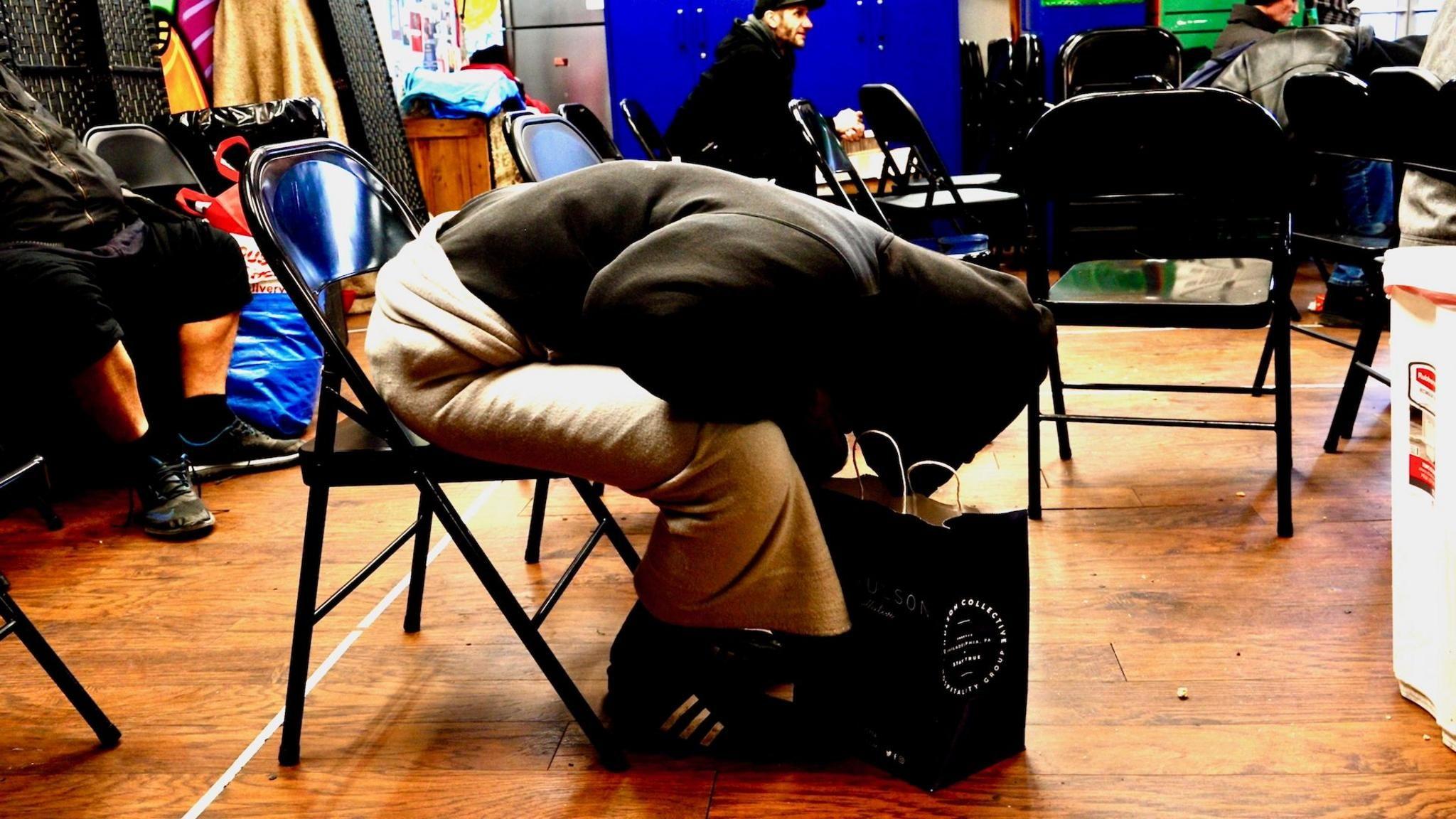
In Kensington, drugs are cheap and abundant, and people are injected in public. While walking through the neighborhood, Pichardo finds people.
The latter, as to a growing number of opioid consumers, amputated a limb.
A new drug in the street, the tranquilizer for xilacin animals, is mixing with fentanyl. It causes open wounds that are infected. The air smells badly in some places.
John White is 56 years old and for 40 of them has fought against addiction. In Sunshine House, Pichardo serves a homemade soup.
“I have lived in this city all my life,” says White. “The fentanyl and opioid epidemic is the worst I have seen. Fentanyl hooks you so much that you have to get more. So they put it in everything. ”
White suffered a fentanyl overdose after smoking a folk joint with that drug. It is being added to all kinds of illicit drugs, such as heroin, cocaine and marijuana.
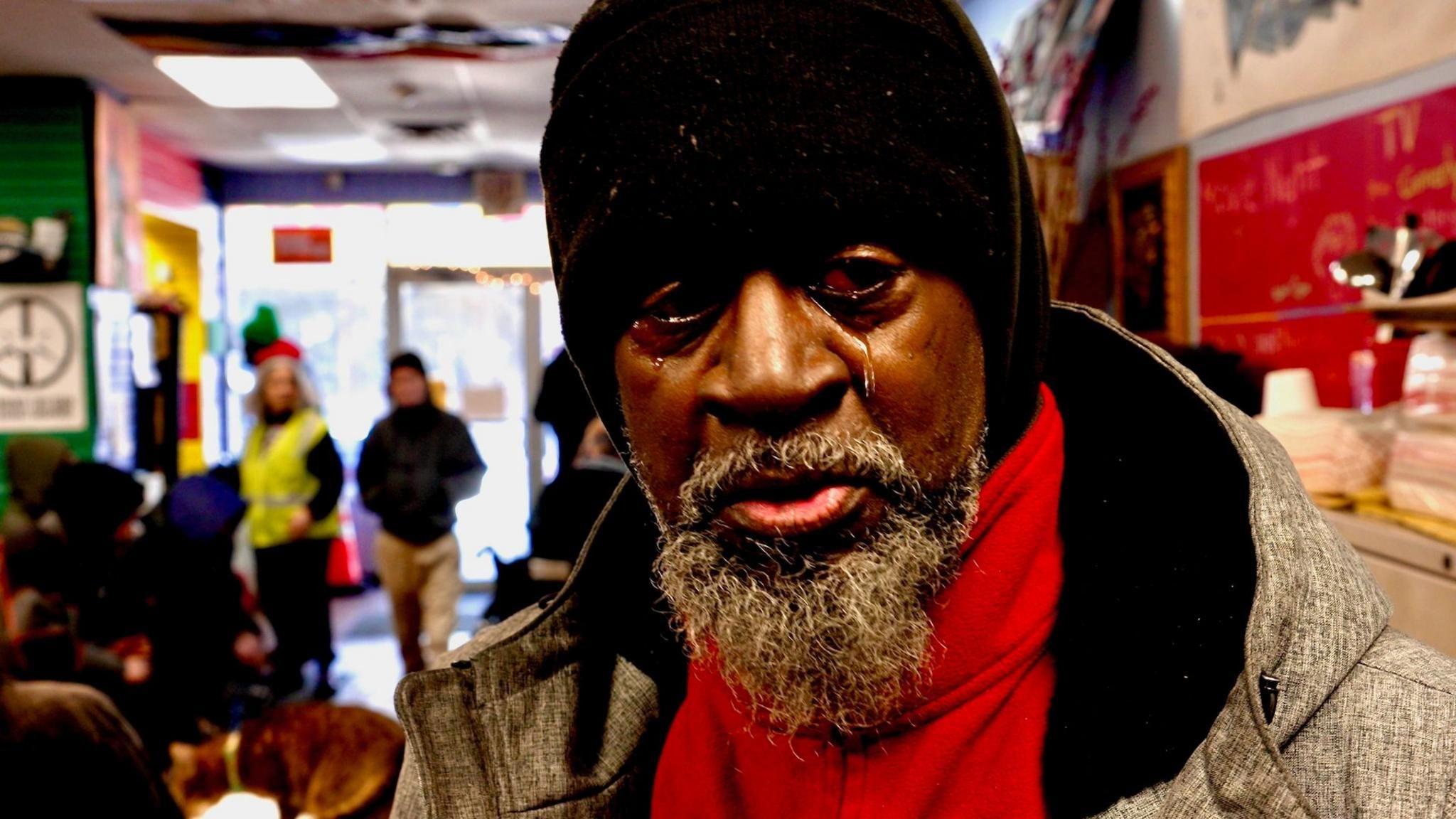
Pichardo has little hope that, although fentanyl traffic from Mexico is cut, improve the lives of people in Kensington.
“The problem we have with the war against drugs is that it did not work before [y] I don’t think it’s going to work now, ”he explains.
When the supply of a drug is cut, another replaces it, he says.
“Before there was heroine, not now. Now there is fentanil. When there is no fentanyl, there will be xilacin. So, it is as if they find a way to keep people addicted so that people can make money at the expense of people, at the expense of people’s suffering. ”
Just in front of Sunshine House, a young woman is lying on the sidewalk, with the body extended on the cement: she does not respond. Pichardo quickly arrives at the place, with his medical kit, and re -administered Naloxone. The woman finally revives.
Pichardo returns to Sunshine House, with another saved life and another number to add to the last pages of his worn Bible.

Click here To read more BBC News World Stories.
Subscribe here To our new newsletter to receive a selection of the best content of the week every Friday.
You can also follow us in YouTube, Instagram, Tiktok, X, Facebook and in our WhatsApp channel.
And remember that you can receive notifications in our app. Download the latest version and act.