

And Hawaii, a small independent state headed by a native queen.
But things were going to change forever.
In the 1890s Hawaii was the scenario of conspiracies, political tensions and military maneuvers, which finally led to the decision of President William McKinley to annex the architect to the United States.
It was a decisive step in the territorial expansion of the United States and, according to some authors, in the formation of the “USA. Imperialists ”.
But how was Hawaii then? Why were the United States interested in such a remote place? How did you get him?
This is the story of how the country that emerged as a great world power took over a remote island and how it made it a strategic enclave from which to project and defend its worldwide power.
What was Hawaii around 1890
At the beginning of the 1890s, Hawaii was an independent monarchy in which the native sovereign Liliʻuokalani reigned.
Located in the middle of the maritime routes towards the American and Asian markets, it was becoming an increasingly coveted piece in a world dominated by the race between the great European colonial powers, to which the United States was about to join.
The native Polynesian population had attended in recent decades upon the arrival of Europeans and Americans attracted by the high margins of the benefit of sugar cultivation in the Hawaii islands.
In those plantations, many Japanese migrants also worked, often undergoing exploitation and abuse, which, together with the strategic location and the growing commercial weight of the archipelago, fed Japan’s wishes to get Hawaii.
But the influence of the United States was also increasing, especially because of the role of American businessmen who copied the sugar business and also a large part of local power. “They had become very rich and now they wanted their political power to match the economic one,” Robert Merry, American historian and author of a biography of President McKinley, explains to BBC Mundo.
The Hawaii Americans plot
The queen’s plans to boost a new constitution that allowed the natives to vote and reinforce the power of the crown alarmed the white growers, who saw their privileges danger.
To this was added the decision of the United States government to establish tariffs to protect its sugar producers.
According to the American historian Tennant McWilliams, this “created a big problem for Hawaii sugar growers. They only had one way to survive: become part of the United States. ”
With that objective they launched a plot against the queen who had the support of the United States representative in Honolulu, John L. Stevens, and a group of more than a hundred Marines who arrived in Honolulu from a ship of the US Navy that was in the area.
“The queen was under tremendous pressure and renounced the throne,” Merry explains.
With the queen detained and guarded by armed men, the white growers established a provisional government that asked Washington to Hawaii’s annexation to the United States.
The then president, Benjamin Harrison, was a supporter of the idea, but, according to Merry, “sent a proposal for annexation treaty to Congress that found a lukewarm response, so he turned back.”
Hawaii’s question would be open for the man who succeeded him in the White House in 1893, Grover Cleveland.
Grover Cleveland’s rejection of Hawaii’s annexation
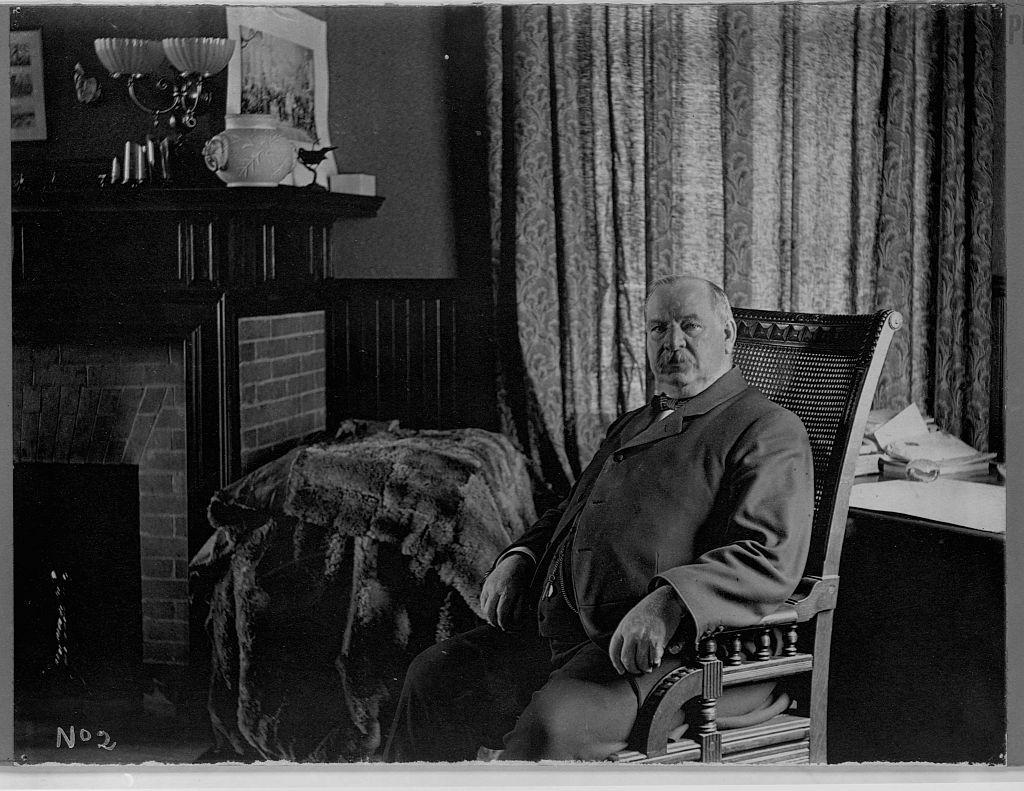
Cleveland’s coming to the power of the matter.
The new president commissioned an investigation into the events that led to the fall of Liliʻuokalani and his conclusions could not be more contrary to the wishes of sugar growers.
According to an article published by the Gilder Lehrman Institute of the United States History, “Cleveland refused to carry out Hawaii’s annexation because his belief in the justice and honor of the United States collided with the actions to sustain a provisional government that he perceived as an antidemocratic.”
In a message of 1893, the president proclaimed: “It has been the established policy of the United States to grant the peoples of other countries the same freedom and independence (…) that we have always claimed for us.”
According to McWilliams, after knowing the report, Cleveland “not only condemned the aggressiveness of the United States, and the conspiracy and secrecy of all that as illegal and immoral, but urged a very pragmatic and moral solution: return the queen to power.”
But the Americans who had destroyed her refused to obey Cleveland, who let things be. “Cleveland was not interested in a military intervention in Hawaii” against Americans, says Merry.
The contradiction between the positions of Presidents Harrison and Cleveland shows the different visions about the role that the United States should play in the world at a time when it was emerging as the great industrial and military power.
Cleveland was an isolationist who did not see any benefit to his country in the annexation of distant islands in Polynesia, but other Americans were still hugging the theory of the theory of manifest destination that, popularized in the mid -nineteenth century, made them believe that their country was called to expand and dominate the world.
Soon, Cleveland’s isolationist ideas would be defeated.
William McKinley and Hawaii’s annexation
In 1897 the other great protagonist of this story entered the scene. That year, William McKinley becomes president of the United States and takes up Hawaii’s issue, which had not been a dominant issue in the campaign of the elections in which he prevailed.
Described as an “ardent imperialist”, McKinley is a president who has spoken again in the United States for the claim made of his figure Donald Trump, who admires the territorial expansion that occurred during his presidency.
McKinley resumed some of the arguments that Harrison had wielded in favor of annexation, such as the risk of Hawai ending up falling into the hands of some foreign power, which saw as a potential threat to the security of the United States, a thesis that resembles those expressed by Trump about Groenland or the Panama Canal in our day.
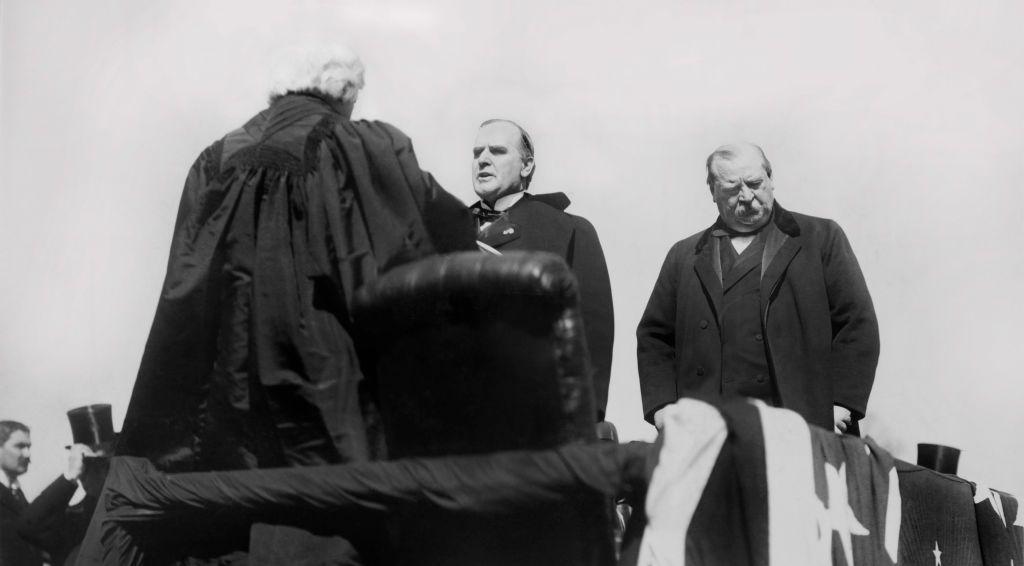
“McKinley was not a visionary who arrived with great territorial ambitions to the presidency, but a great manager who knew how to see opportunities and realized that Hawaii’s continuity as an independent entity in the Pacific was probably not viable,” explains Merry.
So in 1897 he carried out a first attempt that the United States Congress approved annexation. McKinley tried to persuade legislators that, if his country did not, it would be Japan who would take the initiative and take over Hawaii. But the annexation was rejected again.
The fate of the Hawaians would not end up deciding until the following year and due to the weight of a war fought on an island far from Hawaii: Cuba.
There the independence rebels had been raised against Spanish domain for years. The inability of Spain to contain insurrection caused irritation in the United States, which saw as a European power in decline destabilized what it considered its area of influence and harmed its interests.
Washington demanded from Madrid concessions to Cuban insurgents who first refused to do and then were insufficient to achieve peace.
Finally, the United States entered war with Spain, which preserved as the last vestiges of its Empire Cuba, Puerto Rico and the Philippines.
The war “pushed the United States to annex Hawaii because it highlighted its military importance against the moral aspect of annexation,” according to the Gilder Lehrman Institute.
Hawai had become a vital supply and scale and a platform from which an increasingly powerful US marine could attack Spanish objectives in the Philippines.
Finally, on August 12, 1898, McKinley signed the law approved on the eve by the Congress by which the Hawaii Islands became territory of the United States.
Hawaii’s strategic importance
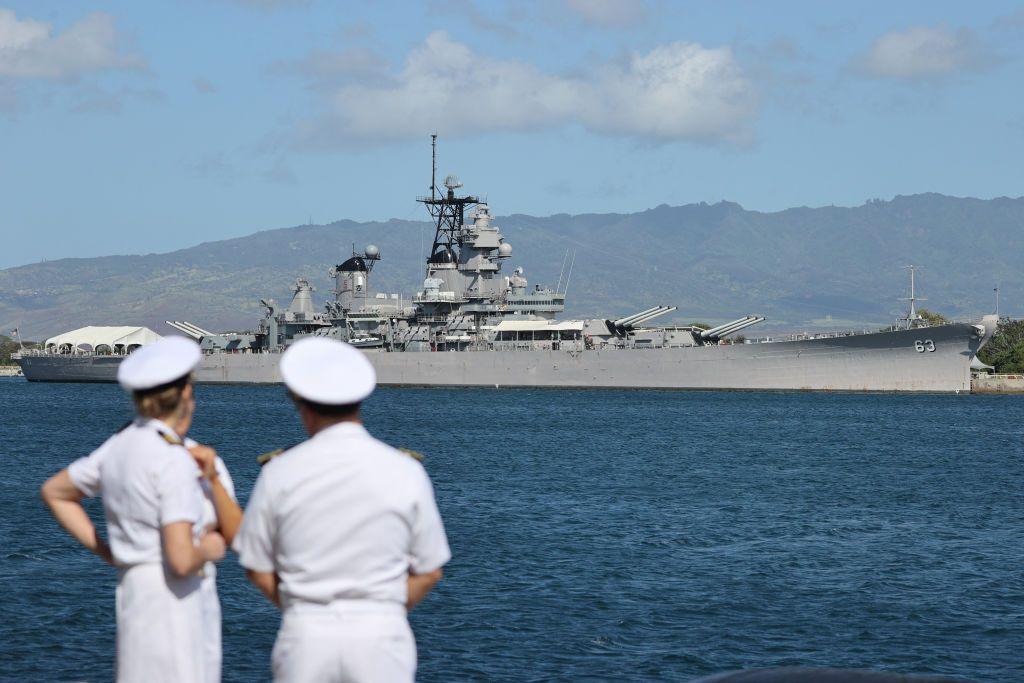
Since its annexation, Hawaii has been one of the great power platforms of the United States in the Asia-Pacific region.
According to Merry, “at the end of the 19th century you needed Hawaii if you wanted to have a dominant position in the Pacific.”
“It was the time of the great steel ships that consumed coal and the United States was endowing a large fleet that needed a supply point,” continues the historian.
The attack on the base of Pearl Harbor, with which Japan began hostilities against the United States in World War II, highlighted Hawaii’s importance.
“Japan attacked Hawaii, but if he had been in control of Hawaii he could have attack the west coast of the United States.”
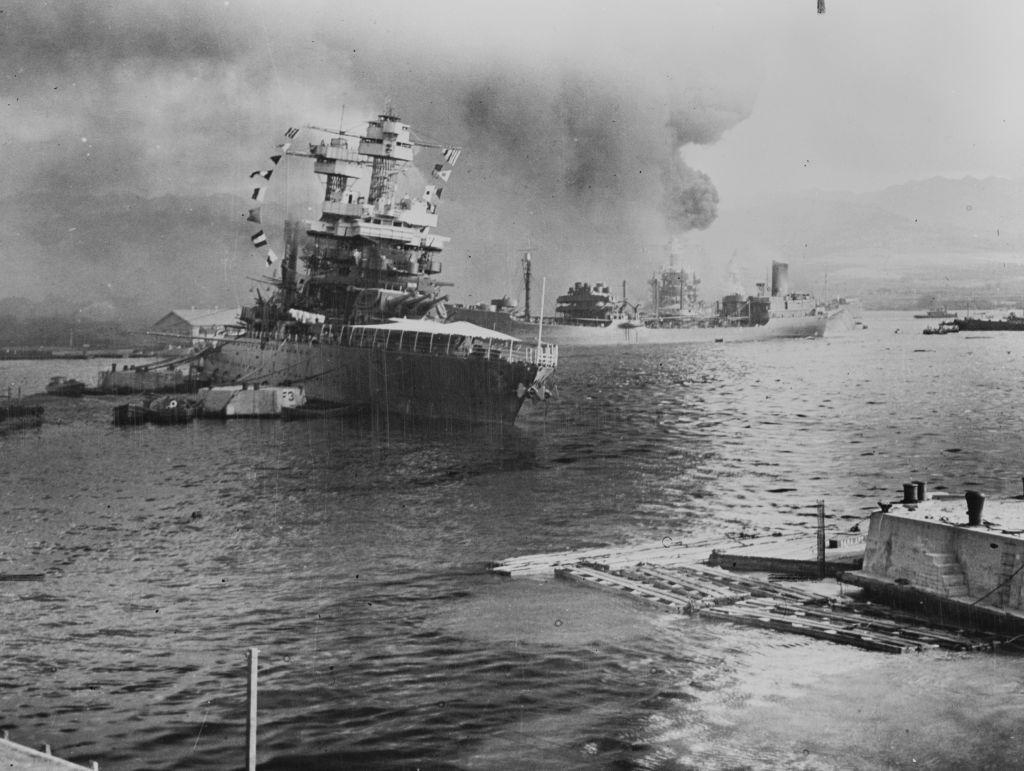
Decades later, Hawaii remains the base of the Pacific fleet, with two hundred ships and around 1,500 airplanes, the largest in the United States Navy.
Now that China is the great rival, “Hawaii is still the basis for the weapons and resources with which the United States continues to act as a power in Asia and the Pacific,” concludes Merry.
How the annexation to the United States was seen from Hawaii
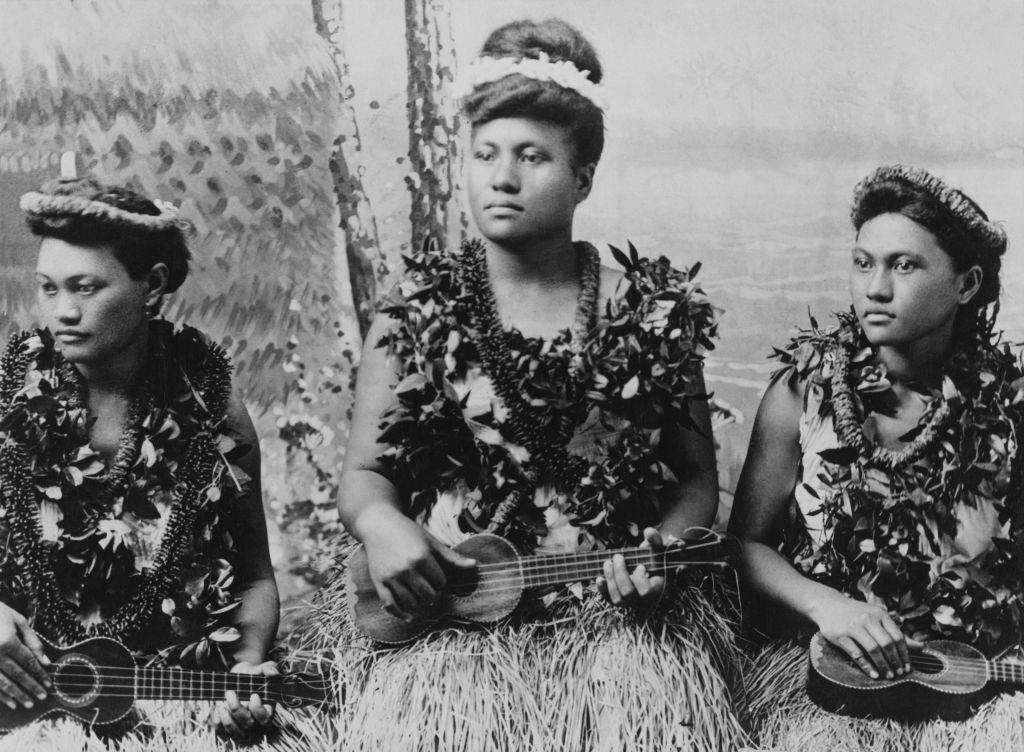
The fall of the Hawaiian monarchy and the establishment of American sovereignty over the archipelago remains a thorny historical episode that, although it contributed to the aggrandizement of an existing nation, the United States, led to the disappearance of another, the independent Hawaii.
The actions of the white sugar owners who demolished Queen Liliʻuokalani were convicted not only by President Cleveland, but by many in Hawaii and the United States.
And McKinley’s decision to annex Hawaii ignored among other voices those of thousands of natives who signed a request so that it would not be carried out.
Almost one hundred years later, in 1993, the United States Congress approved a resolution of “apologize to the Native Hawaiians for the overthrow of the kingdom of Hawaii.”
The resolution described as “illegal” the conspiracy that led to the overthrow of Liliʻuokalani and acknowledged that before being incorporated into the United States, “the Native Hawaiian people lived in a highly organized and self -sufficient social system based on the communal tenure of the Earth.”
The conviction that the events that led to Hawaii’s annexation were an unfair grievance to the natives caused the emergence of a movement for Hawaii’s sovereignty still active in the archipelago.

Click here To read more BBC News World Stories.
Subscribe here To our new newsletter to receive every Friday a selection of our best content of the week.
You can also follow us in YouTube, Instagram, Tiktok, X, Facebook And in our new WhatsApp channelwhere you will find last minute news and our best content.
And remember that you can receive notifications in our app. Download the latest version and act.