

With its vibrant colors, unique forms and unmistakable aromas, flowers become essential protagonists of the Holy Week in Guatemala. Either in the elaboration of carpets or in the ornamentation of the ostlation altars typical of Lentthese natural expressions embellish and dignify this liturgical time, becoming a symbol of devotion and tradition.
In the country of eternal spring species flourish that evoke the spirituality of this time of reflection and recollection, such as the Jacaranda flower, the lilies and the flower of Matilisguate, which announce the arrival of Lent and embellish the landscapes where they travel the processional walks.
The roses, lilies and carnations are part of the characteristic decorations of this era, being flowers with colorful petals, such as the purple limonium sinuatum, those preferred by the public for their attachment to the liturgical color of the season.
Although many of these flowers are not originally from the region, their roots in the country has made them the favorites of the season, and each one has attributed a special meaning. In this note we present what are the flowers that decorate Lent and Holy Week in Guatemala.
Jacaranda flower
With its characteristic bluish lilac tone and its trumpet shape, Jacaranda’s flower Not only beautifies the streets and heaven during Lent, but also announces the arrival of spring and harmonizes with the liturgical color of this era.
The fall of these flowers in the Lent time adorns the spaces where the processional steps pass, since its most emblematic flowering occurs between March and April, when their glasses look more leafy and colorful.
In some cultures, this flower is used to decorate the carpets, while in others the natural stamp that the flowers leave when falling, forming a spontaneous carpet on the streets is valued.
Its flower has the purpose of helping with the pollination of other species. In addition, it has healing effects when consumed in infusions. (Free Press Photography: Juan Diego González)
Carnation
With its degraded color and its unique beauty, the carnation is one of the most used flowers during this time, since it symbolizes love, purity and evokes the sacrifice of Jesus in Calvary.
Also known as water flower, the Dianthus Caryophyllusaccording to his scientific name, dates back to the time of the Roman Empire and was chosen to commemorate the passion, death and resurrection of Jesus of Nazareth.
For others, the carnation originated from the tears that fell to the earth from the eyes of Mary, so many believers associate this flower with the love of a mother.

The carnation is one of the flowers most used by the faithful in Holy Week. (Photo: Free Press: Shuttersock)
Blanco Palo Flower
With its vibrant yellow color, this flower usually offers a visual show when falling, forming a natural carpet with its petals. Under his scientific name, Tabebuia Donnell-Smithiipresents different shades of yellow as its life cycle progresses. It is a species valued by its ephemeral beauty, which beautifies streets and landscapes during the fortune season.
Matilisguate
Known for its pink shades during flowering, the Matilisguate symbolizes the renewal and hope of Lent’s time. This flower is also used in the decoration of veels and carpets during Holy Week in Guatemala and other countries in Central America.
The Matilisguate flowers are also used in rituals, such as those carried out in Totonicapán, where mysticism and devotion are intertwined, representing the faith of the communities.

Because of its color, Matilisguate is ideal for the elaboration of carpets and altars of Lent. (Photo: Free Press: Shuttersock)
Lily
Associated with the passion and resurrection of Jesus Christ, the lily is a representative flower of Lent and Holy Week, widely used by its white and purple colors, which evoke Jesus’ journey towards the cross.
Also known as Lily of Easter, it is a flower used by believers during resurrection Sunday to decorate religious scenarios and provide a singular perfume.
In its various shades, the white lily represents purity and innocence; yellow, happiness and gratitude; while red lily symbolizes love

The lily are the favorite flower of the devotees of the Virgin Mary, representing her pain for the passion and resurrection of Jesus Christ. (Photo: Free Press: Shuttersock)
ROSAS
Symbolizing the purity of the Virgin in its white color and, in red, the spill of the blood of Jesus on the cross, the rose is one of the favorite flowers for the decoration of carpets and altars during Lent and Holy Week.
Its chromatic variations also represent emotions linked to pain and hope: pink tones evoke the suffering of the Virgin Mary, while the yellow and orange petals symbolize the joy of the resurrection of the Messiah ..

Because of their color versatility, roses are the queens of flowers during Holy Week derived from their symbolism. (Photo: Free Press: Shuttersock)
Corozo flower
One of the most emblematic of Holy Week in Guatemala, the Corozo flower is distinguished by its unmistakable aroma, which is part of the processional environment and has become a symbol of the Lenten Time.
Historical investigations suggest that the Corozo was already used before the Spanish conquest. According to biology experts, the Maya used it in ceremonies and rituals, considering it a sacred offering for their divinities. It was also part of the decoration of carpets prepared to receive leaders and kings, along with other elements such as cocoa and the Pataxte.
Today, the Corozo continues to be a representative symbol of Lent and Holy Week. Its essence permeates carpets, orchards and altars, embellishing the sacred art of this era. In combination with pine and sawdust, it enhances its fragrance, creating a unique sensation of spirituality and consecration.
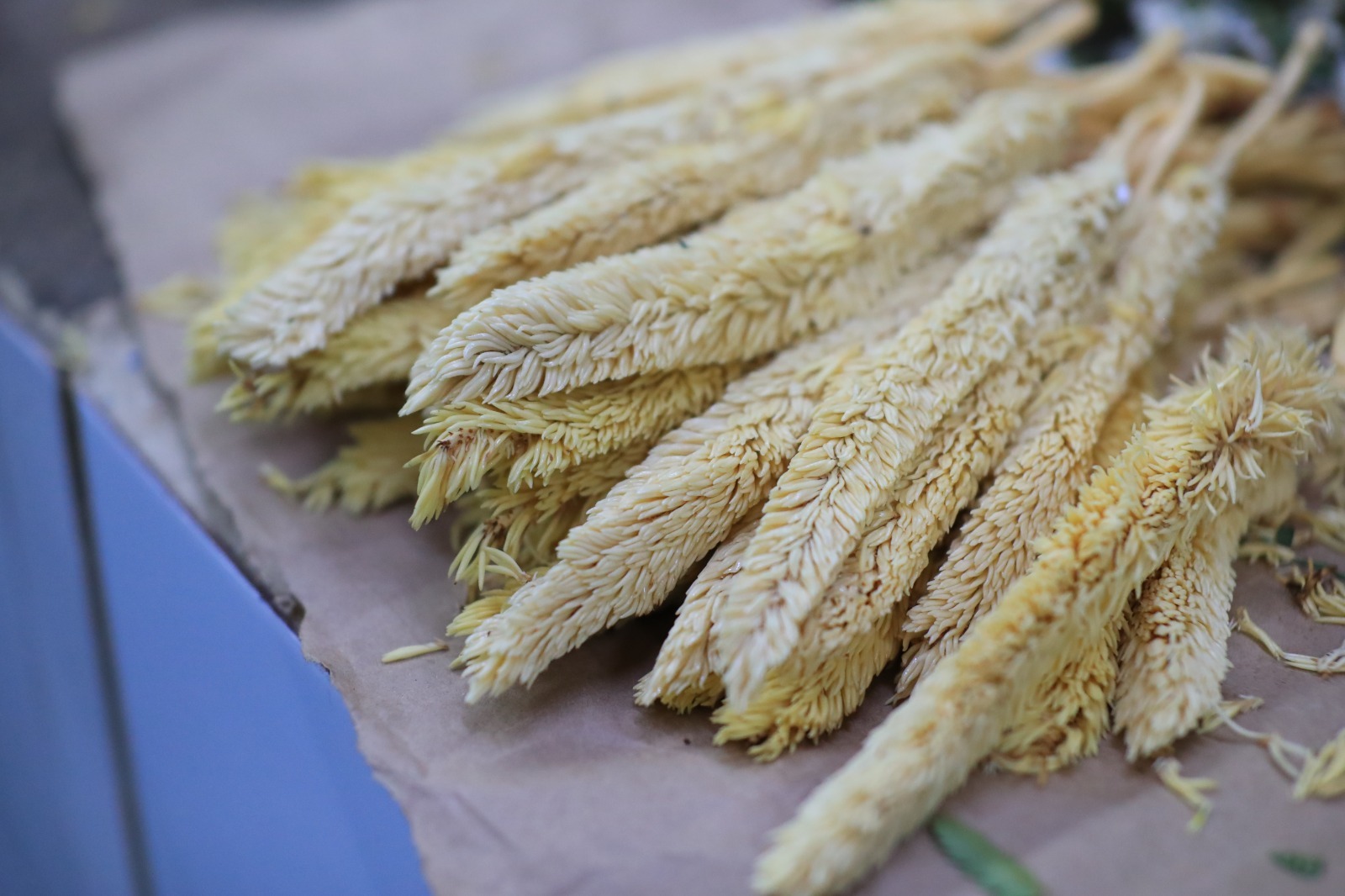
The Corozo is used to decorate religious altars, carpets and even to make the branches of Palm Sunday. (PHOTO FREE PRESS: PL hemeroteca).