
According to the testimonies, those involved claimed to belong to a Mexican NGO and claimed to act on behalf of the mayor Eduardo Mendez.
Under that argument, They offered bags of food to women in vulnerable conditions, mainly single mothers or mothers with several children.
Weeks later, those affected discovered that they had a productive credit of Q2 thousand in their name in the Genesis Corporationwhich they never requested.
IPR and photographs: the mechanism of deception
The women told a local media that, as a requirement to receive the provisions, the supposed benefactors requested the Personal Identification Document (DPI) and took photographs of their faces.
When they asked if they should sign any document, they were told no, since the process was “digital” and necessary to register the aid.
“They said it was only to upload it to the system and authorize the exchange,” said one of the victims.
In addition, they were asked not to take photographs or record videos during deliveries, which made it difficult to document the event at the time.
The visits were carried out between January and March 2026 on different dates, which prevented the pattern from being detected immediately.
The fraud came to light due to non-existent credits
The case was discovered when one of the women tried to apply for a loan and was rejected due to an active debt that she was unaware of.
“At the bank they told him that he had already authorized a loan. That’s when we started investigating,” said another affected person.
From that moment on, several women verified their situation and confirmed that they were listed with active credits of Q2 thousandwhose funds would have been used in purchases at hardware stores, spare parts and workshops in different parts of the country.
Red would have manipulated digital credits
When consulted by Free pressrepresentatives of the Génesis Empresarial Foundation confirmed that at least 70 people have been affected for a possible scam scheme through the improper use of a digital line of credit in communities in Petén, mainly in the Caoba village.
According to officials of the entity, the case is already being investigated by the Public Ministry (MP), while a legal team from the foundation is in the area to coordinate actions.
As they explained, the problem It was not caused by a system breach technological, but by a scheme of social engineeringthat is, deceptions aimed at users to manipulate them and obtain access to their personal data.
“These people have taken advantage of good faith, necessity and little knowledge in rural areas. They manipulate users into handing over their IPR and participating in a digital process that they do not understand,” indicated representatives of the foundation.
Genesis Foundation suspends collections
In turn, the Business Genesis Foundation confirmed that it also appears as an affected party, since it productive credits by Q2 thousand were awarded to 70 women and, in many cases, they had already been used.
“We are an affected party and we are not going to harm anyone who has been a victim of proven deception,” they indicated.
The entity indicated that it was also affected and that it activated its legal team, which is already coordinating actions with the Public Ministry.
Among the measures adopted by the Génesis Foundation, the following stand out:
- Suspension of payments to affected people
- Those who prove to have been victims will not be harmed
- Active collaboration with authorities
In addition, they announced programs of digital financial educationsocial support and medical days in the impacted communities.
The authorities of the financial institution commented to this medium that the investigation has also been extended and similar cases are not ruled out in Puerto Barrios.
MP investigates identity theft network
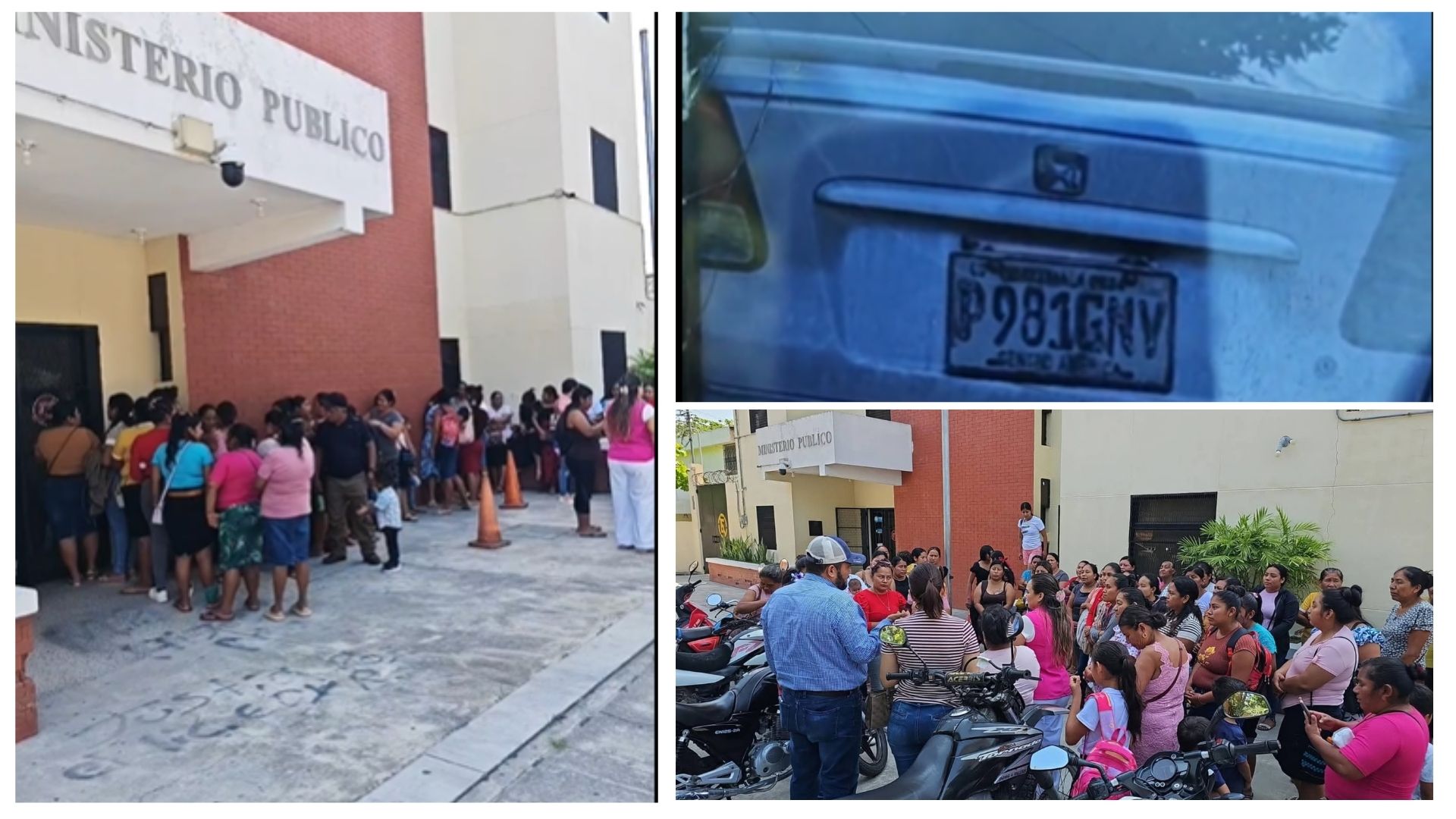
On April 9, Mayor Eduardo Méndez accompanied about 50 women to file complaints with the Public Ministry (MP).
According to what the mayor published on social networks, the suspects operated in groups, avoided being photographed and claimed to act on his behalf. However, evidence such as photographs, videos and vehicle data was collected.
The MP reported that, between January and February 2026, at least 50 people were deceived through this mechanism: they offered groceries, collected DPI and photographs, and then used that information to manage digital credits without authorization.
The complaints arose when the victims began to receive charges. In coordination with the DEIC, work is being done to identify those responsible.
Cases are also reported in communities such as El Capulinar, San Andrés, Petén, and it is expected to receive new complaints from at least 30 people.
A pattern that targets the vulnerable population
Research shows a scheme aimed at specific profiles:
- People in conditions of poverty
- With limited access to technology or digital education
This reinforces the hypothesis of an organized network of identity theft that exploited vulnerable conditions.
A scam that exposes risks in rural communities
The case highlights the risks of improper use of personal data and the need to strengthen the financial education in vulnerable communities.
While the investigations continue, dozens of women in Petén face debts that they never acquired, after trusting in supposed help that ended up being a scam.