
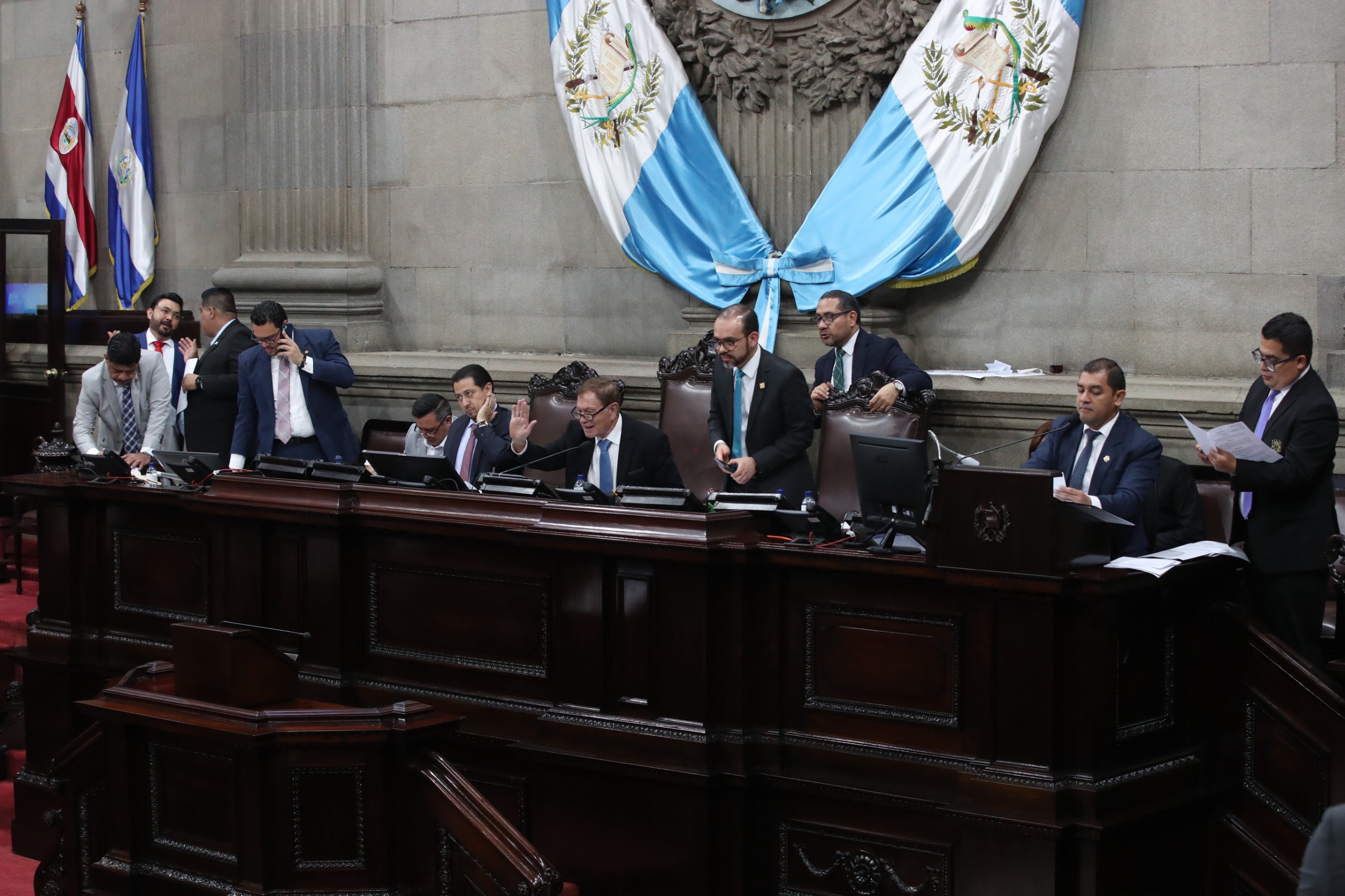
The Banking Association of Guatemala (ABG) remains waiting for the progress in the Congress of the Republic of initiative 6593, called “Comprehensive Law against Money Laundering or Other Assets and the Financing of Terrorism”given the proximity of the legislative recess.
Depending on the sector, the spaces for political discussion are beginning to shrink, since there are at least five plenary sessions remaining before the start of the parliamentary recess.
Banks hope to approve anti-laundering law before May
In consultation with Free press Regarding the discussions before the parliamentary recess, the Banking Association of Guatemala (ABG) indicated that it recognizes and values the technical work developed by the Economic and Foreign Trade Commission of Congress, as well as the political commitment shown by the Board of Directors, headed by Congressman Luis Contreras.
The sector pointed out that, without the technical coordination of the commission and the political articulation achieved by the Board of Directors with the legislative blocks, there would have been no progress in the formation process of the Comprehensive Law for the Prevention and Repression of Money Laundering or Other Assets and the Financing of Terrorism.
“The ABG understands that a technical and specialized law, which implies a structural reform in the prevention and repression of money laundering, requires analysis and discussion,” they indicated.
The association stated that it has observed seriousness in the process, Therefore, he is confident that final approval will be finalized before the end of April.
Furthermore, he warned that the majority of deputies are aware that the countdown for the Mutual Evaluation has already begun, so there is no room to delay the approval of the regulations.
Delaying anti-money laundering law would put investment grade at risk
The Banking Association of Guatemala (ABG) also provided its perspective on the discussion in the plenary session of Congress in the coming days, which it described as crucial and determining.
“Since Bill 6593 entered Congress in July of last year, the working committees and deputies have been clear that postponing its approval beyond April puts the country at risk, prevents it from reaching investment grade and affects all economic sectors, especially users of the financial system, such as recipients of family remittances,” the union warned.
The ABG pointed out that, once the initiative was approved and entered into force, will begin an intensive process for the preparation and publication of the regulationsas well as the formulation of operational manuals and training programs aimed at the 32 groups of obligated persons.
With this, the country could demonstrate technical compliance before the evaluators of the Latin American Financial Action Group (Gafilat).
The ABG understands that a technical and specialized law, which implies a structural reform in the prevention and repression of money laundering, requires analysis and discussion.
However, the association warned that This technical compliance will not be sufficient for the final evaluation if the effectiveness of the new legal and regulatory framework is not demonstrated..
In that sense, he stated that it will be necessary to respond, with verifiable evidence, to several questions: how many suspicious transactions have been reported to the Special Verification Intendance (IVE) and transferred to the Public Ministry; how many cases are under investigation or have been concluded; how many money laundering structures have been dismantled and how many people have been captured.
Likewise, it will be key to demonstrate the effectiveness of financial intelligence, the number and type of cases in the sentencing process, as well as the performance of the Judicial Branch and the courts in these processes.
Anti-money laundering law expected to come into force in August
Regarding the processes planned for the second half of 2026, once the regulations come into force, the banking and financial sector is already analyzing this scenario.
“Observing the orderly process that is being carried out in Congress and the technical work carried out by the Superintendence of Banks and the Special Verification Intendancy, the association is confident that the law will be approved in April, will come into force in August and all actors will fulfill their responsibilities,” indicated the ABG.
The association emphasized that the approval of The law does not represent the end of the process to transform the prevention and repression of money laundering in Guatemala, but rather the beginning of a new stage.
“The most intense work will begin in September”stressed the ABG.