
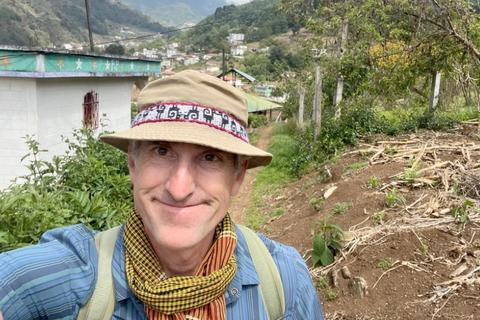
Former US immigration judge Jeremiah Johnsonwho worked for almost a decade in San Francisco, undertook an unusual trip to Guatemala to reunite with the indigenous Mayan family to whom he granted asylum in his last case, a decision that marked the end of his judicial career after being dismissed.
Who is Jeremiah Johnson and why was he fired?
As revealed UnivisionJohnson, 52, was part of the United States immigration court system, where he resolved hundreds of asylum cases. His name gained relevance for granting protection in about 89% of casesa figure that, according to him, responded to the profile of the files he received and not to an ideological position.
However, his departure occurred in the context of a stricter immigration policy promoted by the administration of donald trumpwhich since 2025 promoted the dismissal of judges, the tightening of asylum criteria and a restructuring of the immigration judicial system.
In total, more than 100 judges were removedaccording to data from sector associations, in the midst of a national debate on the management of migration.
The last case: a Mayan family and violence in Guatemala
Before being fired, Johnson solved a case that would mark him deeply: that of a Guatemalan family of origin. maya momwho fled after suffering violence in his community.
According to the file:
- The conflict arose over access to water in a rural community
- A family member was killed after an attack
- The family denounced lack of protection from authorities
After hearing the testimony—translated into the Mam language—Johnson granted asylum.
“They have been granted asylum in the United States. That decision is final,” were his last words as a judge.
The journey: traveling the migrant route in reverse
Five months after his dismissal, Johnson decided to embark on an unusual journey: follow the migrant routebut in the opposite direction.
He crossed the Arizona border, spoke with different actors in the immigration system and finally arrived in the mountains of Guatemala, without an exact address, only with a name written down.
In a community close to All Saintsmanaged to locate the parents of the migrant he helped.
The meeting: flowers, memory and a grave
Upon finding them, the former judge identified himself and gave them a bunch of flowers as a symbolic gesture. Then he asked about the son murdered years before.
The reaction was immediate:
- The mother burst into tears
- The father put his hand on his chest
- They both took him to the cemetery
There, in front of the grave, the link between a judicial decision in the United States and the real consequences in a rural Guatemalan community materialized.
An immigration system under pressure
Johnson’s story occurs amid a structural crisis in the US immigration system, which has accumulated nearly 3.8 million pending casesof which more than 2.4 million are asylum applications.
While the administration defends measures to speed up deportations and reduce approvals, critics warn that firing judges worsens the judicial backlog. The creation of an immigration system independent of the executive branch is even being discussed in Congress.
Today, Johnson no longer passes sentences. Travel through territories, document stories and closely observe the migration phenomenon. His trip to Guatemala was not only personal, but it exposes the human dimension behind legal decisions that affect millions of people. With information from N+ Univision.
*Stay up to date with the Now newsletter. Key information at the moment it happens. Subscribe here.