
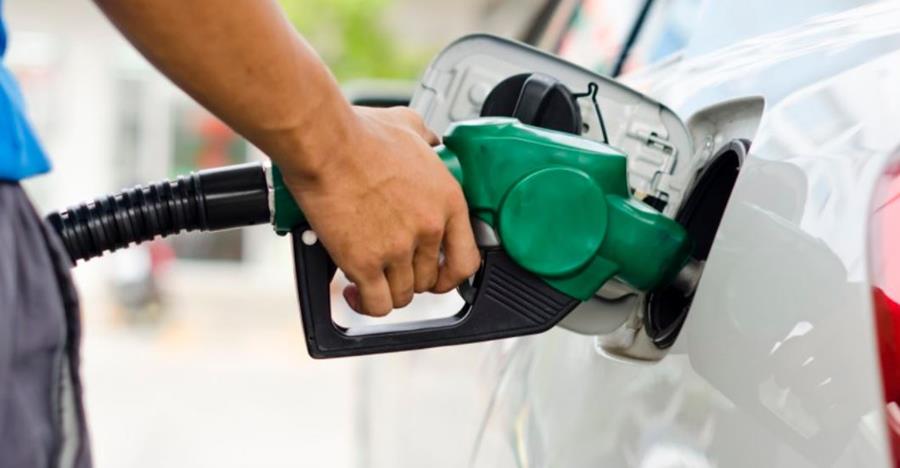
At least Q5 billion have been redirected in public finances to provide subsidies to gasoline consumers, diesel and propane in the last five years, due to the increase in the international price of a barrel of oil, which has affected the refined products consumed in Guatemala on a global scale.
In different cyclical circumstances, but with the common denominator that the price of crude oil becomes more expensive and exceeds US$100, in 2022 the Congress of the Republic authorized temporary support, which initially consisted of a financial program of Q2,523 million, but ended in about Q3,300 million to subsidize consumers. On that occasion, the support was Q7 per gallon of diesel, Q5 for super and regular gasoline and Q0.80 per pound of liquefied petroleum gas.
In 2026, The Legislature endorsed a subsidy of Q8 per gallon of diesel and Q5 for gasoline, for an amount of Q2 billion, to cover a period of 90 days for consumers, which will begin to apply on January 1 and end on July 31.
Representatives of economic research centers consulted agree that state support represents a fiscal cost, but that sometimes it does not have a technical or effectiveness design to reach the people who really need the benefits, in practice.
CONTENT FOR SUBSCRIBERS
These are the only cases in which it is known that there is a subsidy program for diesel and gasoline consumers. It is different from the subsidy to the electricity rate or social rate, as the consumption of the supply is known.
Subsidies do not always benefit those who need them most
Ricardo Barrientos, executive director of the Central American Institute of Fiscal Studies (Icefi), and Hugo Maul, of the National Economic Research Center (Cien), agreed that the history of subsidies, particularly programs aimed at fuel, must be analyzed from different perspectives, in which they must be temporary, have technical foundations to measure its effectiveness and not respond to political-electoral interests.
They exemplified that a subsidy does not necessarily reach the people who really need it and that others, who can cover the cost, benefit when support is widespread.
Subsidies require better technical design
Barrientos considers that the subsidies granted in 2022 and the one that will now come into force must be evaluated in its real effectiveness. He explained that, if the technical design of the subsidy is weak or incorrect, people who do not really need it end up receiving it.
He recalled that there are consumers who drive high-end vehicles, but who will benefit from receiving state support, “and clearly it is a person who does not need it.”
“There the subsidy loses effectiveness, because it is received by people who do not need it,” he exemplified.
In the case of diesel, which is mostly consumed in cargo, commercial and people transportation vehicles, it must be ensured that these sectors receive it, so this is the type of debate that should arise regarding effectiveness, based on the design of the program.
The researcher reiterated that the subsidies must be temporary, calculated based on a single registry of beneficiaries and delivered directly to homes.
There are consumers who drive high-end vehicles, but who will benefit from receiving state support, “and clearly it is a person who does not need it.”
“Both subsidies were not designed like this, because in Guatemala there is no registry of beneficiaries or households that fit the socioeconomic profile that the beneficiaries of the subsidy should be. For practicality and operational viability, what is done is to provide a subsidy for all diesel and gasoline, knowing that there will be failures; you bet on the idea of cast net”, he noted.
He stated that the technical design can generate ineffectiveness when it opens the door to abuse and corruption, and recommended that it be delivered through the online electronic invoice (FEL), since the information is detailed in the invoice and it would be very easy to apply it.
Subsidies distort fuel consumption
Maul reiterates that, in the end, money or benefits end up being distributed to people who do not need it, and that it is crucial to understand that the effect of the price increase will not disappear, but someone else will have to pay for it. Therefore, what is observed in the increase in the price of oil should lead to savings or greater efficiency in consumption by vehicle owners.
CONTENT FOR SUBSCRIBERS
There is also the measure that, if the price of fuel is high – as it is now –, its consumption must be rationalized; But if it is kept artificially low or cheap—when the next program comes into effect—the incentive is to continue spending the same as before and The signal is not transmitted that it is a resource that has become more expensive.
Instead of promoting savings due to the rise in crude oil, the subsidy masks the adjustment that must be made and, generally, the generalized subsidy benefits those who consume the most.
He exemplified that a motorcycle delivery driver can consume one or two gallons per day, but someone who has a highly motorized vehicle can consume up to 20 gallons per day, so they take more advantage of the support than the motorcycle user.
“How to do this individually is quite complicated. The best way is to give each person a voucher redeemable for gasoline or a transfer so they can decide what to do, but these mechanisms take time,” he added.
They warn about possible extension of subsidies
The analysts cited another fundamental aspect: how these subsidies are managed to be dismantled, because now they were projected for three months; However, if oil prices remain high and coincide with the entry into an election year, the incentives in Congress are not aligned to withdraw the subsidy from voters.
“There is great concern there, because there are many countries that have problems due to these types of decisions, which turn out to be for a couple of months when in reality they extend to two years,” Maul cited.