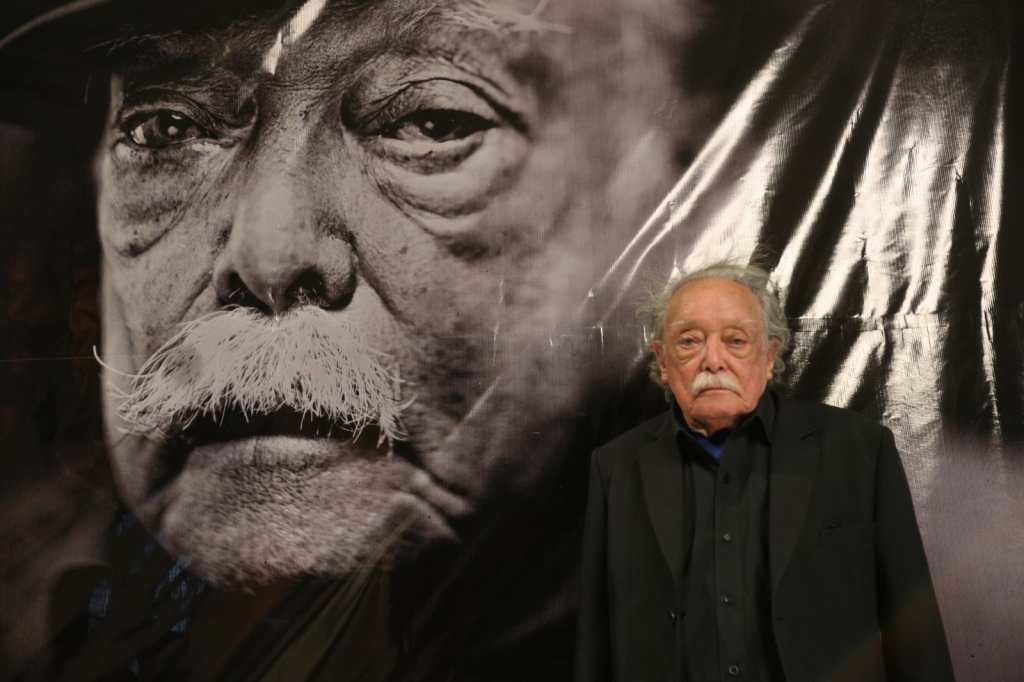
“A long time ago, in the distant year of 1971, I was beginning to realize that, apart from being an academically formed composer who achieved a great technique, I began to understand that he was not a common composer,” he began Joaquín Orellana His speech.
The Acoustic room National Conservatory of Music Germán Alcántara He witnessed the delivery of a work of more than five yearsin which many involved joined efforts so that Orellana’s legacy was embodied.
In 167 pages the work that the teacher began in 1971 is collected. The book Orellana’s legacyin addition to telling its story, rEúne photographs and plans of the 72 sound supplies, as well as a description of each and a QR code that allows you to listen to its sound. This, so that, as Julio Díaz mentioned, “at the time we no longer have the teacher here, we have the opportunity to continue interpreting his music and continue replicating his sound supplies.”
“Then it happened: I started realizing that I was not just a composer, but a pursuer of sound ”Orellana continued in his speech who, with a countenance tired of the years, still works on approximately 14 more sound supplies to add to this list.
A trip to the origin of sound
“They will ask ‘why the marimba?’ Well, on the understanding that music operates as an acoustic phenomenon that becomes art, I I started considering marimba beyond its folkloric value and as a national instrument, as one of the most important acoustic phenomena”, Added Orellana, before offering a brief historical context of the instrument.
The history of these sound supplies began with the Sonarimbawhich fuses music and sculpture. His search led him to be inspired by the African balafones, ancestors of the marimba, where he discovered the power of the chance controlled in the Sound creation. “It’s as if marimba had suffered a Big Bang”he explained, in describing how his sound sculptures broke with everything established.
“Now, without neglecting its folk nature, its being submerged in the soul of the Guatemalans, their nostalgia, their loves – of the marimba -, I made these pieces, and it was the great reason for the creation of the creation of Branches of an imaginary marimba”, One of its many musical pieces.
However, remember how this creation process was not easy: “Every work of art causes divergences. The bad thing is to qualify it according to taste. A very frequent human error.”
“They called me ‘El Loco Orellana,” he continued, while reflecting on how, when he realized that beyond a composer he was transforming into a “sound persecutor”, his sound supplies evolved into sculptures, which made him a victim of teasing.
“Well, yes, ‘El Loco Orellana’, but with the flow in the soul of creation madness.”
About the book Orellana’s legacy
With an ovation of applause from the public to the teacher and a presentation of the Quauhtlemallan quintet, the presentation event of the book of the works of Joaquín Orellana ended.
Upon receiving the book, the teacher did not hide his emotion: “This is a great party for the spirit,” he said. “It shows that the message has finally arrived. This book will be a tool for young musicians who want to explore beyond the traditional.”
As its back cover summarizes, the book represents “a concrete manifestation of a brilliant mind.” Presents spelling, audiovisual references, construction materials and plans; an “invaluable inheritance for future generations.”