
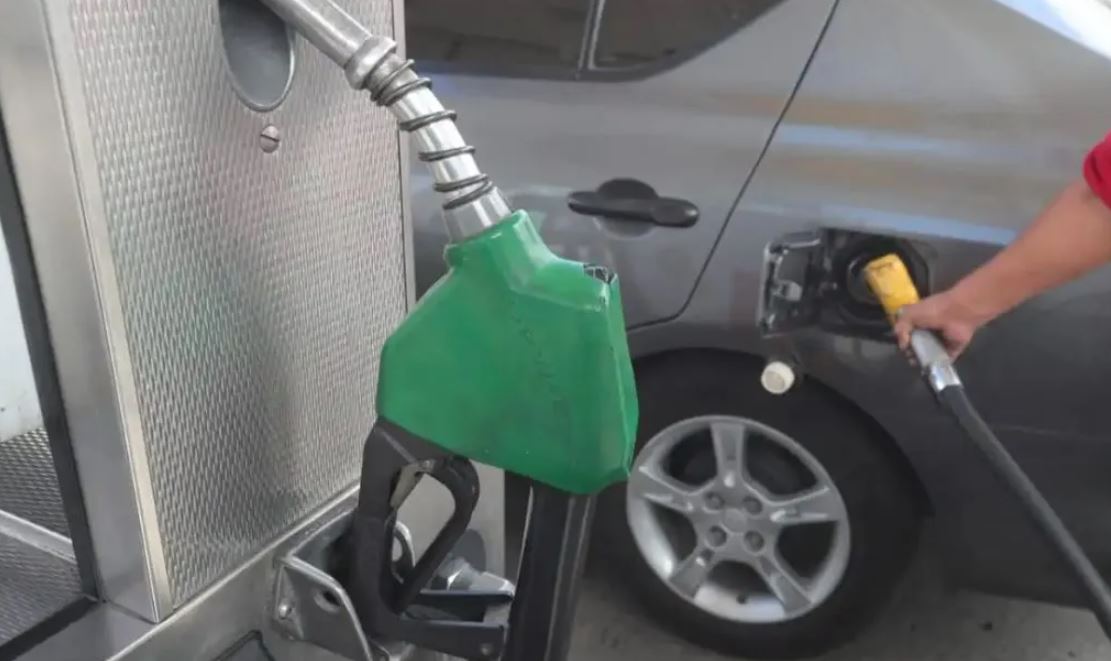
The vendors report that they have doubts regarding how the application of the subsidy will affect the stations due to inventory management and the prices that must be applied to existing fuels at gas stations at the time the provision comes into effect and to new supplies, so they could have to absorb losses, according to Enrique Meléndez, executive director of the Guatemalan Association of Gasoline Retailers (AGEG).
In addition, he said that the Ministry of Energy and Mines (MEM) must issue a ministerial agreement that establishes the methodology to obtain the reference prices.
Fuel in stock
Meléndez said that the way to implement the subsidy is almost the same as how it was applied in 2022. One of the doubts is the management of inventories at the entrance and at the exit, since for a gas station it is complex and the observations of the sector were not taken into account, so they hope to see how this situation can be managed at the service stations.
The doubt is that the authorities say that retailers can continue selling the product they have in inventory until it runs out, without applying the discount, because it was purchased when the subsidy was not in effect, he added.
As Meléndez explains, they face the difficulty that some stations could exhaust their inventory sooner; However, those that have not exhausted it and must sell without subsidies may not have buyers or may reduce influx, because the product will be at higher prices. Therefore, service stations that still have inventory would have to absorb heavy losses.
“We could continue selling at the prices we have while we still have inventory without a subsidy. But the problem is that, between the number of stations that there are and the entire model, some are already going to have a subsidy; so, for those that do not have it, the question is who is going to buy from them at those prices without a subsidy,” and we are looking at how to manage the situation.
Asked about this, the Vice Minister of Energy and Mines, in charge of Hydrocarbons, Erwin Barrios, said that Article 8 regulates it and indicates that, when there are inventories of diesel and gasoline acquired prior to the entry into force of the emergency support, they will not be obliged to apply the benefit until said inventory is exhausted.
Said article, according to the published document, refers to inventory at service stations. Establishes that operating license holders who have inventory of diesel and gasoline acquired prior to the entry into force of the subsidy, they are not obliged to apply it or to apply the reference price to the final consumer until said inventory is exhausted.. To do this, they must report the quantity of product purchased via purchase invoice, which will be reviewed by the Verification Team to determine the volume to which the benefit is not applicable.
CONTENT FOR SUBSCRIBERS
Contrary to this, at gas stations that, at the expiration of the subsidy period, have inventory, the benefit must be applied until the product purchased under it is exhausted; Likewise, it will be verified at the end of the period to determine the volume to which it is applicable.
Reference and transfer prices
Regarding the operation and transfer of temporary social support, it is established that the subsidy will only be recognized for diesel and gasoline importers who opt for the MEM. and reflect the corresponding decrease in the terminal sales price (Ex Rack), in accordance with the law and regulations.
Importers must dispatch the invoiced product from their facilities with the corresponding reduction, to ensure its transfer in the marketing chain to the final consumer.
According to article 5 of the regulation, the MEM must establish, through a ministerial agreement, the calculation mechanism to determine the reference prices and, based on this, the General Directorate of Hydrocarbons will set the reference sales prices at the terminal (Ex Rack) and to the final consumer at service stations in departmental capitals.
It is also established that, when international market conditions affect the national market, the MEM may update the national reference price and the variation ranges for the final consumer, for which it must consider the international conditions and apply them to the existing delivery modalities.
In this regard, Meléndez said that they are waiting for the ministerial agreement of the MEM to know how the application of the subsidy will be and the details of how the reference price will be established, both ex-rack when leaving the importers and at service stations, and the subsidy must be subtracted from that price.
In addition, the periodicity of said prices or their review must be established. If any importer sells the product at a higher price, it would be violating the decree and there would be sanctions, he added.
Read also: Congress approves Q2 billion as a fuel subsidy
Meanwhile, Barrios said that this Monday the 27th the MEM sent Ministerial Agreement 189-2026 for publication in the official gazette, which contains information on how the subsidy will be applied.
According to the Minister of Energy and Mines, Víctor Ventura, There is a commitment that the subsidy will come into effect on May 1.
New increases and doubts
After several weeks of rising, fuel prices for the final consumer in Guatemala were already stable or falling between April 9 and 20, according to MEM monitoring; However, as the announced date for the subsidy to come into effect approaches, they began to rise again.
Asked about this, the vice minister indicated that prices have maintained the uncertainty caused by international conditions derived from the war in the Middle East.
He added that the MEM, through the General Directorate of Hydrocarbons, calculates and publishes reference prices based on the international information contained in Platts, and verifies that sales reflect those conditions in the national market. He also indicated that monitoring is carried out and that, when a price distortion is detected ex officio or by complaint, files are generated that are transferred to the Diaco so that it can proceed with the corresponding complaints.
Regarding how it will be guaranteed that the subsidy reaches the final consumer, the official said that the established model is that the fuel, already with the temporary support applied, is dispatched from importers to distributors; Therefore, when it arrives at the gas stations it already includes the discount.
In addition, the reference price with the corresponding discount must be published on station billboards, while Diaco will carry out inspections to avoid abuses. The Sentinel Plan remains active to verify correct quality, quantity and price.
Regarding the new increases, Meléndez explained that the stores are not applying an irregular practice and that the suppliers have made adjustments to the product they sell, which they transfer and reflect on the billboards and in the prices to the public.
The Ministry of Energy and Mines published the fuel subsidy regulations, which establish controls in the marketing chain and define coordination with the SAT for verification.https://t.co/Mp8ROXoldg
— Free Press (@prensa_libre) April 27, 2026
He added that the international price has once again reflected increases. “We are reflecting the prices at which the suppliers are selling to us, and the suppliers are seeing that the international market has increased in the last week,” and it can be seen that the price of gasoline and diesel, that is, the refined product, has risen more than oil.
Meléndez said that many people observe future prices, which are those that are generally published, but spot prices, which are usually higher than futures, should also be considered.
Concerns arise
Ricardo Barrientos, executive director of the Central American Institute of Fiscal Studies (Icefi), insisted that the subsidy should be applied directly by gas stations to final consumers through each online electronic invoice that is issued, and that based on these the stores collect the subsidy from the MEM. However, he said that it was again decided to deliver it to the importers, as in previous administrations.
CONTENT FOR SUBSCRIBERS
Because of this, he explained, doubts may arise about whether the subsidy is really reaching end users. He added that he must It must be verified by the MEM and the corresponding authorities if the recent increases are justified and if they follow the behavior of the international price.
The other concern mentioned by Barrientos is that, according to published news, the Public Ministry said that it has not found speculation in the cases of complaints received against stores; However, he considers that even the importers should continue to be investigated.
The opinion of the Guild of Hydrocarbon Importing Companies (GEIH) was sought, but they have not responded to the request.