
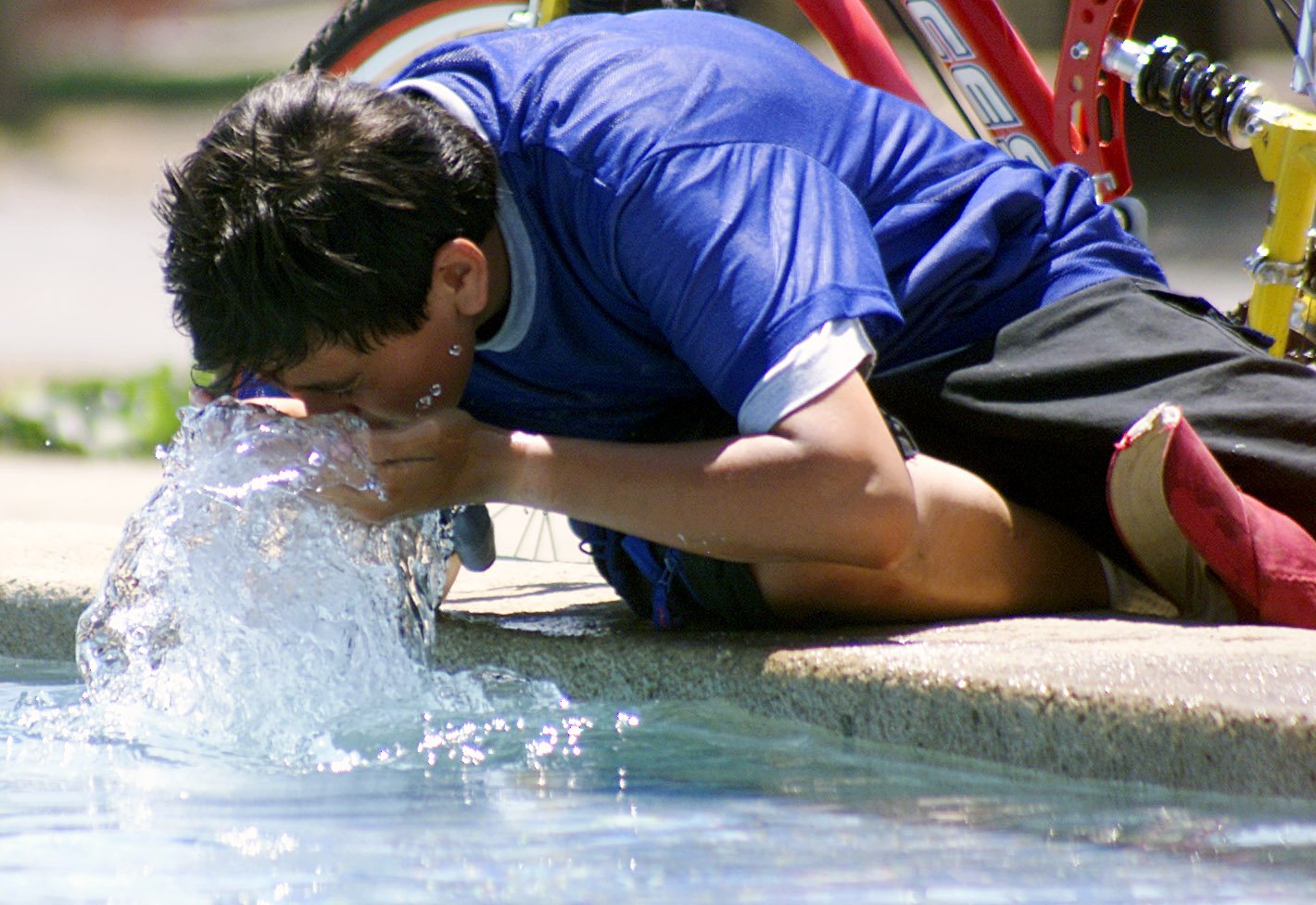
Guatemalans are feeling it: he heat of these days It’s more intense.
Although the routine continues, the high thermal sensation is reported in offices, buses and homes.
Guatemala is going through a heat wave that is reflected both in the thermometers as in the constant search for water, shade, fans and air conditioning.
It will be during this week, beginning of May, when this heat that has taken the thermometers to the lows will continue. 39°C in Petén and in arid areas of the Eastwhere historically the heat is usually stronger.
The National Institute of Seismology, Volcanology, Meteorology and Hydrology (Insivumeh) confirmed on Monday, April 28, that, over the weekend, temperatures above average in practically the entire country.
And it’s not just the north and the East. In it Central Highlands, including the Guatemala City, the maximums have exceeded the 30°C.
During this Tuesday, April 28, Zacapa frame 39.8°C, Petén 38.6°C and San Marcos 38°Cwith clear skies and high solar radiation. Although some moisture will enter from the Peaceful and scattered rains could fall in the Bocacostathe relief will be momentary.
Although there will be rain in the southern region, it will be momentary. The hot sensation will continue through the dry period, confirmed the Insivumeh.
Also read: El Niño could prolong the dog days and increase the need for irrigation in Guatemala
How long will the heat wave last?
The Insivumeh already classifies it as a heat wave: several days in a row with abnormally high temperatures, the main characteristic to define it as such.
Models show the heat holding firm through the end of this week.
The forecast map indicates that much of the territory will be between 30°C and 34°C, with few areas under 22°C.
In it North and East, maximum temperatures of 37°C are expected, and 35°C on the Pacific coast. He Caribbean will be around 34°Cwhile Westthe Northern Transverse Strip and the Central Highlands will range between 28°C and 30°C.
It’s not the first time. In recent years, stations in Petén have reported temperatures close to or above 40°C.
This heat wave occurs under the first manifestations of the influence of the El Niño phenomenonwhich usually brings less rain and more heat to the region, and which will extend into the second half of 2026.
The result will be longer dry periods, more intense heat waves, increased risk of wildfires and impacts to crops and available water.
Meanwhile, Health asks not to expose yourself to the sun between 11 a.m. and 4 p.m., stay hydrated and take special care of children and older adults.
Most read: Hackers demand Q1.2 million to stop attacks and prevent disclosure of data of Guatemalans