
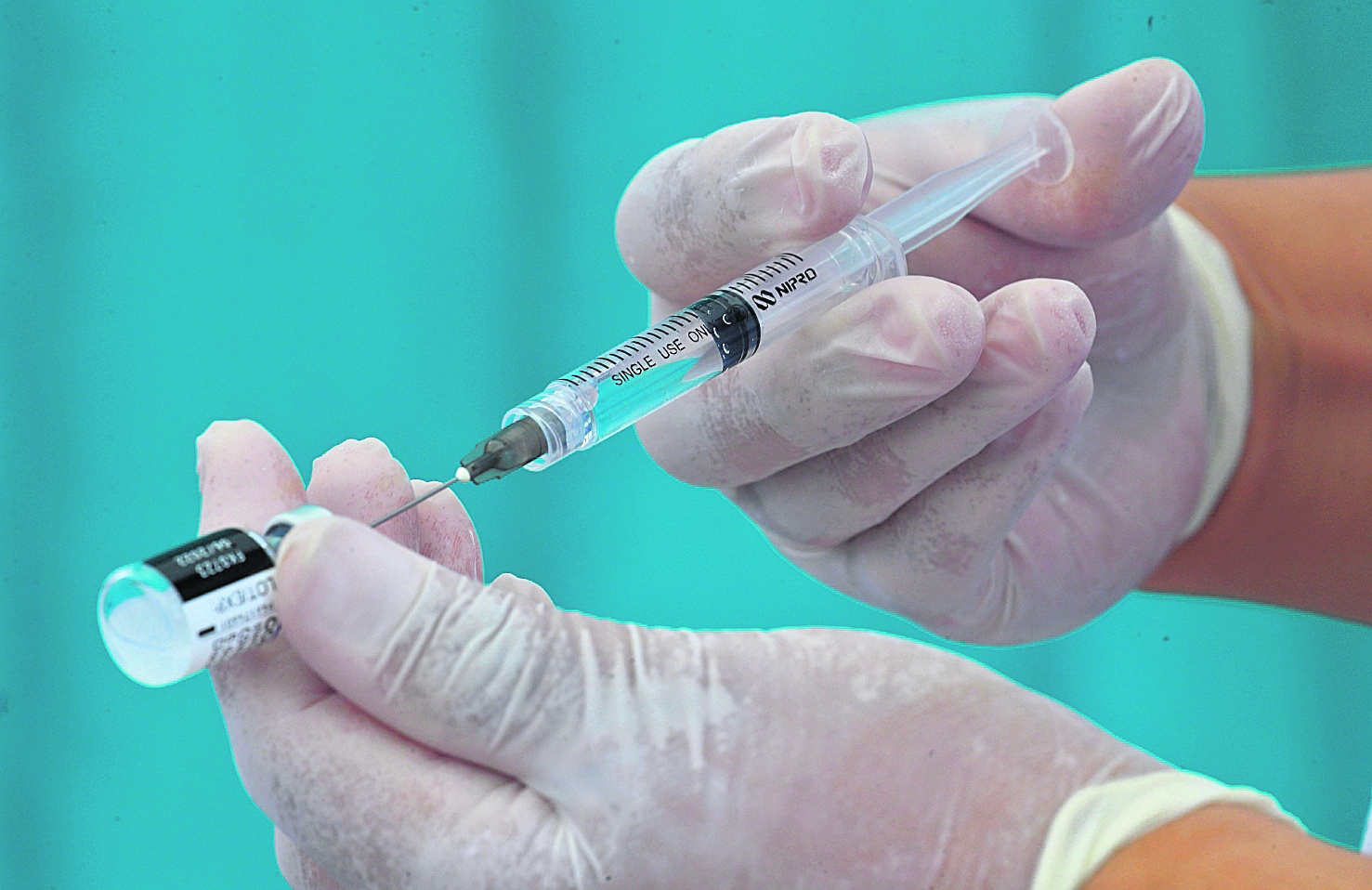
The Ministry of Health has applied the hexavalent vaccine to more than 129 thousand children, which protects against diphtheria, tetanus, whooping cough, hepatitis B, Haemophilus influenzae type b and poliomyelitis.
Last November, the ministry announced that it would include the biological vaccine in the regular vaccination schedule, instead of the pentavalent one, and that it would cover the population under five years of age with four doses: the first at two months of age; the following, at four, six and 18 months. This is administered intramuscularly in the thigh.
At the time of its introduction, the authorities indicated that it would have greater adherence among Guatemalans, since in a single puncture children would receive protection from six diseases. In populations that have resistance to vaccines, this is an advantage.
Another point in its favor is that it represents savings for the public health system, since costs in syringes, cold chain and transportation are reduced, among others, because fewer doses are administered.
Minors born in September 2025 were the first to receive the first dose of the hexavalent vaccine within the regular vaccination schedule. The children who received the pentavalent vaccine were able to complete the schedule with the new vaccine.
By March 16, the Ministry had vaccinated 129 thousand 874 children: with the first at 38 thousand 331; with the second to 33 thousand 504; with the third, 32 thousand 287, and 25 thousand 752 with the reinforcement.
The five departments where the largest child population has been vaccinated with the hexavalent vaccine are Guatemala (15.3%), Huehuetenango (10.8%) and Alta Verapaz (9.4%). While coverage has been lower in Baja Verapaz, which reaches 0.8%.
Availability
The report from the Ministry of Health indicated that by March 13 there were 357 thousand 716 doses availableof which 49.8% were distributed in 19 health areas throughout the country. The remaining biological was kept in the portfolio’s National Biological Center.
The investment of the Ministry of Health to acquire 600 thousand doses rose to Q9 million 492 thousand 500, The purchase was made through the Revolving Fund of the Pan American Health Organization (PAHO).
According to infectious disease specialist Mario Melgar, the pentavalent vaccine has already been completely replaced by the hexavalent vaccine and, considering the population to be covered, one million doses should be administered per year.
He adds that the 129 thousand doses applied until March 16 represent a reasonable pace. What must be taken into account is that the vaccination rate in children under one year of age remains within adequate ranges.
Health authorities indicate that the hexavalent vaccine may have a cost of Q600 in the private sector and is available free of charge in public health services.
Among the countries in the region that have chosen to include this vaccine in regular schedules are Mexico, Brazil, Chile, Panama, Colombia and the Dominican Republic.
According to medical criteria, vaccination is the most effective and safest tool against infectious diseases.