
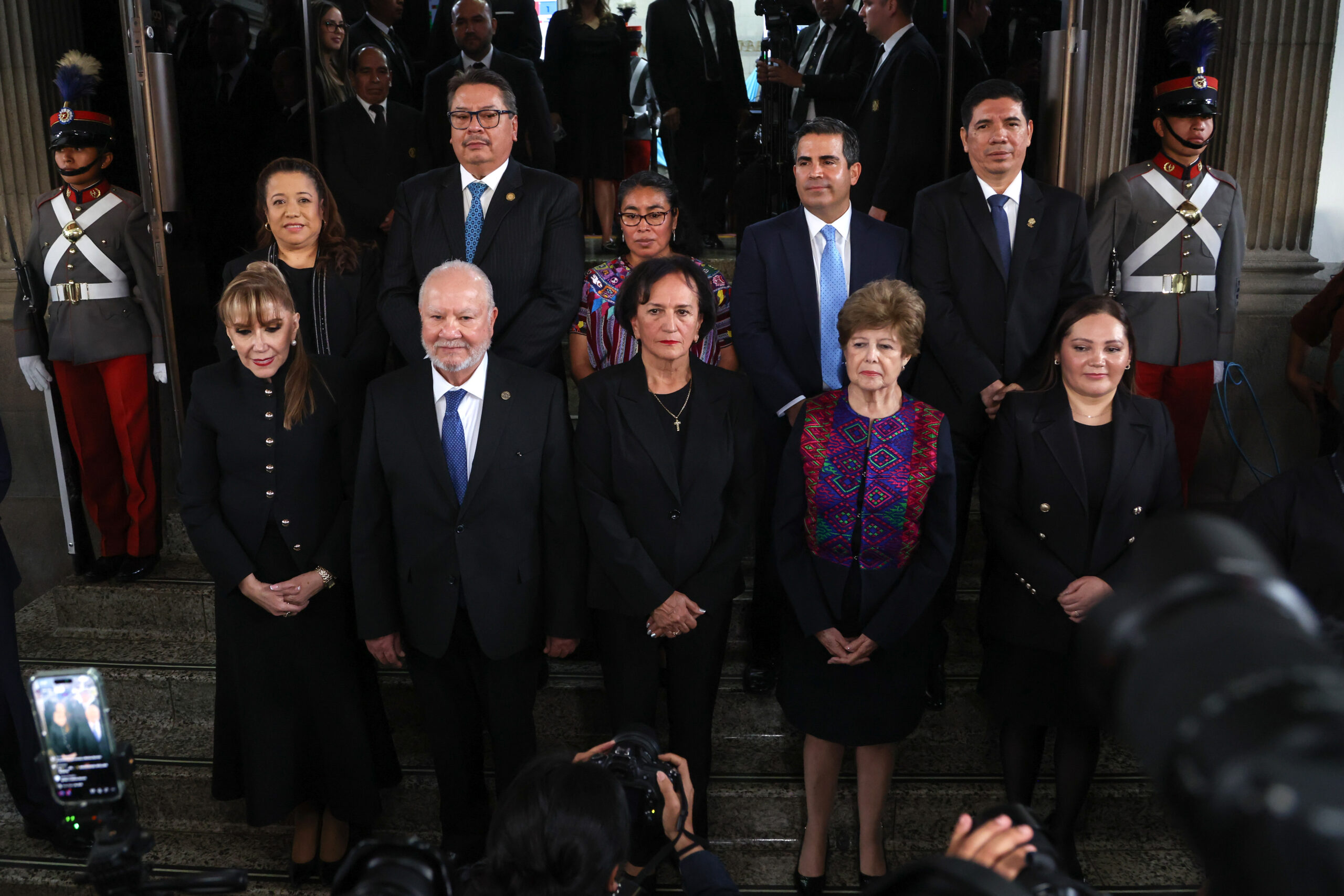
Next May 14 marks the first month of the new Constitutional Court (CC). In three weeks, a rift has become evident between the magistrates that make up the ninth magistrate.
The division has escalated to an institutional statement, issued last Wednesday night, in which the CC reported threats against its president, Anabella Morfín, and the secretary of that institution.
The intimidation goes along the lines of questioning Morfín and the secretary of the CC for apparently having delayed some cases and not scheduling them for discussion in the plenary session.
Two jurists with extensive experience, when judging the events of recent weeks, agreed that, although the beginning of a new judiciary may be difficult, avenues for dialogue must be sought so as not to hinder the work entrusted to them. In addition to taking seriously whether the intimidations are direct against the magistrates for the exercise of their work.
Division
Former Appeals Judge Yolanda Pérez Ruiz commented that since the CC was integrated, a division was foreseen and, if not handled well, it could even lead to a confrontation.
On the one hand there are Morfín and Astrid Lemus, appointed by the Executive and the Bar Association, respectively. The other group would be made up of Roberto Molina Barreto, Dina Ochoa and Julia Rivera, appointed by Congress, the Supreme Court of Justice and the Higher University Council, in their order.
The events of the last three weeks would confirm the division.
From the first minutes, after the inauguration, Molina Barreto, Ochoa and Rivera requested in writing to the president of the CC that a protection be urgently known within the framework of the work of the candidate for the Public Ministry.
A second fact that emerged was the request signed by six of the 10 magistrates that make up the CC, to continue with the plenary sessions virtually and not in person, as Morfín had requested.
Pérez Ruiz maintained that there will always be divided criteria, the key is to maintain technical debates. “In a collegiate court, and experience tells me this, if one is lucky, there is quick consensus; if not, there will be some discussion, but discussing technical issues is much easier than discussing biased political issues.”
Mario Fuentes Destarac, constitutional lawyer, also normalized the divided criteria in the court at the beginning of a magistracy, because “it is a logical process of adaptation”; However, “external pressures are not valid, and if there are threats, complaints must be filed.”
Fuentes Destarac also recalled the need to have meeting points. For example, it is the president who is in charge of administering the work of the court; However, there are mechanisms that allow the rest of the judges to suggest some topics that will be discussed in plenary.
“The judges have the right to make requests, internally, to the administrative authority, which is the exclusive responsibility of the president of the court, with which he makes schedules and it is the president who makes those administrative decisions,” explained Fuentes Destarac.
The actions to avoid a crisis, explained Pérez Ruiz, involve finding ways of dialogue.
“I would dream that they could sit down and talk about the obligations and priorities for the country, because we need an environment where the problems that matter to us all can be resolved,” he said.