
He Ministry of Health distributed this year Q6 thousand 791.9 million among the 46 hospitals that make up the public service network, and Q556.9 million are to acquire medicinal and pharmaceutical productswhich represents 8.2% of the budget, according to a report from the Integrated Accounting System (Sicoin), of the Ministry of Finance, as of May 4.
The resources allocated to medicines are located in line 266, and the average execution in this area amounts to 49.6%with which about half of the funds would have been disbursed in the first quarter of 2026.
When approaching each executing unit -hospital-, there are six that are one step away from exhausting the budget to purchase medicines, since spending exceeds 90%, and if we do not receive a monetary injection in the short term, the risk of shortages is latent.
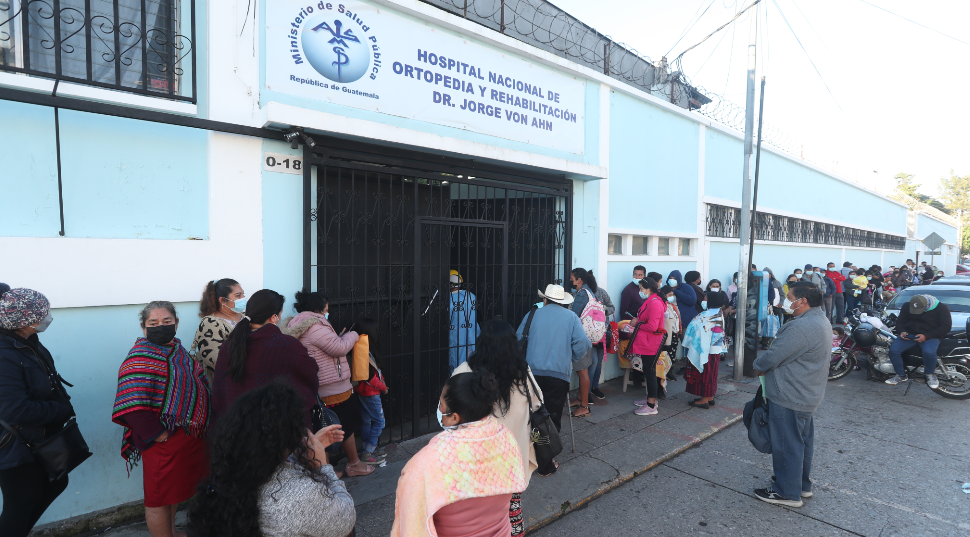
The allocation in line 266 is low in these centers, but in three the amount does not exceed one million quetzales. In this case there are the Orthopedics and Rehabilitation Hospital Dr. Jorge Von Ahnwhich has a budget of Q369,911 for medicinal and pharmaceutical products, and the execution is 93.18%.
He Sayaxché District, Petén, It appears with Q786 thousand 592 and the expense reaches 90.96%. But the most critical situation is that of the hospital. Santa Barbara, Izabal, which of the Q811,382 has already executed 99.68%.
They have a higher allocation Department of Totonicapanwith Q3 million, but already spent 99.79%; the one of Barillas has Q1.1 million and the execution is 97.3%, and the Type 1 Tecpán Guatemala It appears with Q1.3 million and the amount spent amounts to 98.5%.
Contrary to those with fewer funds and high execution, there are the two reference hospitals: General San Juan de Dios, whose budget to acquire medicines is Q103.9 million and has executed 44.17%. The other is the Roosevelt, with Q202.8 million, and the amount spent does not exceed 30%.
The other hospitals with the highest allocation are the Western Regional, in Quetzaltenango, with Q45.5 million, and that of Escuintla, with Q20.6 million; The recorded expense is 32% and 34.99%, respectively.
Risk of shortages?
He shortage of medicines in public hospitals It is a chronic illness, which is mainly due to the low budget allocation, which does not allow maintaining stocks of products in line with the demand for care of the population.
According to sources consulted from the hospitals that are about to reach 100% execution in line 266, this year They work with the same 2025 budgetso they will require an increase in funds to the Ministry of Health.
Jimmy Chaclán, from the Communication Department of the Totonicapán Departmental Hospital, points out that the processes have already begun to request Q8 million as additional resources for purchasing medications and medical-surgical supplies, which will allow them to have products for the rest of the year. At the moment they are supplied.
The hospital cares for about 400 people a day between outpatient consultations in different specialties and emergencies – it has three intensive units for adults, neonates and pediatrics.
Another case is that of the Sayaxché District hospital, Petén, where there are medications, but payment to the suppliers who supplied them during the first four months of the year is pending. Marlon Folgar, financial manager, indicates that the Q786,592 they had to cover this item have already been exhausted and that the debt reaches 100% of the budget assigned.
“There are many suppliers who are owed, because they already supplied us. We are not the only hospital that will ask for a budget increase; in May everyone starts asking for more resources,” says Folgar.
The requested increase would range between Q5 million and Q6 million not only to purchase medicines, but also medical-surgical supplies and laboratory reagents, but projections are made to establish whether the funds will be enough to cover supplies until December.
Folgar mentions that, without this economic injection, the commercial houses would cut their credit and would no longer provide them with the supplies they need to serve the population. He trusts that the additional resources will be delivered between next June and July.
In 2025 they also requested an injection of funds and that allowed them to have supplies until February of this year. At the moment, the supply of medical-surgical supplies is 93%, and that of medicines reaches 90%.
Dr. Carmen Elena Henry, director of the Dr. Jorge Von Ahn Orthopedics and Rehabilitation Hospital, points out that the medication purchases they have made allow them to be supplied for eight monthswhich is covered with internal modifications in your budget. When resources are insufficient, they will request an extension from the Ministry of Health in the last month of the quarter of the year.
Nuria Mejía, from the Coordination of NGOs and Cooperatives (Congcoop), points out that in hospitals where they have already exhausted more than 90% of the resources for purchasing medicines, the risk is running. risk of shortage in the following months.
He adds that the Ministry of Health must pay attention to these hospitals and guarantee that the warehouses do not remain empty, since it would be “fatal” for the population to reach that extreme, since it puts families in trouble who must buy supplies and medicines so that their relatives can receive care. This, he considers, increases out-of-pocket spending, which national studies estimate at 52.2%.