

The night wrapped the streets of what we know today as the historic center with a mantle of silence and shadows, only broken by the echo of the gallop of a horse and the persistent aroma of the incense. Was Good Fridaya date on which the sacred and the mysterious seemed to merge into the air.
Rafael del Llano, a cheerist with a devout heart, toured those cobbled roads with the sorrow of who has seen the duel of an entire city pass. But more than tiredness overwhelmed him: the absence of the buried Lord of Santa Catarina, that miraculous image that, for the first time in years, had not come out in procession.
However, fate kept a surprise for Rafael.
This legend, woven between devotion and mystery, based on the book For the old neighborhoods of Guatemala Cityby Celso Lara Figueroa, unites two stories that complement each other and intertwine two centuries of tradition.
The horrific horror of Santa Catalina
Rafael del Llano was exhausted that night. After a day of intense work, he drove the rental carriage of which he was a coachman on the theater street. It was Friday: the night of a Good Friday already quite advanced.
After transferring two old women to the street of the Seminary, he returned to the stables of Schumann to account for the employer and keep the carriage. Rafael, in addition to tired, felt sad. That environment impregnated with incense and aroma to Flor de Corozo weighed on his spirit.
While moving towards the Santa Catarina neighborhood, he folded at the corner of the Merced Church to take the street of La Esperanza, solitary and dark streets where absolute silence flooded his journey, and only listened to the noise of the horseshoes of the horse when he crashed into the cobblestone. He crossed the street of La Concepción and saw the time in one of the cathedral watches.
“I am very tired,” he whispered, “if they are more than eleven.”
And he continued his way down the same street. In his mind he remembered the events of the day: he had transported many people to the different processions that toured the neighborhoods and streets of the city, especially the Holy Burial of Santo Domingo.
Rafael was amazed by the sobriety of that courtship, the silence of the chargers and the immense sadness of the Yacente Christ. In addition, it was the procession of his neighborhood. He lived in the alley of the body.
That year – he was thinking – for the first time in a long time, the buried Lord of the Church of Santa Catarina had not come out in procession. It was said that many had been the causes: lack of money, organization … Anyway … what did he know! His desolation was even greater, because in addition to loading him, he professed immense faith.
“Oh yes!” “It was said,” how miraculous is the buried of Santa Catarina.
Another thought came to his mind. He remembered that, as a child, his grandmother had told him the story of the buried Lord, who was dating back to Santiago de Guatemala, a long time before the earthquake of Santa Marta.
His grandmother had told him that, one night, Brother Pedro was praying at the foot of the crucifix in a church whose name had forgotten.
It was already too late, ”his grandmother had said,” he spent midnight … and when the Holy Brother was most concentrated in her prayer, she heard the voice of the crucified that said:
—Pedro, my son, I want to be buried in the low choir of the catarines.
The brother, without hesitation, turned around, took the image on his shoulders and went very slowly to the darkness of the night. The crucified weight bent his back. Being the highest image than him, he was forced to drag his feet by the cobblestone of the lonely streets of the city.
Thus, after long and painful journey, he arrived at the convent and church of the Catarinas. The nuns were waiting for him with candles on the temple. In the choir they already had prepared an urn that would welcome the Lord. There was deposited by Brother Pedro, with great respect.
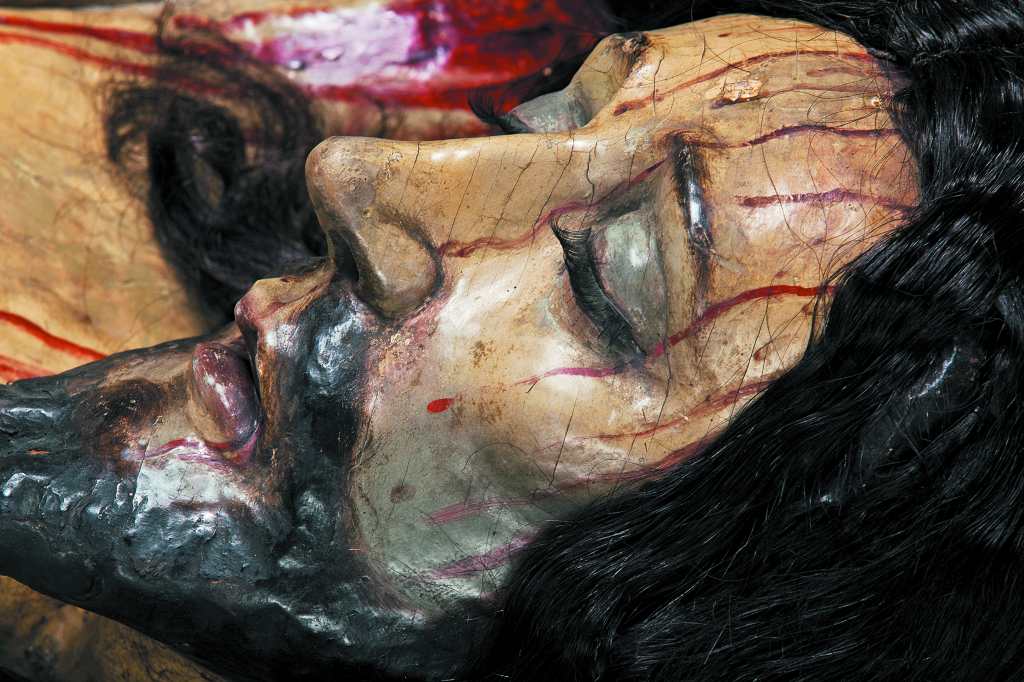
(Testimony of that miracle were the scratches made when he carried him on his shoulders and that the image still presented after so many years. Rafael had seen them and even palpated).
According to his grandmother, that event had stimulated thousands of faithful to approach to worship the crucified who had wanted to be buried in that place.
After the earthquakes of Santa Marta – his memories concluded – the Lord was transferred to the New Guatemala and placed in a chapel of the Church of the convent that the Catarine nuns had ordered to lift, and where he was today.
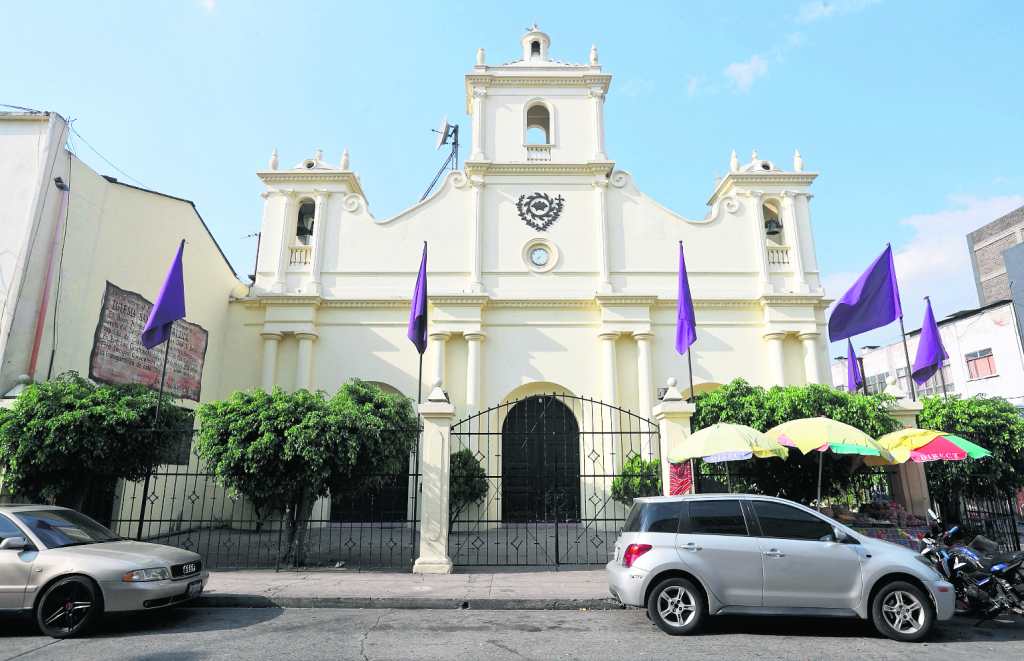
Abstracted in these thoughts, after passing next to the Manchén alley, he reached the Real Street; Little was missing to get to his destination.
Suddenly, the funeral notes of a march made him return to himself and look for the place where they came.
“It’s not possible!” He exclaimed. The Santa Catarina procession! And so late! But if they told me it would not come out this year!
Indeed, in the distance Rafael saw, as for the street of oblivion, that he had folding the corner of the Catarinas convent towards the temple on which the gold and marble urn of the buried Lord rested.
A band of musicians marched behind her. Opening the procession, the circials arrived almost to the door of the temple; Then, two columns of cucuruchos with black tunic and candles lit in their hands walked silent and slowly to the street of the street …
“If fast path,” said the coachman, “I’ll reach the blessing!” The Anda is already reaching the church, because I hear the drag of the forks of the chargers and the notes of the band … the Lord is already in the atrium … they touch the farmer!… ”He continued.
And, hurrying the passage of his horse, he traveled the two blocks that still lacked.
Upon reaching the temple atrium, his fright was tremendous … there was nothing! The procession had disappeared!
Rafael, stuck in the car as a statue, did not just understand.
A cold sweat bathed his face, and a compulsive tremor shook his body, until he fell faint in the carriage seat.
The horse, already without direction and following its instinct, was aimed at the stables of Schumann, located on the posterior street of the temple …
The next morning they found the carriage in the central courtyard, with the body of Rafael del Llano inside, horribly tense.
And, since then, the buried Lord of Santa Catarina never came out again in procession.
More than one legend
Many of Holy Week legends are closely related to community roots to a tradition and the importance that believers give it.
“That is why they arise and reproduce,” says Walter Gutiérrez Molina, historian and professor of the School of History of the University of San Carlos de Guatemala.
In the case of the legend of the buried lord of Santa Catarina “Also known as.” The horrific horror of Santa Catalinaname that, according to Gutiérrez, can be written interchangeably as Catalina or Catarina since at some point the “R” and the “L” were confusing— Two stories are included: The first tells the transfer of the image of Jesus – which, as Lara mentions in his book, occurred in the Church El Calvario de Antigua, in front of the crucified Christ under the choir – to the Santa Catarina Convent, made by Brother Pedro. The second recounts the death of Rafael del Llano.
Regarding this legend, The historian mentions that there are records that in 1900 already appears the Holy Burial of Santa Catarina, although this dates back to the 19th century.
“By 1910, there are measures that want to limit processions, and among those limitations the procession of Santa Catarina is affected. That is when this legend arises, since the people of the neighborhood were very resentful of that restriction. That is why they have the idea of listening to the steps, dragging the worsys and murmurs of the Nazarene faithful over its streets in the early hours of Holy Saturday,” he says.
In addition, Gutiérrez points out that around the sculpture of Jesus buried there is another legend related to its mysterious origin. “What happens is that this image is very old; it has features of the sixteenth century and an aura of mysticism. When so old, a legendary origin is awarded,” says the historian.