
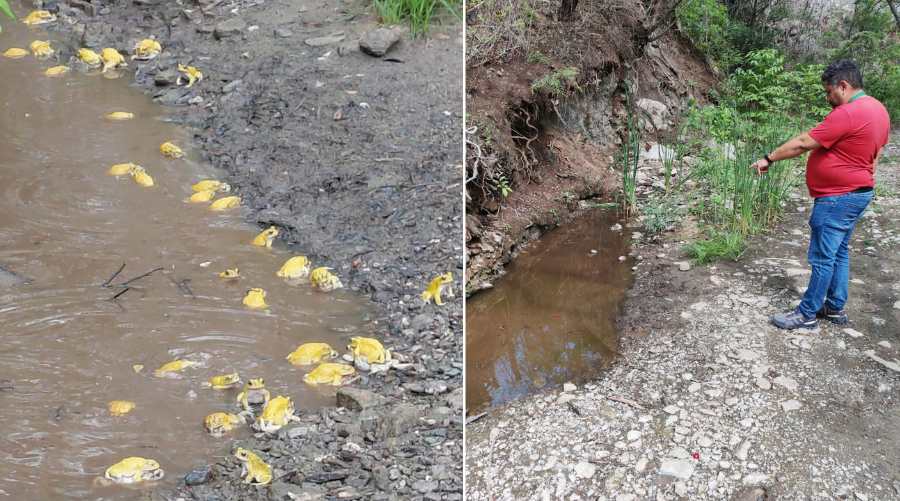
The rainy season It brings with it various changes in nature, including the reappearance of species. This was the case for several yellow toads recently observed in a community in Rio Hondo, Zacapawhose sighting caught the attention of residents and social media users.
Images of the striking yellow amphibians began to circulate, generating curiosity and multiple reactions among users and residents of that town.
The event occurred in the La Palma villagewhere neighbors reported the presence of several specimens intense tone. As explained by Byron Salguero, coordinator of Wildlife of the Eastern Region of the National Council of Protected Areas (Conap), Many people initially believed that they were frogs; However, the species observed corresponds to the yellow toad (Incilius luetkenii).
He National Council of Protected Areas (Conap) confirmed that it is the yellow toad Incilius luetkenii, a native species of the country that forms an important part of the ecosystems of the Motagua Valley.
Characteristics
According to Salguero, some characteristics allow us to distinguish specimens of Incilius luetkenii.
- Size: females are generally larger and more robust.
- Coloration: Males may have slightly darker or yellowish tones during the reproductive season, although color differences are usually subtle.
What relationship do the rains have with their appearance?
According to the technical explanation, these amphibians emerge from their aestivation period—a process in which they remain buried during the dry season to avoid dehydration—and their appearance usually coincides with the first significant rains of each year.
This behavior also marks the beginning of their reproductive stage. Adults concentrate in temporary ponds and bodies of water formed by rain, where males emit vocalizations to attract females. During this period they change tone.
“Its recent presence in Río Hondo, Zacapa, is considered a natural sign of transition towards the rainy season and highlights the importance of conserving temporary water bodies where this species reproduces.“explained the institution.
Conap highlights that the Incilius luetkenii It fulfills a key ecological function, since it contributes to the natural control of insects and other pests, in addition to being an indicator of ecosystem health and water availability in rural areas.
Most read: Why do they recommend not diving into Lake Atitlán? Amsclae alerts for cyanobacteria