
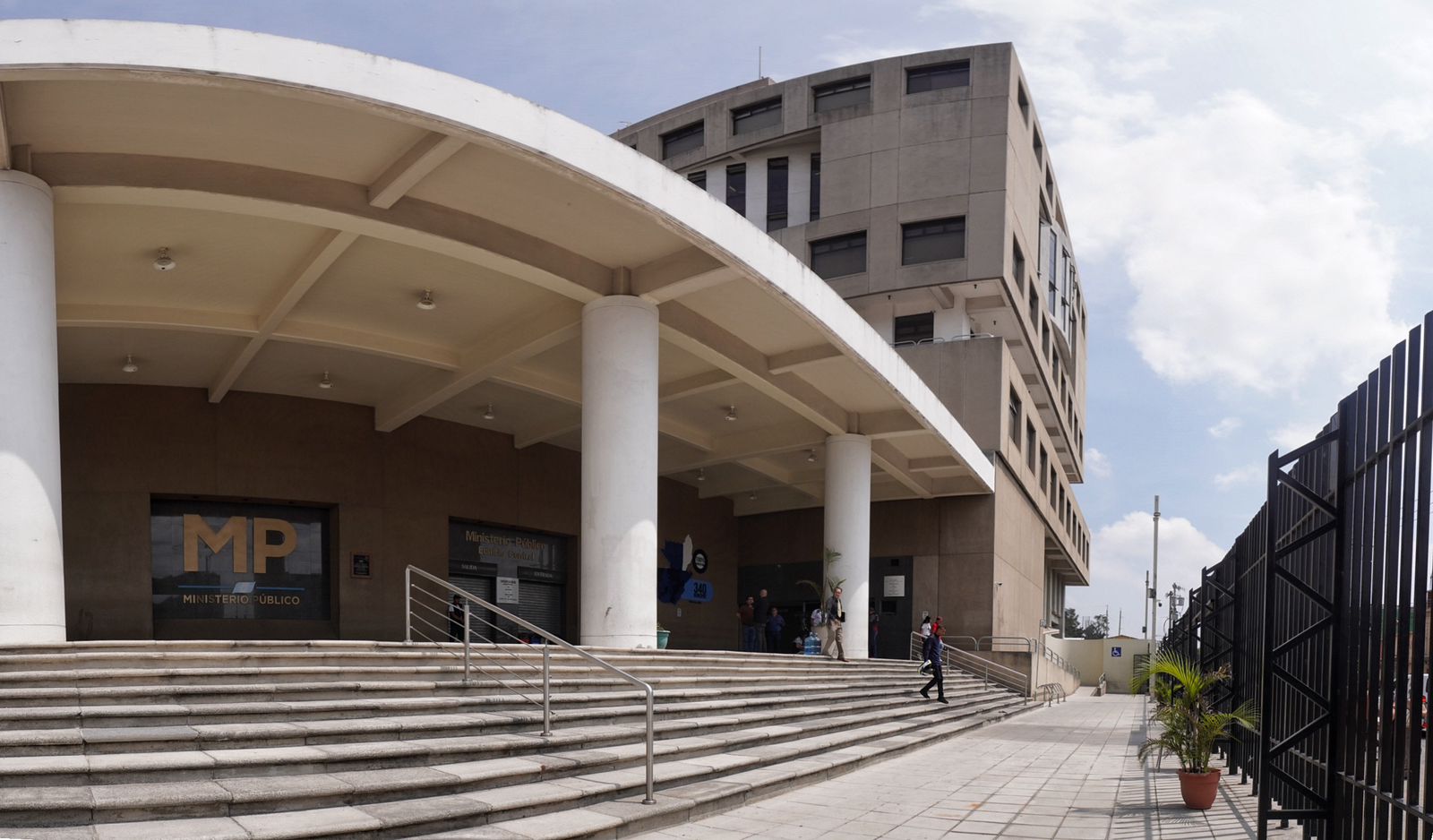
The refusal of Public Ministry (MP) to disclose the salaries of some officials and former officials has generated questions from experts in transparency and access to public information, who consider that the measure lacks a solid justification.
Emisoras Unidas requested data on the monthly salaries earned by the former Attorney General Consuelo Porras, the former head of the Special Prosecutor’s Office against Impunity (FECI), Rafael Curruchiche, as well as the current regional prosecutors. According to the June 1 response released by the media, the MP denied the information because “it is considered reserved by legal provision.”
Free press inquired about the reservation and inquired about the salary scales of MP staff, such as a section prosecutor, fiscal agent or a regional prosecutor, without the names of the people who hold the positions.
The institution maintains that it is currently evaluating issues related to human resources and administrative provisions before defining whether this data will be disclosed, a position that has raised questions about a possible continuity of the opacity policies attributed to the previous administration.
“The current administration is carrying out a comprehensive evaluation of matters related to human resources and administrative and legal provisions issued during previous periods. Once said technical and legal analysis has been completed, The Public Ministry will promptly communicate the decisions and actions that correspond in accordance with the applicable legal framework.“, responded the Department of Communication.
A report available on the MP page, corresponding to May 2026, shows the salaries of personnel hired under line 011, headed by the then Attorney General María Consuelo Porras and then her successor, Gabriel García Luna. However, the report does not find data on the salary earned by Curruchiche or the other officials that Emisoras Unidas inquired about.
The institution argued that the disclosure of this data could imply risks or compromise institutional security. However, specialists consulted on access to public information consider that This reasoning is questionable. especially when it comes to officials whose identity and functions are already widely known.
Tonight it became known that during the afternoon the administrative staff data was published, which had not been known for several years. Until now, the information on fiscal personnel and salary scales remains unknown.
Interpretation of the law
The expert in Access to Public Information, Dr. Silvio Gramajo, considered that the debate does not necessarily lie in a direct violation of the law, but in the way in which the principle of maximum publicity is interpreted versus the citizen’s right to supervise the use of public resources.
As he explained, the reservation of information related to prosecutors and investigation personnel seeks to protect their identity and safety, but he estimated that this criterion can hardly be applied to publicly known figures, such as the former attorney general Porras or Curruchiche, who have even had exposure in social networks.
“From the moment they are public figures and ran to publicize life and the news, It makes no sense to protect the salary under the condition of protecting the person because they are public.”he pointed out.
In his opinion, in these cases an interpretation favorable to transparency should have prevailed. “They would have had to pay attention to the extensive interpretation of the law, interpret the maximum publicity so that, at the time of weighing, the human right of people to know how much they receive in salary would be better guaranteed because we pay for it through public taxes”, he stated.
Gramajo added that the security argument could have greater basis in the case of agents or prosecutors whose identity is not public knowledge, but not with respect to officials who have maintained constant exposure to public opinion.
They agree that there is no legal justification
Both the Former Human Rights Attorney Jorge de León Duque as the analyst Citizen Action Manfredo Marroquín They agreed to question the possible confidentiality of this information, pointing out that it is public data and that there is no legal basis to restrict it.
Marroquín described the measure as “unjustifiable” and warned that it affects institutional credibility.
“I believe that it is an unjustifiable position, from any point of view, be it legal and even worse political, because in the end we all expect from this new MP administration a new political position regarding these issues, and the position of transparency is essential to give credit and credibility to an institution,” he stated.
De León Duque, for his part, maintained that the Constitution and the Access to Public Information Law They force transparency.
“The Constitution establishes that all acts of the Administration are public… and the Law of Access to Public Information is based on the principles of maximum publicity and transparency,” he indicated.
Both also ruled out that the reservation can be justified under security arguments.
Marroquín pointed out that “the Public Ministry’s function of investigating crime has absolutely nothing to do with the salaries that prosecutors earn,” while De León Duque was emphatic. “I don’t see how disclosing salaries could jeopardize criminal prosecution. It really doesn’t make any sense,” he assured.
The salaries of judges and magistrates are published periodically by the Judicial Branch. In the case of the National Civil Police, the salaries by position have been known, without detailing the names.
Also read: Former Attorney General Consuelo Porras reappears publicly after leaving office last May