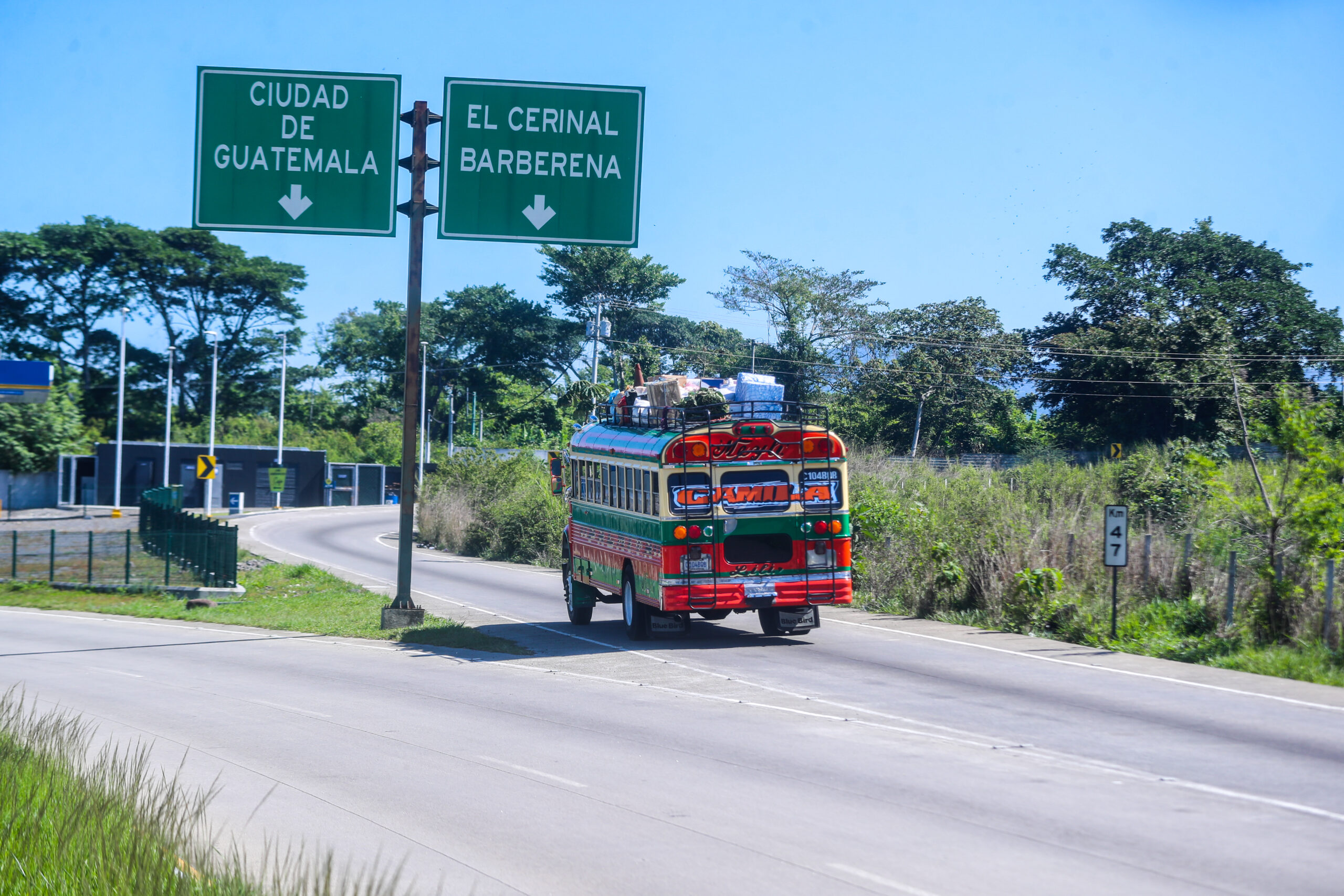
To get to El Cerinal you must travel about 50 kilometers from zone 1 of Guatemala City, along the highway to El Salvador.
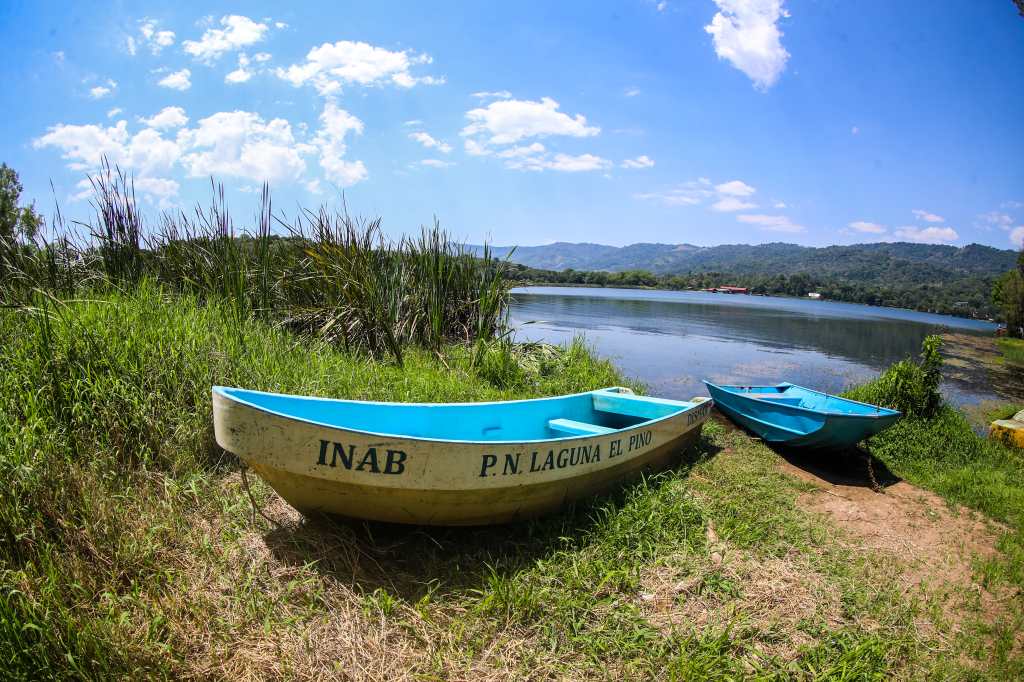
After passing the entrance that announces the detour, and after traveling a few more kilometers, a welcome sign marks the entrance to the village of El Cerinal, Barberena, Santa Rosa. Below the sign, an arrow points the way to Laguna del Pino, one of the main natural attractions of the area and part of the arguments that the local residents use when they talk about the future they envision for their village.
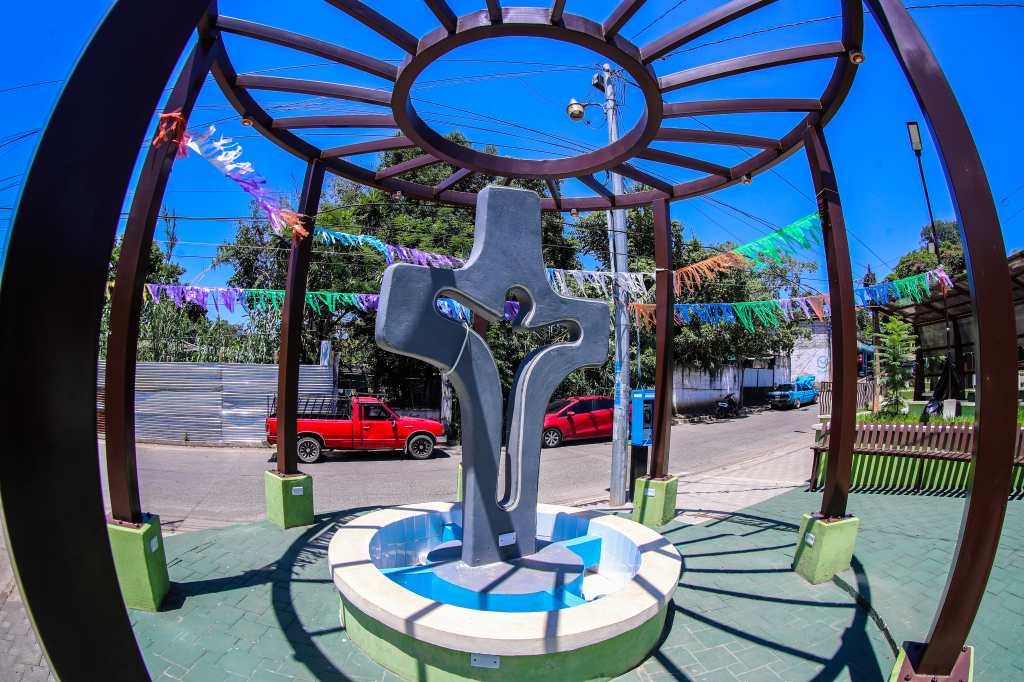
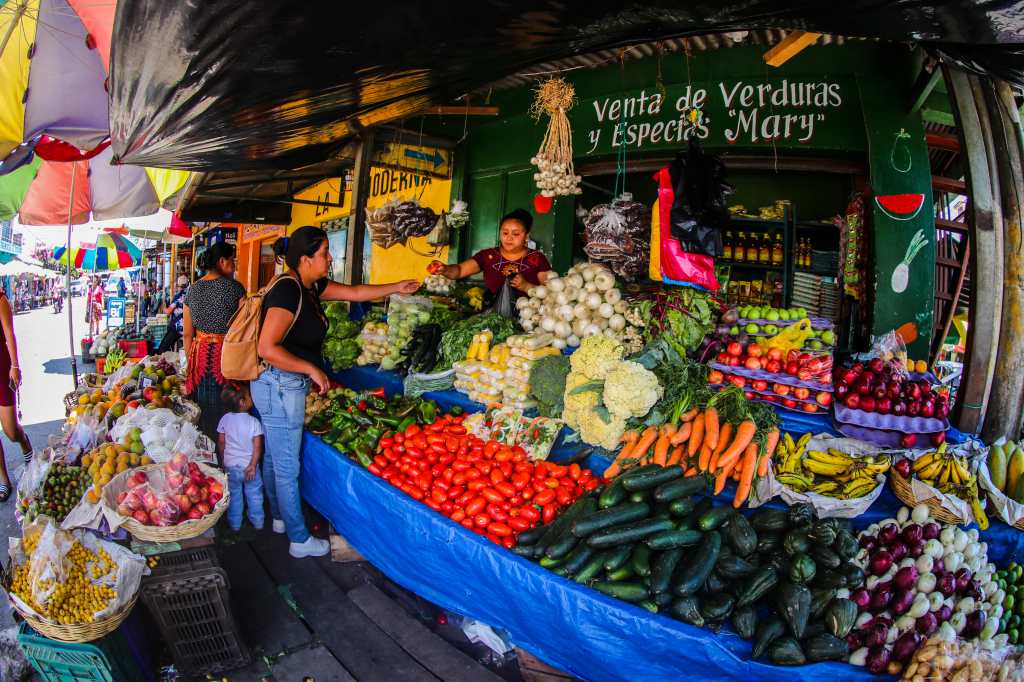
The heat in the area is constant. The region is dry, and in summer, the atmosphere becomes heavy. Still, in the village sports center, a group of children play without worrying about the temperature. A few meters away, on the main street, market stalls stretch along the sidewalk. There is no formal building; only the sales under umbrellas and the movement typical of a community that, with or without the municipal palace, functions as such.
That is precisely what the villagers want the state to officially recognize.
Historical context
The history of El Cerinal began long before municipal management. Its roots date back to the 1950s, when the first families arrived at the place as part of the subdivisions caused by decree 900, the agrarian reform promoted during the government of Jacobo Árbenz. These people were identified as invaders and even communists, but, according to the collective memory of the place, since until now there is no written record, they were only exercising a right.
The village was given various names over the decades. They called it “little Moscow” because of the political stigma of its founders. Then it was called Esquipulitas, in a turn towards the religious, and later, Fray Bartolomé de las Casas. Finally, already in this century, the neighbors decided to recover the original name: El Cerinal.
Ignacio Monzón, originally from the place and president and legal representative of the Association of Neighbors of El Cerinal to Serve (Avencer), was one of the first to take that dream from informal conversation to the formal file.
“We were really in a very forgotten position; there was no investment in our place, El Cerinal, and its communities,” he recalls.
When in 2006 a dispute with the Municipality of Barberena over water administration reached a breaking point, Monzón said it out loud in front of about 500 people: on Monday they would begin to organize to manage municipal autonomy.
It took three years to integrate the file. In 2009 they formalized the request in the Government of Santa Rosa. He says that the management itself began in 2010.
Application file
What followed was a long and documented institutional journey. The file went through the Government of Santa Rosa, the Ministry of the Interior, the National Geographic Institute, the Secretariat of Planning and Programming of the Presidency (Segeplán), as well as environmental, social and economic studies. All the neighboring municipalities—Barberena, Villa Canales, Fraijanes, Santa Cruz Naranjo and Pueblo Nuevo Viñas—issued favorable opinions.
The result was bill 5558, presented to Congress by the Executive Branch, on February 28, 2019, during the government of Jimmy Morales.
The document proposes the creation of the municipality of El Cerinal, in Santa Rosa, through the segregation of Barberena territory.
The area that would comprise the new municipality is 108.55 square kilometers – equivalent to 240 caballerias – and borders to the north with Fraijanes, to the east with Santa Cruz Naranjo, to the south with Barberena and Pueblo Nuevo Viñas and to the west with Villa Canales.
According to the Municipal Code, to create a municipality, it must have at least 20 thousand inhabitants, basic service infrastructure, a territorial district that does not harm the municipality of origin and a favorable technical opinion from Segeplán.
Monzón assures that El Cerinal meets these requirements: it has more than 30 thousand inhabitants, distributed among eight villages, 15 hamlets and 30 farms; drainage in 65% of the territory, public lighting in more than 75%, health center, schools, cemetery, banking services and police station.
The market, although it does not have its own building, exists. The central park and the municipal palace are still pending, but they have already identified some land to build.
In 2023, the initiative was approved in first and second readings in the plenary session of Congress. The third—the one that would open the way to the final vote—never came. First was the election year; then, the demonstrations in October of that year, and then, the changes in government. Today, with the current Congress, the community continues waiting.
“We have been in this government for two years now and they are not promoting this,” laments Monzón. They have sent letters to the deputies and even the Executive. However, the response has been silence.
Municipal policy
Selvin García, former deputy and former president of the National Association of Municipalities (Anam), knows this type of process, as he participated in the approval of the last four municipalities created in Guatemala. The last one was on October 27, 2015, when Congress approved, through decree 06-2015, the establishment of Petatán, Huehuetenango. Since then, no village has been elevated to the status of municipality in the country.
According to García, the El Cerinal case has its own merit. “It is a village that deserves to be a municipality,” he says. But he warns that the brake is not technical, but political. At the end of last April, the initiative was included on the agenda for third reading, but it did not materialize again.
García is clear about what it means for a community to obtain its own municipal category: access to the constitutional system, funds from the Development Councils, the ability to manage international cooperation and, above all, the possibility of making decisions about its own territory. “A village cannot do it,” he summarizes. “The municipality is the one that decides about its own communities.”
Eddy Cifuentes, local power analyst, agrees with the diagnosis, but expresses that it is possible that there is “an express political interest in El Cerinal.”
According to him, the community has grown significantly and has become a territory with electoral weight, which explains both the interest of some political actors in promoting it and the resistance of others. “That weighs more and I think that political interest will weigh more than the development of the municipality itself.”
Furthermore, in the fiscal context, elevating a village in category also has implications, since each new municipality proportionally reduces the constitutional allocation that the existing 340 receive.
However, consider that the benefits outweigh that drawback. “I would say there are more benefits than cons,” he says.
The other territory
Barberena has a territorial area of 294 square kilometers. Of that area, 108.55 square kilometers belong to El Cerinal, which corresponds to 36.92% of the municipality’s total territory.
Prensa Libre tried to find out the opinion of the current mayor of that town, Jonathan Rueda, whose municipality would give up territory if the aforementioned initiative is approved, but no response was obtained.
For his part, the president of Anam, Sebastián Siero, said that he was unaware of El Cerinal’s efforts to become a municipality.
Just like El Cerinal, there are other villages in the country that are waiting for a resolution to declare them municipalities. Meanwhile, for this community the procedures continue, waiting for Congress to approve initiative 5558, which would finally make them municipality 341 of Guatemala.