
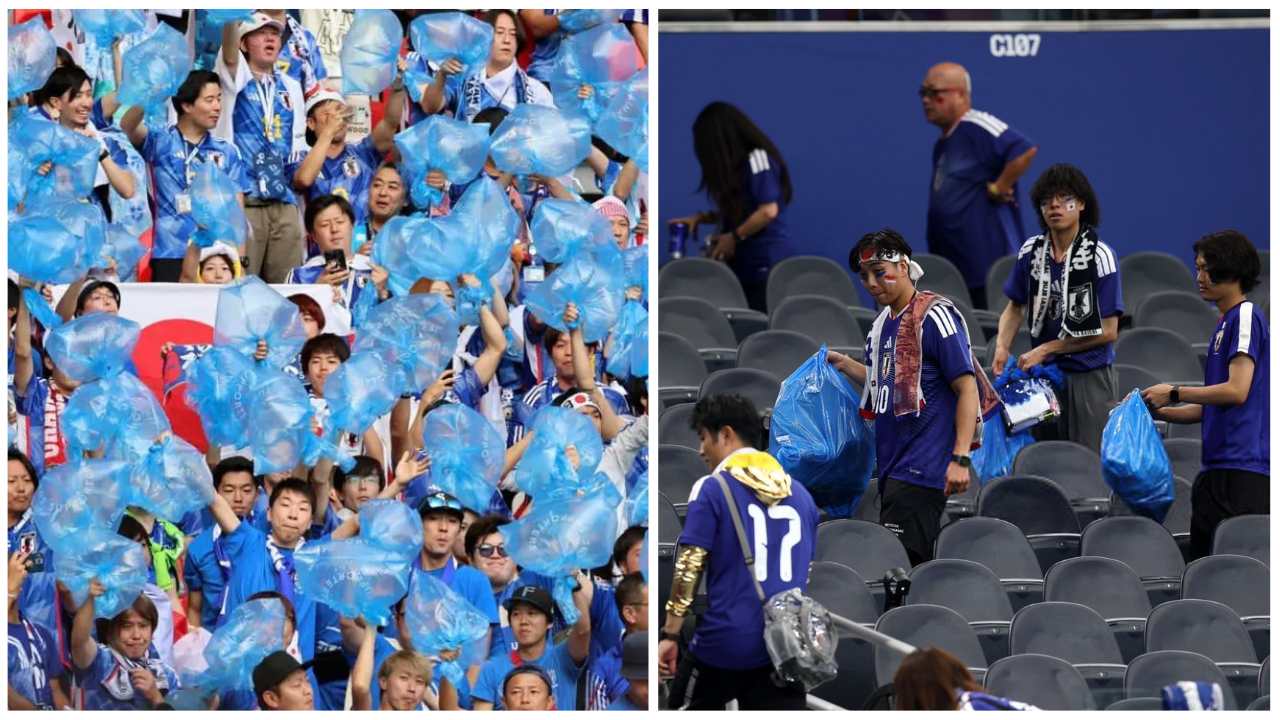
The Japanese fans once again earned global recognition after the 2-2 draw against the Netherlands at AT&T Stadium in Dallas. Once the match was over, dozens of fans remained in the stands to collect trash from their sector, an image that quickly went viral on social networks.
The gesture is not new. Since France 1998, Japanese fans have made cleaning stadiums a tradition during each World Cup, regardless of the result obtained by their team. His behavior usually generates admiration among fans and organizers.
This behavior reflects deeply rooted values in Japanese society. From an early age, students learn to clean their classrooms and common spaces, since in many educational centers that responsibility falls on the students themselves and not on cleaning staff.
The philosophy behind this practice is summarized in the Japanese saying “Tatsu tori ato wo nigosazu”which can be translated as “leave it as you found it”. The principle promotes respect for shared spaces and collective well-being, values that Japanese fans continue to demonstrate at each World Cup.
The Japanese CLEAN IT when they leave each stadium, they are the best thing that happened to this World Cup, I hope things go very well for the Japanese friends pic.twitter.com/rA3rXRyqVK
— Micha (@ElMichalito) June 14, 2026
Specialists point out that the international media attention that this gesture has received over the years has also contributed to reinforcing it. Japanese fans are proud to project these values to the world in highly relevant sporting venues.
The tradition of cleaning stadiums is not limited to the soccer World Cups. This practice has also been repeated in other international competitions, such as the U-20 World Cup in Chile and matches recently held in London.
Furthermore, the J-League, the Japanese professional league, has promoted this community commitment among its followers since its inception. Over the years, the cleanliness of stadiums has become one of the hallmarks of Japanese football and an example of coexistence that transcends borders.
🔴 #sports360bolivia #Vision360 #FIFAWorldCup
𝗕𝗨𝗘𝗡𝗔𝗦 𝗖𝗢𝗦𝗧𝗨𝗠𝗕𝗥𝗘𝗦
Japanese fans clean the stadium after their team drew with the Netherlands in Dallas. Video: @DallasTexasTV pic.twitter.com/vV2y8y5Lem— Sports 360 (@Sports_360Bol) June 14, 2026