
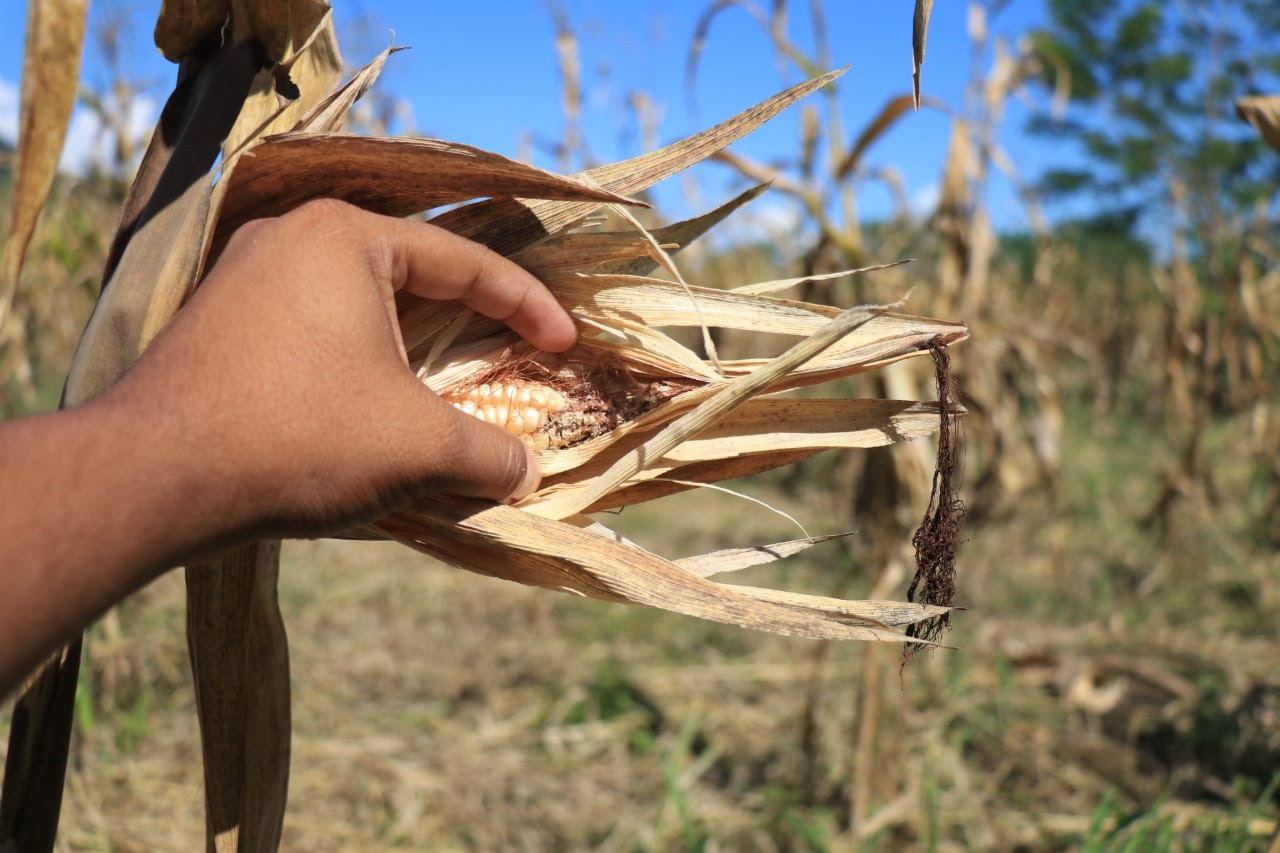
The El Niño phenomenon continues to generate reactions given the effects that are expected due to the cessation of rains and the intense heat that, according to experts, are expected in the coming weeks.
From that account, the Center for Environmental Studies and Biodiversity of the Universidad del Valle de Guatemala (CEAB-UVG) published a report on June 12 through which it analyzes the effects and consequences of this phenomenon in the national territory.
Dr. País Rivera, CEAB-UVG researcher, prepared this reportand said that this is based on scientific evidence on current climatic conditions, as well as on the seasonal outlook for Guatemala, with information at both a regional and global level related to phenomena such as El Niño and La Niña.
Effects will prevail until 2027
According to the expert, we are currently entering a stage dominated by the El Niño phenomenon, which means that the climate in Guatemala will, in general, be drier and hotter than normal, and its consequences could continue until the beginning of next year.
“There is an 82% probability that this phenomenon will fully establish itself between May and July of this year, and a 96% probability that it will continue strongly until the beginning of 2027,” it indicates in its report.
In relation to the rains that are expected for the 2026 seasonindicates that they will be much smaller than usual, and projects August as the month that will have the least amount of precipitation. It also foresees effects due to the intensity with which the heatwave will arrive this year, similar to those that occurred in previous years.
“August will be the most critical month, 30% less rain than normal is expected. The heat wave will be stronger, the period of heat and lack of rain that occurs in the middle of the year – heat wave – could begin earlier, in the second week of July, and will last until the end of August or beginning of September. Its behavior will be very similar to the years 1997, 2015 and 2023, which were years of great drought,” says the expert.
What will happen to the rains?
Regarding the rains, Rivera indicates that “curiously” November is expected to be wetter than normal, as 45% more water is projected to fall, although, as indicated, historically it is a month in which it rains little.
Likewise, it foresees that The beginning of next year will be much drier, which will show the effects of the phenomenon from the first month, with a considerable reduction in the rains that usually fall during this time.
“The beginning of 2027 will be very dry. In January 2027 the lack of rain will be evident, with 28% less than what usually falls in that dry season month,” he says.
The lack of rain as a result of the effects of the El Niño phenomenon will also be accompanied by an increase in temperature, since considerable increases above the average are projected, as indicated.
“Not only will it rain less, but we will feel warmer. For almost every month from June to early 2027, the temperature will be between 0.4 ° C and 0.7 ° C above the historical average. The peak of this additional heat will be recorded in November, when temperatures will be up to 0.7 ° C above the historical average,” he points out.
Rivera also emphasizes that The data presented in the report are of a “referential and complementary” nature. to the official forecasts issued by Insivumeh, Conred and other institutions that provide information on the climate in Guatemala. It also indicates that methodologies based on analogous years and statistical projections from the International Research Institute for Climate and Society (IRI) were used for its preparation.
They analyze strategies to face agricultural shortages
The Ministry of Agriculture, Livestock and Food (MAGA) held the webinar “Drought and Food Security: Challenges of Guatemalan agriculture in the face of the El Niño phenomenon 2026-2027”, in which strategies were analyzed to face the lack of rain and protect agricultural production.
The speaker was Rafael López, director of the Directorate of Geographic, Strategic Information and Risk Management (DIGEGR), who during his intervention “emphasized the importance of having scientific tools to anticipate critical scenarios in the field.” In that sense, he highlighted several technical instruments:
- Soil and Water for the Future Program
- Keyline hydrological system
- Institutional Response Plan (PIR)
- Effective communication systems on environmental and agroclimatic phenomena
López highlighted that “constant monitoring allows for timely alerts to be generated so that local producers adjust their planting calendars and adopt soil conservation practices before the effects of the heat waves intensify.” According to him, this preventive approach seeks to reduce the sector’s vulnerability to prolonged dry periods.
Interinstitutional and academic participation
Analysts and experts from the Institute of Agricultural Science and Technology (ICTA) and the University of San Carlos de Guatemala (Usac) also participated in the event. Besides, Technical projections from the Strategic Agricultural Information Center (CIEA) were analyzed.which serve as a basis for designing sectoral contingency plans.
The speakers agreed that “the transfer of climate information to rural communities is key to strengthening the resilience of the sector and mitigating the socioeconomic impact on family farming.”
According to the participants, inter-institutional support for this phenomenon “strengthens strategic planning capabilities, ensuring the implementation of preventive measures that safeguard productive assets and food security in the country.”