
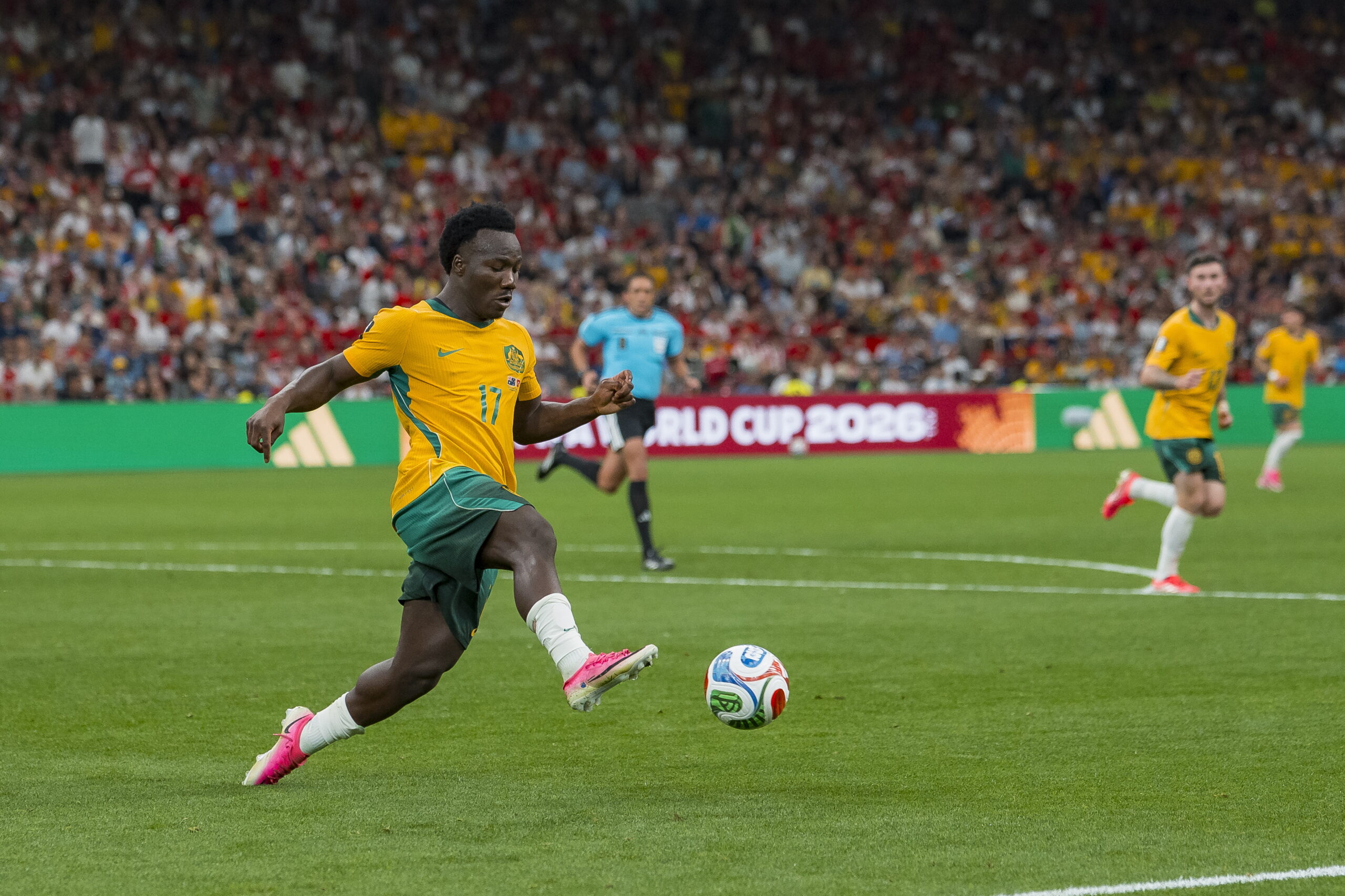
Australia delivered the first big blow of the 2026 World Cup by beating Turkey 2-0 in Vancouver, in a match that will be marked by the name of Nestory Irankunda.
The young attacker, born in Tanzania and raised in Adelaide, opened the scoring in the 26th minute with an action that combined power and precision: he started at high speed, left two defenders behind and finished coolly against Ugurcan Çakir.
The Irankunda’s story began far from the big stadiums. He was born on February 9, 2006 in Kigoma, a region in western Tanzania, near the border with Burundi.which for years welcomed thousands of refugees from the conflicts in the African Great Lakes region.
His parents had fled Burundi during the civil war that shook that country between 1993 and 2005 and they found refuge in Tanzania. Irankunda was born there, in a context marked by displacement and uncertainty, before the family found a new opportunity on the other side of the world.
The goal not only broke the initial dominance of the Turks, who had controlled possession and created the best chances, but also symbolized an extraordinary personal journey: from a refugee camp to Kigoma to become Australia’s youngest goalscorer in a World Cup and the first player born outside the country to score for the Socceroos.
I said it before the game and Irankunda ended up scoring a great goal and being MVP of the game pic.twitter.com/kcCMIPJyWm https://t.co/oz0nDipSvR
— Gxldereinildo_🇲🇿 (@Gxldereinildo_) June 14, 2026
The second half confirmed the surprise. Türkiye insisted on an equalizer, but collided with the defensive discipline of the team led by Tony Popovic. In the 74th minute, Connor Metcalfe took advantage of a loose ball in the area to seal the 2-0 and secure three points that could be decisive in the group.
Irankunda’s celebration was a nod to history: he ran towards the corner flag and hit it while imitating the iconic celebration of Tim Cahill, Australian football legend. A gesture that connects generations and reinforces the idea that this World Cup can be the stage where a new star is born for oceanic soccer.
Australia, with eight players born outside the country and a squad marked by diversity, showed that its multiculturalism is not just a symbol, but a strength capable of overthrowing favorites. In Vancouver, the Socceroos made it clear that they are ready to defy any odds.
The jump to Europe
Trained in youth clubs in South Australia, he stood out from a very young age for his combination of speed, physical power and ability to unbalance matches. His progress soon caught the attention of Adelaide United, where he emerged as one of the A-League’s biggest promises and began to attract interest from European clubs.s.
After scoring 16 goals and distributing eight assists with the Adelaide team, Bayern Munich opted for him in 2024, in one of the most important operations carried out by a footballer from the Australian championship.
The jump to Europe, however, was not easy. Between the Bavarian reserve team and a loan to Swiss Grasshopper, the minutes were scarce. With the 2026 World Cup getting closer and closer and aware that he needed continuity to stay in the Australian team’s plans, he made a risky decision: leave Germany to sign for English club Watford.
In the Championship he found the prominence he was looking for, accumulated experience in a demanding competition and convinced the Australian coach, Tony Popovic, that he deserved a place in the World Cup squad.