

A detailed analysis of a real -size digital scan of the Titanic has revealed new details of the final hours of the emblematic ship.
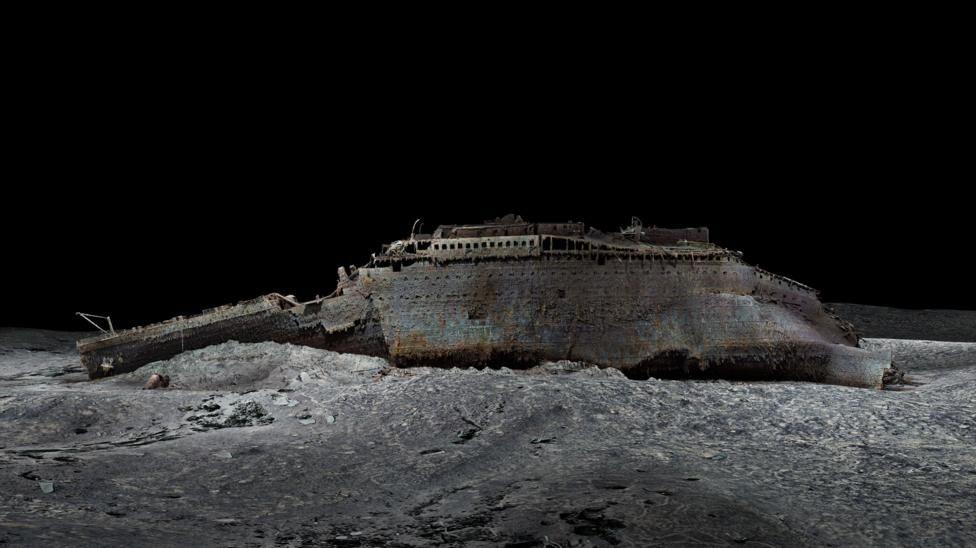
An exact 3D replica shows how the boat broke in two violently after being beaten by an iceberg in 1912, which caused its shipwreck in which 1,500 passengers died.
The images provide a new vision of the boiler room, which confirms the testimonies that indicated that the engineers worked until the end to maintain the lights of the ship on.
And a computerized simulation also suggests that holes in the size of the sheets of paper were those that caused the wreck.
“The Titanic is the last surviving witness of the disaster and still has stories to tell,” explains Parks Stephenson, a Titanic analyst.
The scan has been studied for a new National Geographic documentary called “Titanic: the digital resurrection.”
The remains of the boat, which are on the seabed about 3,800 meters deep in the frost of the Atlantic waters, were digitally mapped by the use of robots.
More than 700,000 images, taken from all possible angles, were used to create a “digital twin”, which was revealed exclusively by the BBC in 2023.
Because the wreck is so large and lies on the seabed in the complete darkness, when exploring it with submersible, only parts of the shipwreck could be seen.
This 3D scan what it does is provide a complete image.
The immense bow is erect on the bottom of the sea, almost as if the ship will continue its trip.
But located about 600 meters from there, the stern is a great mountain of metal. The damage was caused because it crashed into the marine floor after the ship was split in two.
New point of view
The new technology provides a new way to study the boat.
“It’s like the scene of a crime: you need to see what evidence is, but especially in the context in which it occurs,” said Stephenson.
“And having an integral vision of all the shipwreck and the place where it fell is essential to understand what happens here,” he says.
The scan shows new details, such as a round window that was shattered by the iceberg. This coincides with the version of some survivors that the ice got into some cabins during the collision.
Experts have been studying one of the great boilers of Titanic (it is easy to scan because it was in the area where the ship broke in two).
The passengers had said that the ship’s lights worked until the moment it sank.
The digital replica shows that some boilers were concave, which suggests that they were operating when they fell into the water.
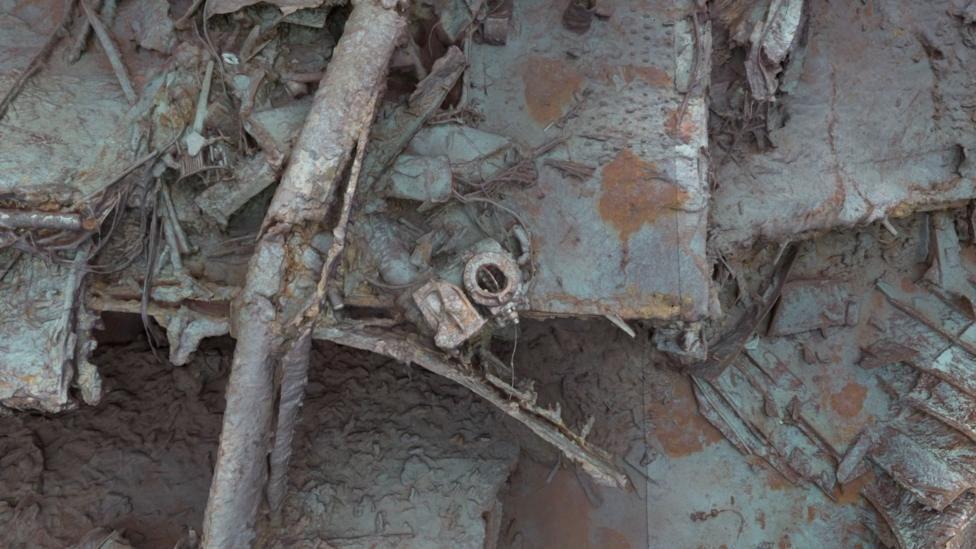
A valve in an open position was also discovered on the stern cover, indicating that steam was still flowing towards the electricity generation system.
Heroism
This would only have been possible thanks to a team of engineers led by Joseph Bell who kept the lights on.
Everyone died in the disaster, but their heroic actions saved many lives, Stephenson explained.
“They kept the lights and the electric current running until the end, which allowed the crew to deploy the lifeboats with some light and not in complete darkness,” he explained.
“They avoided chaos during as long as possible and all that effort is somehow represented by that steam valve that is in the stern,” he said.
A new simulation has also provided more information about sinking.
A detailed structural model of the ship is needed, created from the Titanic plans, as well as information about its speed, direction and position, to predict the damage caused when colliding with the iceberg.
“We use advanced numerical algorithms, computer modeling and supercomputing capabilities to rebuild the titanic sinking,” said Professor Jeom-Kee Paik, of the University College of London, who directed the research.
The simulation shows that, when impacting the ship just sideways against the iceberg, there were a series of online perforations along a narrow section of the helmet.
The Titanic was supposed to be unusual, designed to stay afloat even if four of its watertight compartments were flooded. But the simulation estimates that the iceberg damages were distributed in six compartments.
“The difference between the sinking of the Titanic and its non -sinking lies in the fine margins of the holes, the size of a sheet of paper,” said Simon Benson, associate professor of naval architecture at the University of Newcastle.
“But the problem is that these small holes extend along the ship, so the flood water enters slowly but inexorably through all of them, and finally the compartments are completely flooded and the Titanic sinks.”
Unfortunately, the damages are not appreciated in the scanner, since the lower section of the bow is hidden under the sediments.
Titanic’s human tragedy is still very visible.
The belongings of the passengers of the ship are spread by the seabed.
The scanner provides new clues about that cold night of 1912, but experts will take years to thoroughly examine every detail of the 3D replica.
“He is only telling us his stories little by little,” said Parks Stephenson. “Every time it leaves us wanting more.”
