
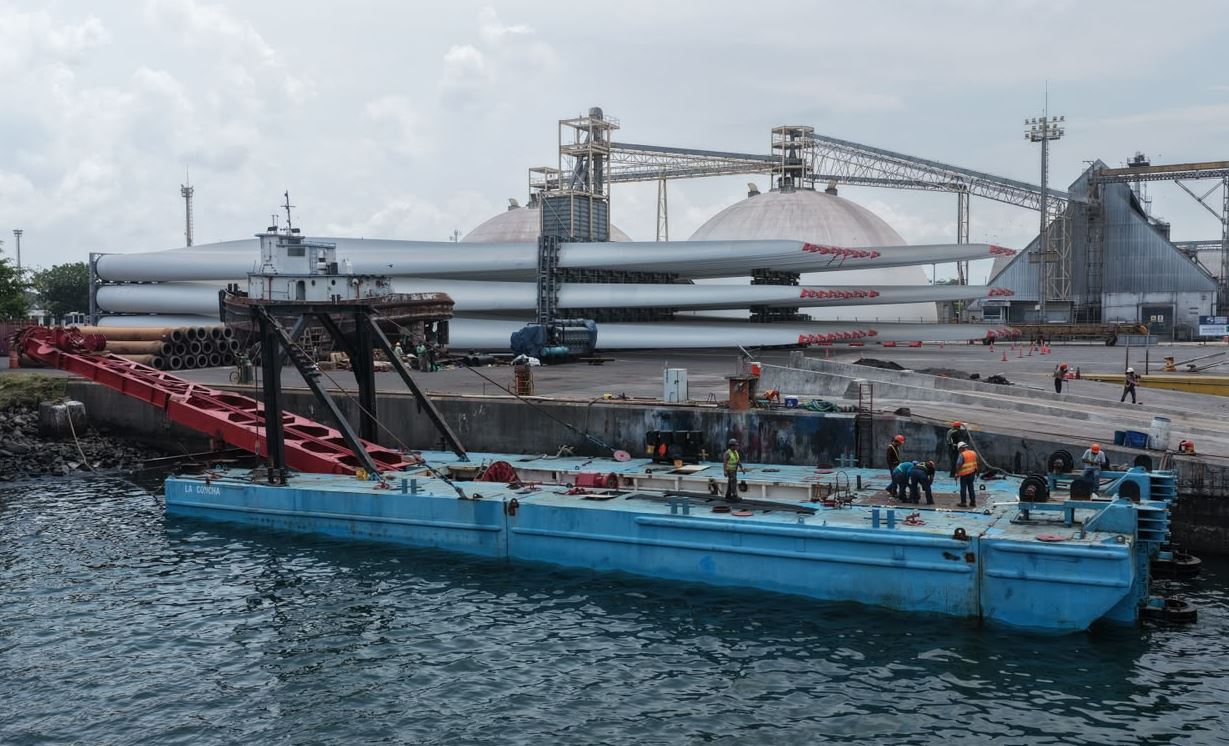
A dredge is already found in the dock of the Quetzal Port Company, in Escuintla, to begin the extraction of sediments and other materials accumulated in the aquatic bed. The provision of this service had been postponed for several months.
The port’s Operations Management is scheduled to begin cleaning work in the dock next Monday, June 22, specifically in the area known as Zeta Gas, where it is necessary to intervene due to the accumulation of sediment and the transit of ships that transport liquefied petroleum gas and dock in the port area.
The situation is due to the size of the vessels and the volume of cargo they transport.
The work will last approximately two months, that is, 60 days, and will conclude in August. This action is part of the agreements reached at the public-private table established to address the issue of dredging from 2025.
The dredge is expected to remove about 180 thousand cubic meters of sediment in five previously defined areas. The cost of the service is estimated at Q15 million, and will be assumed by companies that provide loading and unloading services in the port area.
Dredging involves the excavation and removal of sand, mud, rocks and other sediments from the seabed. These maneuvers are carried out using vessels equipped with pumps or mechanical tools, known as dredgers, with the aim of deepening navigation channels, maintaining ports and recovering eroded beaches.
The cleaning of navigation channels will allow the cargo capacity of ships to be recovered, a limitation that currently represents a risk for port operations.
Dredging will improve port operations
In 2025, an initiative supported by operators such as APM Terminals, Zeta Gas, Repimex, Temsa and Expogranel was signed, together with the Empresa Portuaria Quetzal (EPQ), to facilitate the execution of the planned works.
The actions, considered urgent, have as objective to address operational problems caused by sediment accumulation in the access channel and in the area known as the maneuvering area within the dock.
This situation has generated extra costs for vessels, depending on the type of vessel and the merchandise transported, in addition to prolonging waiting times.
Based on various technical studies, it is expected that, once the work is completed, waiting times will decrease and logistics planning processes for the import and export sectors will improve.