
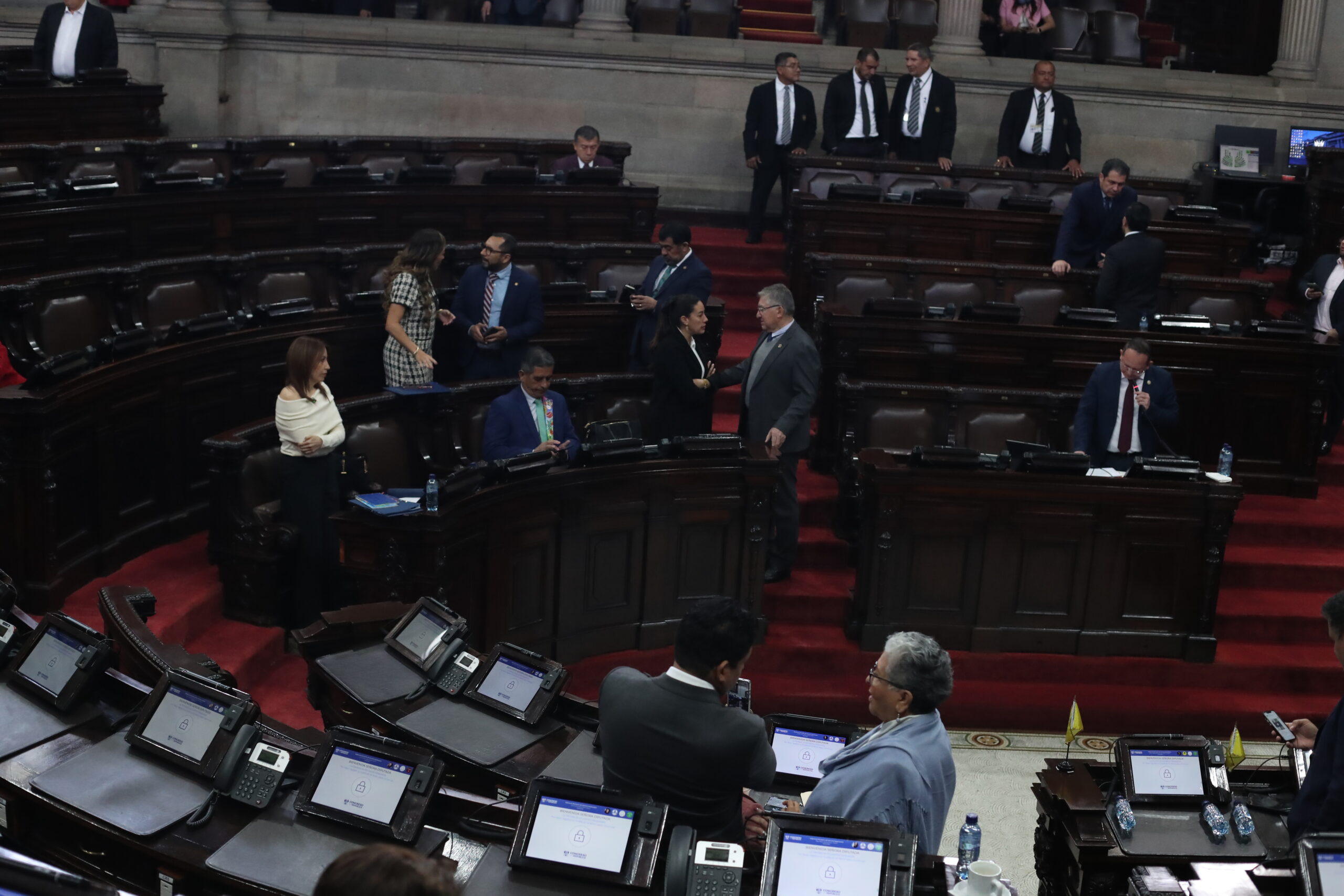
The reduction of the Single Property Tax (IUSI), It seems that it has become a priority for the deputies in Congress, who maintain the discussion around this issue and, apparently, they had already reached agreements to achieve the reduction of said tax borne by the municipalities. The tax reform seeks to benefit citizens from a charge that, in the opinion of the deputies, is “excessive and exaggerated.”
Prior to the beginning of the recess period in Congress, the Board of Directors set up a technical table in which the socialization of the amendments was sought, which were expected to be known in the first session held in the extraordinary period. However, because some disagreements still persisted, its inclusion on the agenda was not finalized.
This week, the head of the National Unity of Hope (UNE) bench, Inés Castillostated that agreements have already been reached between the deputies of various legislative blocks, with whom he assured that they have held meetings in recent days to reach consensus that will allow the modifications to the IUSI to be approved in the next extraordinary session that would be held in Congress in July.
“That is a popular clamor, people are asking for this law to be reformed, it is an abusive tax. There are already great political agreements where an agreement has been reached to lower it from nine to three per thousand for housing. All housing nationwide will pay three per thousand. Likewise, those over 65 years of age would be exempt from the tax, nine per thousand is maintained for all properties that are used for commercial purposes such as warehouses and shopping centers,” said Castillo.
The congressman indicated thatThe amendments cited to the IUSI law are part of those that have been agreed upon with different blocks. However, he clarified that there are still some legislative blocks that seek the repeal of this tax. The legislative blocks that would be supporting the amendments to the IUSI law are UNE, Creo, Vamos, Victoria, Todos y Vos, among others.
Complete removal
For his part, deputy Herman Echeverría, from the Cabal bloc, stated that a reduction of the IUSI to three per thousand is not viable, since this would only open the door for Mayors can find a way to reevaluate properties and, from that account, re-establish new quotas for the collection of the tax.
“Well, this issue is being discussed a lot because it really concerns the people a lot. I, personally, am in favor of completely removing the IUSI, because if we leave it at three per thousand, the mayors are going to come and simply reevaluate the properties and they are going to raise it again technically. We are fighting for this tax, which is unfair, to be completely removed,” said the congressman.
For his part, the independent deputy Nery Rodas states that the real debate should not focus on “whether families or municipalities are helped” by reducing or eliminating the tax, but rather on finding a “balance” to achieve both at the same time.
“A family should not be punished for having their home, but we cannot expect to eliminate the resources that municipalities use to solve the problems of neighbors. Therefore, the reforms must seek a balance, protecting the family home, protecting the elderly with this payment, but also, at the same time, guarantee that local governments continue to have the capacity to provide the basic services required in their municipality,” says Rodas.
More than Q1,800 million in 2025
In 2025, the collection from the Single Property Tax reached Q1,853.7 million in the 22 departments of the country, according to the IUSI Collection Income report published by the Ministry of Public Finance (Minfin).
The report indicates that the departments that received the greatest amount of income are:
Guatemala with Q1 thousand 432.5 million; Escuintla, Q91.8 million; and Sacatepéquez with Q73.3 million.
The municipalities that reported the highest collection of resources from the IUSI are Guatemala, Mixco and Villa Nueva.
Regarding the distribution of funds by municipalities2 per thousand is allocated entirely to the communes, while between 6 and 9 per thousand, 75% corresponds to the municipalities and the remaining 25% corresponds to the State.
The IUSI law also establishes that at least 70% of the resources must be invested in basic services and infrastructure. It is in this aspect that some mayors assure that Municipal work will be compromised if the tax is reduced or eliminated entirely.
Electoral proposal
The position of the mayor of Santa Catarina Pinula and president of the National Association of Municipalities (Anam), Sebastián Siero, was sought to know his position regarding the issue.
On the part of the commune, an audio was shared with statements from the mayor in which he indicates:
“It is a worrying situation. We really believe that it is irresponsible on the part of Congress to put out a proposal like this, without having taken the municipalities into account. How are they going to take resources away from the munis, but they never invited us to Congress to discuss it. So, when we finish reviewing the entire issue, it is not a technical proposal, but it is an electoral proposal,” as he indicates.
Later, through a message via Whatsapp, Siero assured that: “Congress has not called us to any meeting. If they modify the IUSI, they will affect 272 munis. Only 272 have income from the IUSI,” he concluded.