

The 2026 World Cup has become the fastest edition of the tournament to reach 100 goals since 1958, achieving this milestone in game number 33.
Liverpool striker Cody Gakpo scored the Netherlands’ fourth goal in a 5-1 win over Sweden on Saturday.
It is the first time in 68 years that it has taken 33 games to reach triple digits.
The only tournament that achieved it faster was in Switzerland in 1954, won by West Germany, when only 20 matches were needed.
“Probably the most compact and tactically tight game I have seen so far was the Netherlands against Japan, and even that had four goals,” Ellen White, Euro 2022 champion with England, told BBC Sport.
At Brazil 2014, it took 36 games to reach 100 goals, the same amount as in 1982.
In Argentina 1978 and in the United States 1994, 38 games were needed.
This World Cup, organized jointly by the USA, Mexico and Canada, averages 3.09 goals per game and is on track to exceed 300.
Why did it only take 33 games to reach 100 goals?
Do goalkeepers have problems with the ball?
Mexico’s Julián Quiñones opened the scoring in this World Cup in a 2-0 victory over South Africa on June 11.
The goals have not stopped coming since that opening match in Mexico City.
From Germany’s 7-1 thrashing of debutants Curacao in Houston on June 14 to Canada’s emphatic 6-0 victory over Qatar in Vancouver four days later, there has been an avalanche of goals.
One of the reasons for so many goals could be the Adidas ‘Trionda’ ball used in the matches.
It seems that several goalkeepers have already been surprised by the trajectory of the ball.
This was evident earlier this week, when France captain Kylian Mbappé scored his second goal of the game – and furthest of the tournament – by beating Senegalese goalkeeper Edouard Mendy from 30 yards.
It was one of the five goals of the first day scored from more than 22 meters.
Two of those goals were the work of Swede Yasin Ayari against Tunisia, from 24.8 and 24.3 meters respectively.
The goals of the Australian Connor Metcalfe (25.6 meters against Tunisia) and Ismael Saibari (24.7 meters against Brazil) complete the top five places.
Former England goalkeeper Joe Hart, speaking to BBC Sport, has suggested that goalkeepers are having difficulty controlling the ball.
Hart noted that the ball reached England goalkeeper Jordan Pickford quicker than expected when Martin Baturina equalized for Croatia against England on June 17.
More than 10 goals have been scored from outside the box, not to mention the easy goals after goalkeepers were unable to save effective shots.
“There are one or two occasions where this ball has not behaved as you would expect,” said former England goalkeeper Paul Robinson, who is commentating on the World Cup for BBC Sport.
“It’s something you have to pay attention to,” he warned.
It is not the first time that World Cup balls have caused problems. During the 2010 tournament in South Africa, the “Jabulani” became famous for its spin, drop and drift, which was believed to have contributed to several long-range goals.
At the time, England’s David James was one of several players who criticized the ball, saying it would “allow extra goals” and “make some goalkeepers look ridiculous.”
“The ball is terrible. It’s horrible, but it’s horrible for everyone,” James said.
At the end of that tournament, 26 of the 145 goals scored were from outside the area.
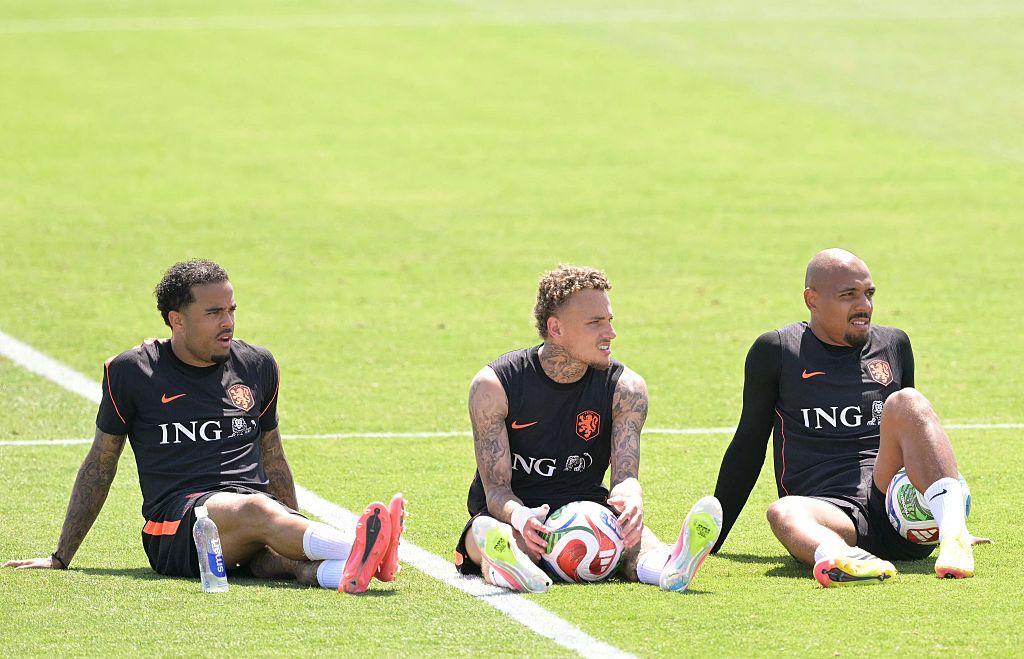
Is the expanded format behind the increase in goals?
Goalless draws in this World Cup have been as rare as seeing Neymar on the field with Brazil.
After more than 30 games in the tournament, recently expanded to 104 games, there have only been two.
And what a memorable goalless draw it was for tournament debutants Cape Verde, who finished a draw with 2010 world champions Spain in Atlanta on June 15.
The Blue Sharks are one of four nations making their debut in the expanded 48-team World Cup, along with Curacao, Jordan and Uzbekistan.
While Cape Verde frustrated Spain, Curacao, the smallest nation to participate in the tournament, both by size and population, conceded seven goals against Germany in its first match and in its second meeting against Ecuador the score ended in a scoreless tie.
“Of course, having more teams and lower-ranked national teams has had a small impact on the quality,” said Thomas Frank, former Brentford and Tottenham manager.
“But, apart from some games, like Germany against Curacao, where the game got away from them, not many teams have been overwhelmed so far,” he highlighted.
Jordan, who are 68th in the FIFA rankings, began their campaign with a 3-1 loss to Austria, while Uzbekistan lost by the same score to Colombia.
Has the interval between matches influenced the large number of goals?
Mexico, which began the tournament on June 11, had to wait a week before playing South Korea again.
Has this given the stronger teams a chance to recover and recharge before playing again?
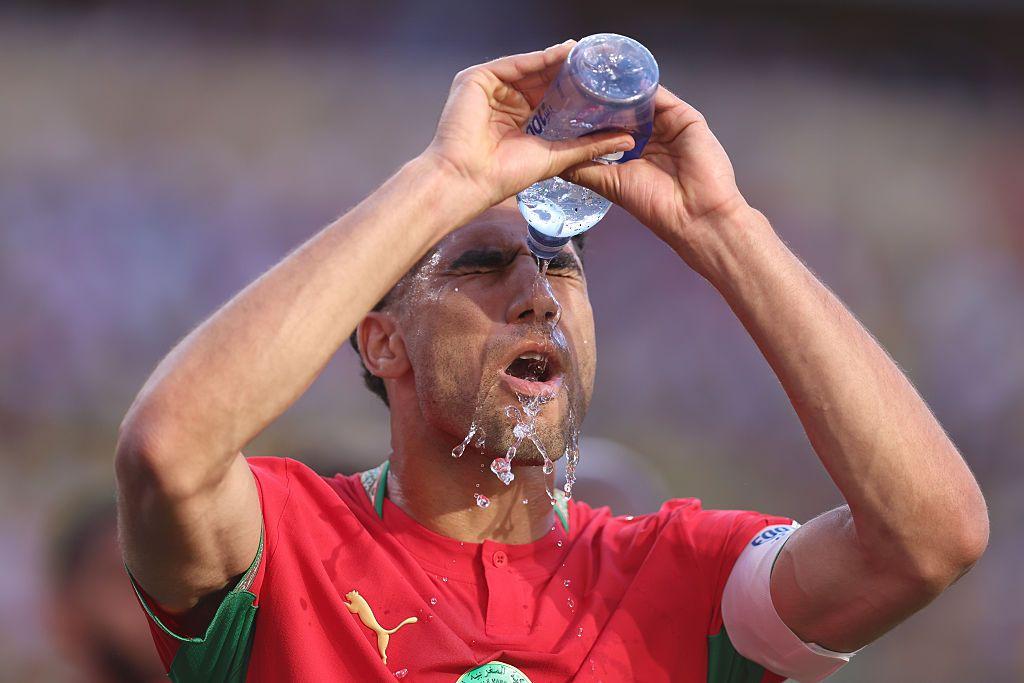
Is the heat causing more goals?
This World Cup (3.09 goals per game) is surpassing Qatar’s scoring average four years ago (2.69 goals per game), a tournament that was held in December to mitigate the high summer temperatures in the Middle East.
Could the heat in North America be causing physical difficulties and, therefore, more goals?
Of the 105 goals of the tournament (after Germany’s victory over Ivory Coast), 30 have been scored between the 76th minute and the end of the match (28.6%, a percentage that could be the sixth highest in history and the highest since 2014).
There have also been a high number of costly errors that have led to goals.
Tunisia’s Ellyes Skhiri lost possession in a dangerous area against Sweden, allowing Viktor Gyokeres to score.
The North Africans made six errors that led to shots on goal, four of which directly resulted in a goal, in a resounding 5-1 victory for Graham Potter’s team in their first match.
Elsewhere, have hydration breaks – booed by fans in some games – allowed teams to regroup and then score goals?
The mandatory three-minute breaks in all 104 games are intended for players to hydrate, but coaches have used them to make tactical changes and give new instructions.
Brazil was down 1-0 against Morocco in its first match in New Jersey, but managed to tie 10 minutes after the restart after a hydration break in the first half.
“You can tell the players what to do,” said Swiss coach Murat Yakin.
“We can show them images. During those three minutes we can talk to them, talk about substitutions, we can talk about changes,” he explained.
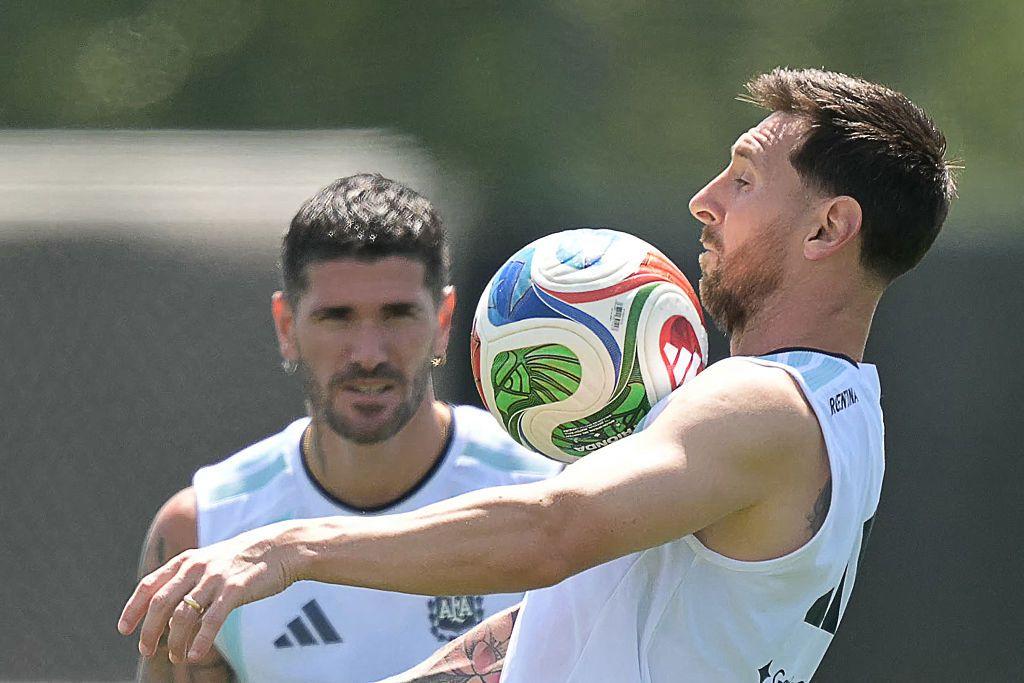
Dazzling start
Another factor behind the scoring streak is that many of the big names have arrived and have had a brilliant start.
Lionel Messi scored a hat-trick against Algeria, Kylian Mbappé scored a brace against Senegal, while Vinícius Jr. has scored in each of Brazil’s two games. Erling Haaland, winner of the 2025-26 Premier League Golden Boot for his 27 goals for Manchester City, also scored a brace in Norway’s 4-1 win against Iraq, as did England captain Harry Kane in the win over Croatia.
“We have seen many times, both in World Cups and European Championships, that the best players have not been in top form after a demanding season, as happened to Harry Kane two years ago at Euro 2024,” added Frank.
“But he and other key players like Lionel Messi and Erling Haaland are unstoppable and look in top shape,” he noted.
Speaking to BBC Sport, former Manchester City defender Micah Richards said: “The forwards in this World Cup look very confident in themselves.”
“It’s as if everyone believes they are going to score and fully trusts their abilities. It’s less about tactics and more about the positive atmosphere of being in a World Cup,” he concluded.

click here to read more stories from BBC News Mundo.
Subscribe here to our new newsletter to receive a selection of our best content of the week every Friday.
You can also follow us on YouTube, instagram, TikTok, x, Facebook and in our whatsapp channel.
And remember that you can receive notifications in our app. Download the latest version and activate them.