
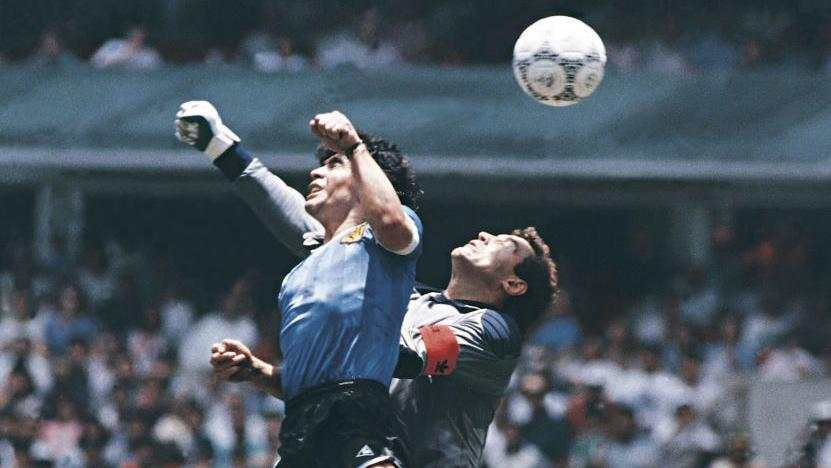
It was my first soccer game. I had never been to a stadium and I wasn’t even interested in that sport, but by a stroke of luck I ended up seeing Diego Armando Maradona score two of the most famous goals in the history of football for England.
It happened 40 years ago. The World Cup was being played in Mexico and we were all excited because the team, led by Hugo Sánchez, had reached the quarterfinals, where they lost with honors on penalties against the powerful West Germany.
Even so, I never imagined that I would see a Copa match, much less in the historic Azteca Stadium.
On the morning of June 22, 1986, my dad called us to say that a friend had given him two tickets that he was not going to use. Everything was last minute, but my mom decided to take me so I could “live the experience.”
I was 17 years old and I was excited, but not because of the football, but because it was the opportunity to see many handsome boys from all over the world. I got ready as if I were going to a party: makeup and the whole show. My mom said I was exaggerating, but she let me go anyway.
The Azteca Stadium was very far away, so we left early. From the Periférico you could feel the atmosphere: cars with flags, open windows, people shouting cheers from one car to another.
The funny thing was that we all shouted: “Long live Mexico!”, although the team was no longer in the competition.
Maradona, the villain
When we arrived, it seemed like a giant party. There were chavas (girls) painting flags on their cheeks and I immediately asked them to paint one for me. I have no photos from that day and, of course, there were no cell phones either.
Our seats were right in the middle of the stadium, which was perfect because there were people from all over, speaking a thousand different languages. I had always dreamed of traveling and that made it even more special.
When the game started, I was barely following what was happening on the field. I was more aware of the Mexican wave, of the rhythm of the public. Furthermore, the first half ended 0 to 0.
But 6 minutes into the second half, everything changed.
Suddenly, the entire stadium stood up. For a second there was celebration… and then confusion, arguments, noise growing in different directions.
Maradona had jumped to fight for a high ball alongside Peter Shilton: the English goalkeeper went to reject it with his closed fist and the Argentine went to attack with his head… and his hand.
The episode would go down in history as the “hand of God,” but that day, inside the stadium, people debated: had it been with the head or with the hand?
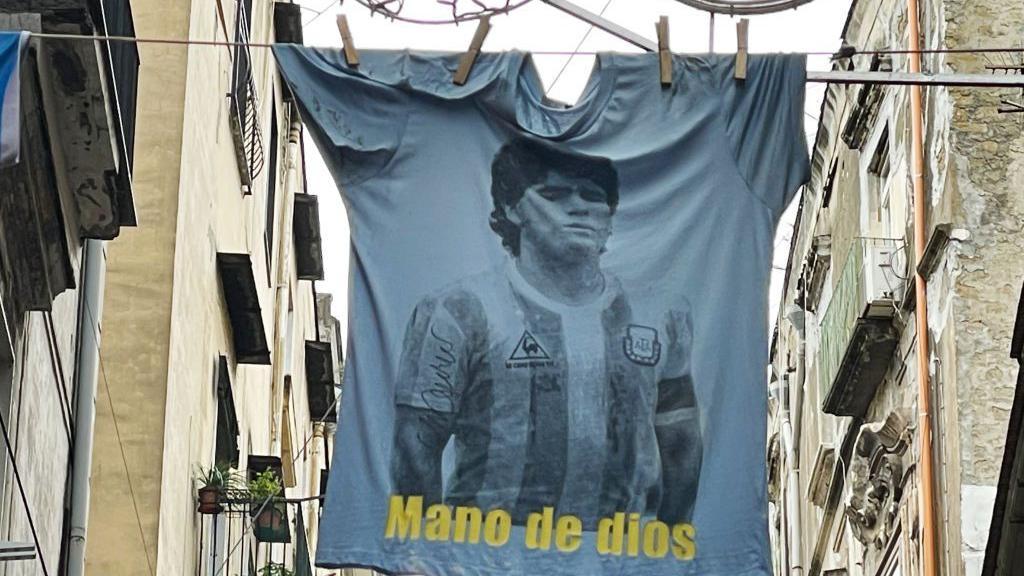
The English protested furiously. The Argentinians, Mexicans and Latinos around me defended the 10.
At that time the memory of the Malvinas/Falklands War was still very present, when in 1982 the Argentine military landed on the islands to claim their sovereignty.
During the 74 days that that conflict lasted, 649 Argentine soldiers and 255 British soldiers died, in addition to three inhabitants of the islands.
Therefore, on and off the field, that Argentina versus England felt more than a simple soccer match.
But I was still far from being a journalist and I half understood the football discussion and the geopolitical background, even more so amid so much chaos.
Next to me, a man in a suit—probably escaped from the office—explained to me the sports thing: Maradona hit the ball with his hand, but the referee didn’t see it and declared the goal valid.
The discussion was so intense in the stands that, 4 minutes later, we almost missed the second goal.
And that’s the one that really stuck with me.
“This is why people love football”
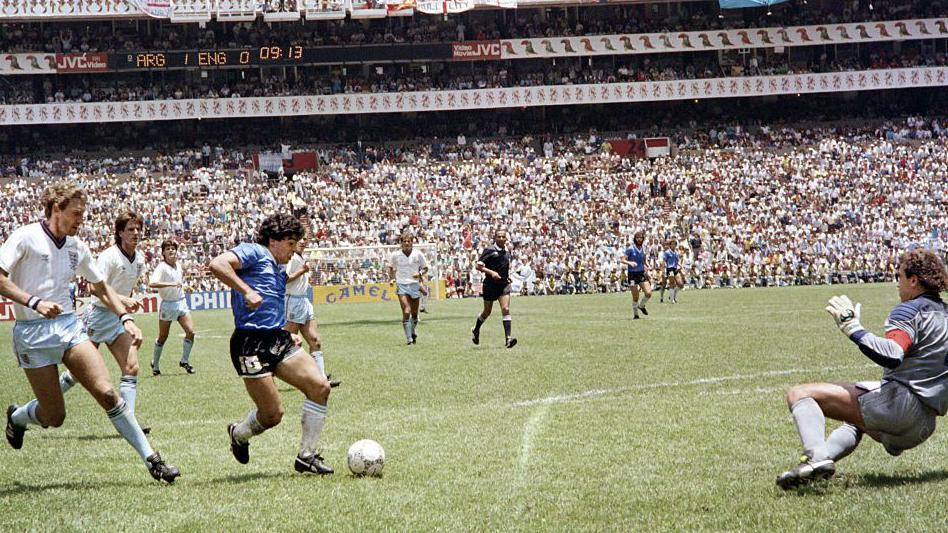
Unlike the first, the entire stadium fell silent when the play began.
Maradona advanced with the ball with almost impossible precision, avoiding four English players. Shilton himself fell into a sitting position due to a feint.
And then, suddenly, the ball in the back of the net. The stadium exploded.
I remember thinking: “This is why people love football.”
I looked around and was surprised to see that even some English people were celebrating. It was impossible not to do it.
Years later, Maradona would say the famous phrase: “The ball is not stained,” which is so far the best way to explain this apparent contradiction happening just a few minutes apart.
When the game ended—with the Argentine victory 2 to 1—my mother and I walked to the car in the middle of the hustle and bustle, eating tacos and fruit with chili and lemon.
Years later I understood that I had witnessed a historic episode. I never stopped being passionate about football, but that day it stayed with me.
When I later lived and worked for the BBC as a correspondent in Buenos Aires, the “hand of God” was a constant theme, mentioned mainly by Argentines compared to my English colleagues.
But I always thought that the truly unforgettable goal was the second, almost incredible if I hadn’t seen it with my own eyes.
Therefore, rather than the “hand of God”, I am always much more willing to boast that I saw the “goal of the century” in person.

click here to read more stories from BBC News Mundo.
Subscribe here to our new newsletter to receive a selection of our best content of the week every Friday.
You can also follow us on YouTube, instagram, TikTok, x, Facebook and on our channel WhatsApp.
And remember that you can receive notifications in our app. Download the latest version and activate them.