
Carlos Arias, president of the Coordinating Committee of Agricultural, Commercial, Industrial and Financial Associations (Cacif), explains, in the extract of this interview, that investment is discouraged and asks the authorities to investigate cases of municipal arbitrariness due to charges and decisions towards projects of different kinds.
According to Ariasthe lack of legal certainty, derived from municipal decisions that impose requirements or charges without legal basis, generates distortions in investment conditions and sends a negative message to local and foreign investors.
Given this, he insists that the Public Ministry (MP) and other competent bodies must investigate possible irregularities, since municipal autonomy should not allow actions outside the law.
In recent weeks, cases of projects facing problems due to municipal decisions have emerged publicly. What effect do these types of practices have on investment?
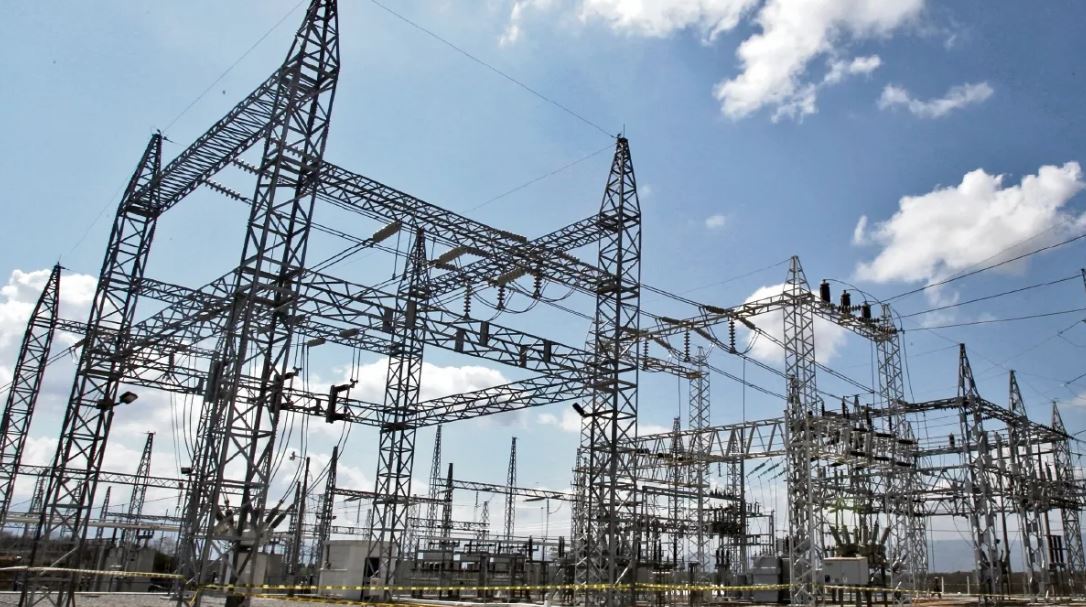
Here there is an issue of legal certainty. Investments in large projects such as electrical infrastructure or road infrastructure, for example, are projects that are normally national priorities, seeking foreign investment or investors who risk investing throughout the national territory. But, when we have arbitrariness in the municipalities, where the requirements that the law establishes are not respected, the right to issue licenses is not respected, because there are additional economic requirements that have no legal basis, what they cause is a distortion of the investment conditions and what that sends is a negative message to investors that in Guatemala you cannot trust the legal system.
As the National Electric Energy Commission (CNEE) said in Congress, there are cases that we believe should be investigated by the authorities, where all the requirements were met, all the studies, all the discussions with communities, everything was carried out completely and then it becomes a municipal whim where this stops, stops, where there may even be, according to what they said, signs of corruption.
For us, the message discourages investment in Guatemala as there is no legal certainty.
Apart from Xochi or the electricity projects that have been mentioned in recent days, have you identified other projects in other sectors with these types of problems?
Yes, of construction sector they live telling us that operating in some municipalities of the country is like operating in a different countrywhere the rules for issuing construction licenses, deadlines and legal compliance are very difficult, because in the end arbitrariness is what prevails in some municipalities.
What authorities should investigate, because many talk about municipal autonomy?
Municipal autonomy is not a municipal reign that does not have to be limited to national legislation. The Constitution itself defends that autonomy, but it also defends projects that are national, where the common good must prevail over the particular good, and corruption cannot be denied at the national level.
CONTENT FOR SUBSCRIBERS
That is, if there is corruption in a municipality, it is the Public Ministry that will be responsible for investigating. The mayor, as a representative of the Municipal Council, does not have the right, because he is a mayor, to be corrupt. No one has that right. So, in the end, municipal autonomy does not shield municipal corporations from demanding bribes or any type of extra costs that are not in the law. It is worth noting that national authorities have a responsibility to investigate.
Is there any complaint from a particular company or sector for this type of case that has already been presented to the authorities?
I do not have the details of the particular cases, but if an authority such as the National Electrical Energy Commission clearly mentions it in the Congress of the Republic, let’s start from there, there should already be an investigation into this situation.
In Guatemala, what we need is more infrastructure, more investment, and what this arbitrary way of acting does is that it scares away investment from Guatemala, because it is perceived that municipal licenses not only cost them to be granted under normal conditions, but can also be revoked. That is truly unprecedented in a rule of law.
He electricity sector mentions more than 41 projects that have these difficulties and on roads, The most recent public case was Xochi. Are there any other projects that are facing these problems?
I will leave the specific cases to the authorities to process them as they are presented to them, we should not be the ones to issue an opinion on one case or another, what we know is that there is an important group of cases that are on the table. So, the Public Ministry should take this seriously and seek to ensure that the law is respected at all levels in Guatemala, and municipal autonomy is not something that allows violation of the law. Municipal autonomy has its limits, which is in legal compliance.
What is Cacif’s call or position?
Cacif’s call is to all the mayors of the country to be aware that the development of the country corresponds to all of us, that national interconnection projects, whether electrical or road infrastructure, it is up to all of us to support them and do things based on the law, complying with what the law mandates and allowing that development to occur.
The call is to prevent us from falling into cases where there is an abuse of authority or arbitrariness, because this way we will not be able to get investment to come to Guatemala.
What is Cacif’s proposal?
They must start by following the law, a proposal is not needed to say, “follow the law.” The last straw would be that we have to make a plan to comply with the law, with the situation we are going through in the country, where each municipality has an obligation to comply with the law. So, it is not an issue of a project, it is not an issue that we as a private sector have to organize something in particular.
Have you approached ANAM or the Executive Agency to see what can be done about it?
Every time we have the opportunity to speak with leaders, whether from the Executive, mayors, you will always hear the same way of speaking from us, which is: we want a country that develops in a way that reaches that development to all corners of the country. We want this development to be based on a rule of law that can count on reliable institutions and that these institutions do their work within the law, so that investment in Guatemala finds a way to develop the country at a greater speed.
In Congress there is a bill to declare electricity transmission works urgent, which seeks to unify criteria for authorizations or permits. Have you analyzed it or do you support it?
Yes, we know the bill, we believe that it is important to declare priority projects in electrical transmission, because in the end it will be of no use to us if more electrical generation comes if we do not have a way to transmit it. From the private sector we will be working with the Congress of the Republic to promote a law that allows these investments in transmission to occur in Guatemala.
Any other similar proposal for another sector or that has emerged from the private sector?
We have been asking for months for the DIPP (Directorate of Priority Road Projects) to get to work. on the issue of priority road infrastructure. We insist that legal compliance must be given, that the ministers of State who sit on that board of directors have to take action and that it is useless to have laws that we do not comply with, even worse if the government of the Republic itself decides not to comply.
Have you had any contact with the National Association of Municipalities (Anam) to express these sector concerns? What have they asked you and what response have you received?
No, we have not approached ANAM, we have spoken and tried to move the projects forward with the mayors in particular, and we hope that ANAM, as coordinator, does its part in promoting legal compliance in Guatemala.