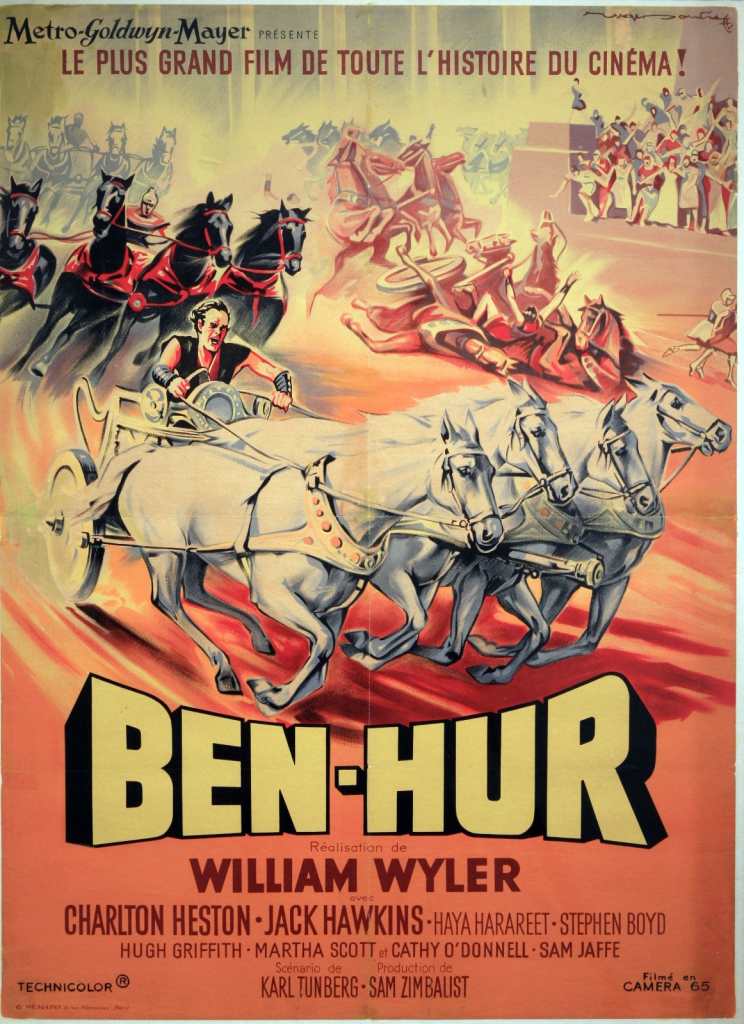
The first time the world heard about Ben-Hur It was not in 1959, when the Metro-Goldwyn-Mayer (MGM) studio premiered the film-which to date is crowned as one of the most awarded tapes in the history of the Oscar Awards-, but half a century earlier.
He November 12, 1880 the American Lewis Wallace launched a book called Ben Hur: A History of Christ, A novel that would change your life.
Wallace, in addition to being a soldier of the American Civil War, governor of New Mexico and, subsequently, ambassador to Turkey, was a prodigy of the arts that manufactured and touched his own violins, drew and painted, and possessed eight patents for various inventions, including a retractable reel hidden in the mango of a fishing cane.
But It was in the literature where Wallace really left a mark, which made him the only novelist honored in the National Hall of Statues of the United States Capitol.
The origin of inspiration
Ben Hur: A tale of the Christ, It was not the first novel published by Wallace. After returning home after fighting in the civil war and in the battle of Monocacy, he published a story about the conquest of the Aztec Empire by the Spaniards, entitled The right Godin 1873.
The inspiration for his next work was born from his own ignorance, because, according to a text of the National Fund of Humanities of the United StatesWallace used to tell how in 1875 he met Colonel Robert Ingersoll in a train. After many hours of conversation, in which he questioned the existence of God, heaven, Christ and other theological concepts, Wallace realized how little he knew about his own religion.
In order to know all the necessary details to write your work, Wallace began to study: first the Bible and then all the reference books on the old Middle East he could find. Thus began his trip to the world of Judea of the 1st century.
The author suspected that a novel about Jesus Christ would be put under the magnifying glass by experts, so everything I was going to write should be accurate.
According to the text of the National Humanities Fund, Wallace did everything, except traveling to Jerusalem. However, years later, when he visited the Holy Land, he realized that his research had been so complete that he found no reason to modify the text of the book.
A novel that made history
Wallace wrote a very thorough story. So much so that he dedicated four pages only to the description of the sand of the car race in the Antioch circus.
The book was published on November 12, 1880. Although he did not have an immediate success, two years later he charged great impulse among the readers.
For the year 1900, 36 editions in English of the book had already been printed and had translated into another twenty languages, including Braille. In addition, it became the best -selling novel in the United States that year.
From your first publication, the book Ben-Hur: A story of Christ He has never stopped printing. For a long time he remained the best -selling novel in the United States, Until in 1936 What the wind tookby Margaret Mitchell, he took his position.
The novel intertwines the life of Jesus with that of a fictional protagonist, the young Jewish prince Judah Ben-Hur, who suffers betrayal, injustice and brutality, and longs for a Jewish king to defeat Rome. This book combines an exciting historical adventure with a sincere Christian message of redemption.
From paper to theater
During those years, many considered theater as something sinful. However, the Broadway version show of Ben-Hur It attracted many spectators for twenty -one.
More than 20 million people saw the staging between 1899 and 1920. To transport all the scenery and cattle from the work from one place to another, four complete trains were required.
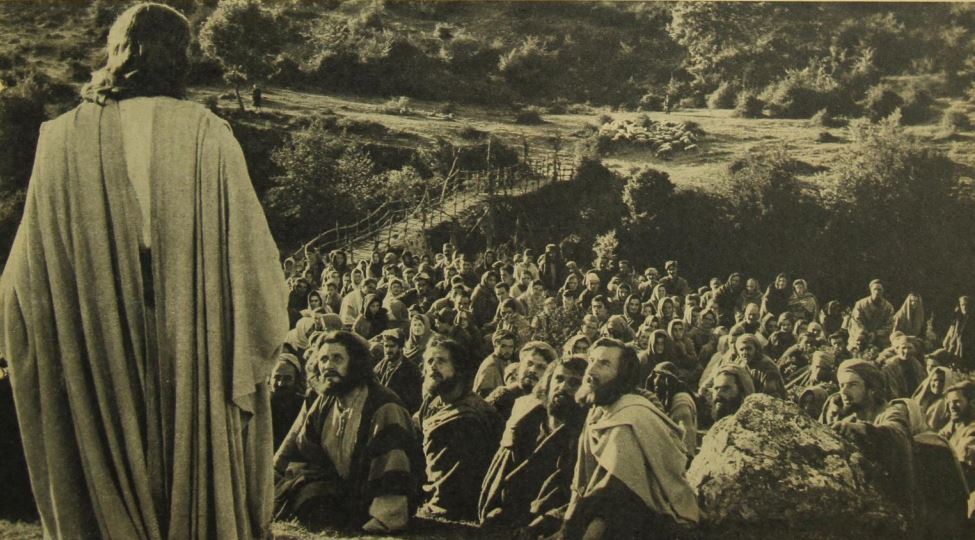
Initially, Wallace flatly refused to dramatize his book, until theatrical producer Abraham L. Erlanger convinced him that Jesus would not be interpreted by any actor; Christ would only be represented as a ray of light on stage. Something that also remained in the cinema, where the public never sees his face.
A blockbuster success
Lewis Wallace died in 1905, at 77, and could not see any of the film adaptations of his book.
Two years after his death, the first unauthorized cinematographic version was released, with a duration of 15 minutes. However, Wallace’s son sued the filmmaker for using the plot without permission.
The second adaptation was made in 1925. That film was authorized and continued the Wallace manuscript more reliable, even keeping the second part of the novel title: A HISTORY OF CHRIST.
This version, made at the time of silent cinema, was an odyssey. According to the Infobae media, its filming included fires, accidents and all kinds of unforeseen events.
For a chance of destiny, In this film William Wyler worked as a production assistant, without imagining what years later it would be he who would direct a new adaptation that would also change his life.
In the mid -twentieth century, MGM faced financial problems, due to the entry into force of the antimonopoly law in the United States and the rise of television, which was increasingly hitting cinema. However, The study opted for the adaptation of Ben-Hur with the aim of creating such an impressive and moving film that attracted the public to film rooms.
The movie cost MGM US $ 15 million, one of the largest budgets of the time. It premiered on November 24, 1959 and for the study it became a resounding success.
He obtained a total of 11 Oscar awards and, for a long time, he kept the record as the most awarded film by the Academy, Brand that could only match almost four decades later, with Titanic (1997) and The Lord of the Rings: The Return of the King (2003).
Ben-Hur It has been the only Hollywood film included in the official list of religious films approved by the Vatican and, as a clock, it is broadcast on television chains every Holy Week.