
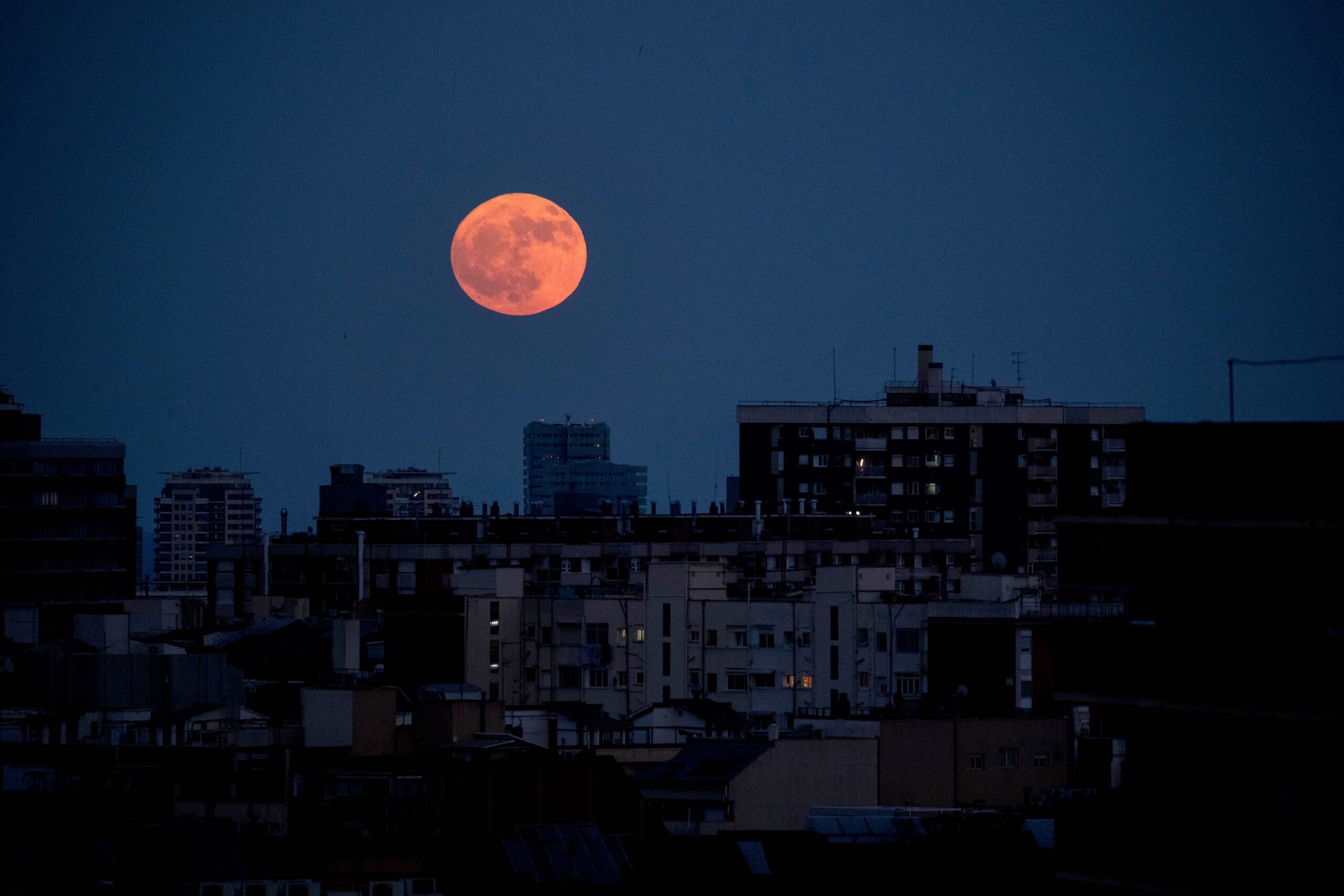
June says goodbye with one of the most anticipated astronomical events of the year: the Strawberry Moon. next monday June 29, 2026 there will be a full moon and, although it will retain its usual color, the term “Strawberry Moon” has another origin.
Although many might think that the Strawberry Moon refers to its color, in reality Its name comes from the indigenous Algonquian peoples of northeastern North America, who identified this full moon with the wild strawberry harvest season.
“Over the centuries, that name was preserved and today it is one of the best known in the lunar calendar,” explains the specialized site Universo del Sureste.
According to NASA, The full moon occurs when the side of the Moon facing Earth is completely illuminated by the Sun. There are different types of full moons, such as red moons, supermoons, blue moons, harvest moons, and of course, the Strawberry Moon.
This year, the Strawberry Moon will also be considered a “strawberry micromoon,” as it will reach its full phase when it is at the furthest point from Earth in its orbit.so it will look a little smaller: up to 7% smaller than an average full moon.
In 2026, The Strawberry Moon can be observed on June 29. The phenomenon will reach its peak at 23:57 GMT. In Guatemala, it will correspond to 5:57 p.m., according to the specialized site star walk. Although It is expected that it can be better appreciated during the night of Monday the 29th and the early morning of Tuesday the 30th.
“In those first minutes it can be seen with yellow, orange or reddish tones because the light passes through a greater amount of the Earth’s atmosphere,” explains the site specialized in astronomy.
The Strawberry Moon can be observed with the naked eye, without the need for a telescope; However, it is recommended to look for a place with clear skies and little artificial lighting.