
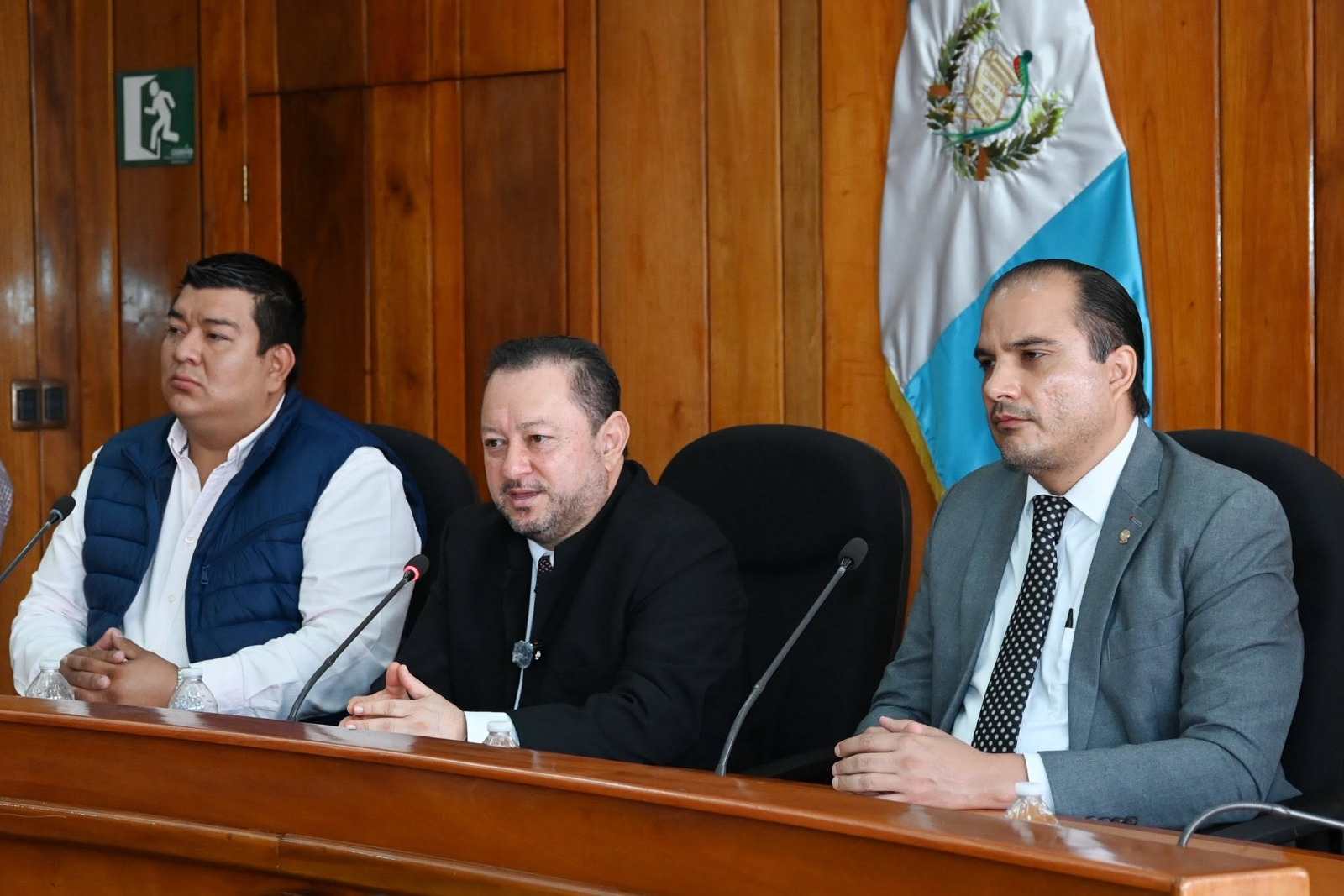
One day before the end of the 2022-2026 period of the rector of the University of San Carlos de Guatemala (Usac), The panorama regarding the replacement of authorities remains undefined. Various pending legal appeals, added to a reform to the Election Regulations approved last year by the Higher University Council (CSU), indicate that Walter Mazariegos continues to serve as Rector after June 30despite the fact that the mandate for which he was elected is coming to an end.
Three analysts consulted by Free press They agree that the immediate scenario points to de facto continuity of the current rector, although they differ on the legal and political scope of that permanence. They also warn that the lack of certainty prolongs an institutional crisis that affects the governance of the country’s public university.
Mynor Lorenzo, analyst at Guatemala Visible, explained that the main factor of uncertainty is the protections and legal actions that still remain unresolved in the Constitutional Court (CC) and in Chambers of the Court of Appeals. related to the election of the rector for the period 2026-2030.
“Legally, the 2022-2026 period must close on June 30; However, it is very likely that the current rector will continue in office,” he stated.
According to Lorenzo, this possibility is based on the article 2 bis of the Election Regulations, incorporated by the Higher University Council in April 2025, which establishes that the university authorities will continue in the exercise of their functions while the person elected to replace them does not take office.
The analyst recalled that this modification changed the mechanism that historically regulated the temporary succession of the rector. Before the reform, at the end of the period without an elected successor, the position had to be assumed temporarily by the oldest dean.
Reform under question
Precisely this modification is one of the points that generates the greatest controversy.
For Juan Pablo Muñoz, coordinator of the Alliance for Reforms, the permanence of the current rector does not respond only to a legal vacuum, but to political decisions that have prevented the normalization of university life.
“The correct thing should be for the person who ends his term to hand over his position, even if there is no successor. In Usac there are succession rules for rector and deans; their stay should not be prolonged. The modification is arbitrary and undemocratic“, held.
Muñoz considers that keeping the rector after the expiration of his term would prevent the recovery of the institutionality of the university and would prolong a conflict that, according to him, It keeps various academic and administrative activities paralyzed.
He added that, in his opinion, the university community already expressed its will during the electoral process, but the judicial resolutions have not yet allowed the dispute to be definitively resolved.
Crisis that surpasses the election
A similar vision is raised by Carmen Aída Ibarra, director of Pro Justicia, who considers that the uncertainty around the replacement of rector It is only a manifestation of a deeper institutional crisis.
At your discretion, The conflict did not begin with the current election, but has developed since 2022.
“Everything indicates that Walter Mazariegos is not going to leave office. The crisis at the University of San Carlos has been going on for four years and has been characterized by undemocratic practices and violations of the rights of students, teachers and workers,” he stated.
Ibarra maintains that the reform of the Election Regulations did not resolve a legal vacuum either, but rather seeks to modify, through a regulatory provision, aspects that are established in the Organic Law of the University of San Carlos.
“The law already establishes the procedure to replace the rector when there is no successor. The Higher University Council cannot modify that law through a regulation,” he said.
The director of Pro Justicia recalled that there are unconstitutionality actions pending resolution precisely against this reform.
Wear and tear of the Rectory
Beyond the judicial outcome, Lorenzo considers that the process has had consequences for the image of the institution.
He stated that The figure of the rector has suffered wear and tear both within the university community as well as in front of society and international organizations, due to the constant questions that have accompanied his management.
This institutional deterioration, he added, has repercussions on a university that, in addition to being the only public one in the country, has constitutional representation in more than 50 State institutions and must preserve its academic credibility both nationally and internationally.
What can happen on July 1
Regarding the immediate scenario, Lorenzo pointed out that there is still There is no clarity about the actions that could be developed when the current rector’s term formally concludes.
He indicated that it is still unknown if the Higher University Council will carry out any protocol act or if opposition sectors will promote new actions.
“We will have to be attentive to the administrative or judicial decisions that allow us to clear the panorama,” he stated.
Meanwhile, the three analysts agree that The immediate future of the Rector’s Office will depend less on the university calendar and more on the resolutions adopted by the Constitutional Court and the other courts that hear actions related to the election of the rector for the period 2026-2030. The lack of these rulings leaves it unclear who will lead the USAC as of July 1.