
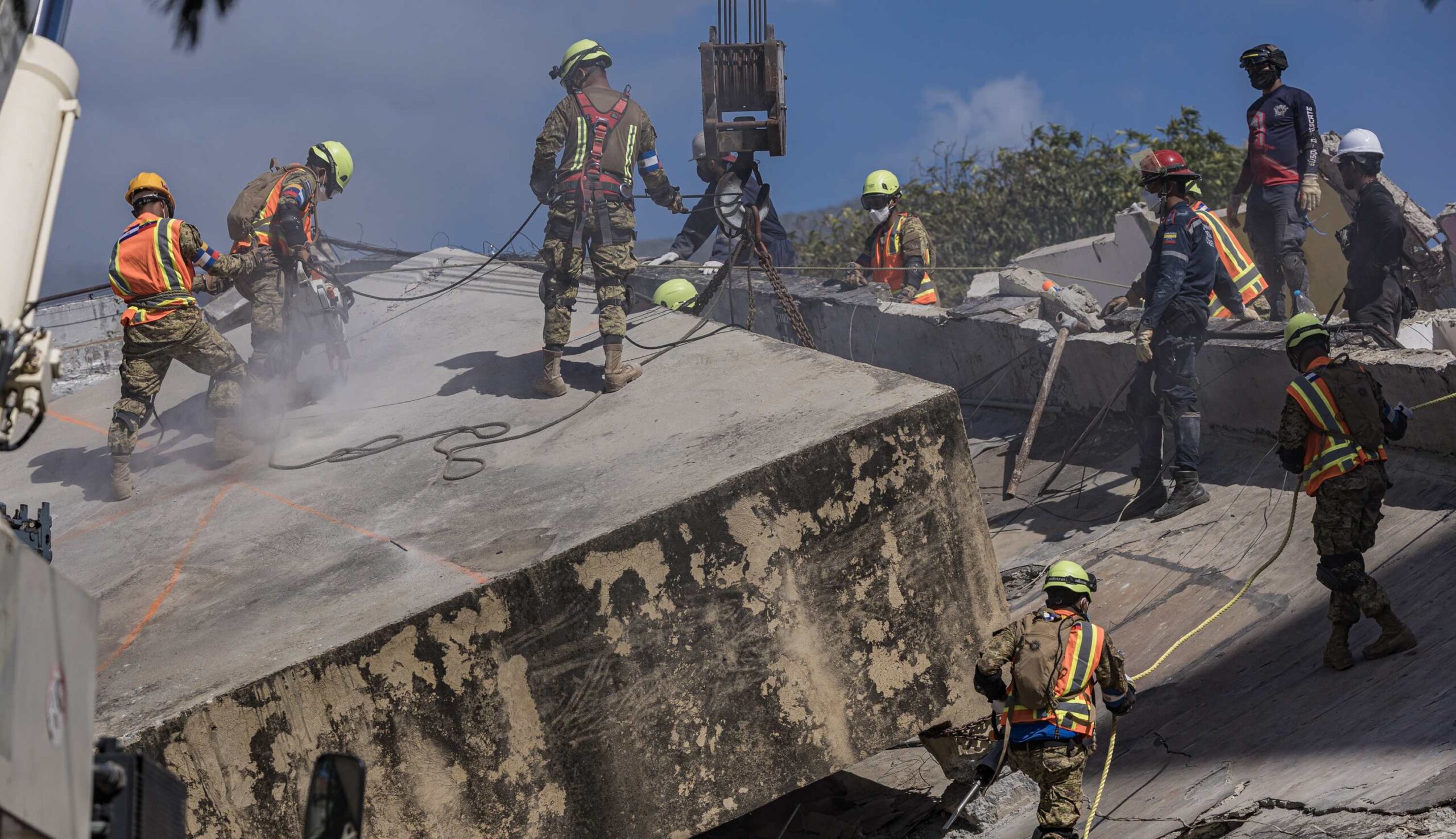
A recording shows how a TikTok live broadcast changed the course of the search among buildings collapsed by earthquakes in Venezuela. Additionally, the keyless satellite connection became a crucial tool when local networks failed.
As heavy machinery removed tons of concrete from buildings destroyed by two earthquakes in Venezuela, the voice of a lifeguard broke the noise of the engines.
“Do not turn off the Starlink. There is another tower that communicated via live,” a rescue worker is heard saying, so volunteers and emergency teams changed direction almost immediately, since the information came from an unexpected place: a live TikTok broadcast made, supposedly, by people trapped under the rubble.
The scene was recorded in a video recorded in one of the areas devastated by the double earthquake that shook Venezuela on June 24. The recording was spread on social networks while the search efforts continue.
“They knew there was a girl because she connected to a TikTok live and started asking for help,” says one of the people who appears in the recording while pointing out different collapsed buildings, according to a publication from Infobae.
The images show the frenetic work of those participating in the operation.
“There is another tower; we need operators to go to another tower,” another rescuer shouts.
The answer comes just a few seconds later.
“There is another tower that communicated via live.” Whoever recorded the scene insists on the importance of keeping the satellite internet antennas active.
“They just got three more people through the live. They left the Starlinks open and without passwords. The people must have had their phones in their hands and because of a TikTok live we are getting them,” he says in the video.
“There is a father with his son. There is a girl; we still don’t know about her. And there are more people back there,” he says while pointing towards several buildings reduced to rubble.
The images reflect a reality that has been repeated for days in different affected cities: rescue brigades search collapsed structures in search of any sign of life, while time is against them.
Given the collapse of much of the telecommunications infrastructure, connectivity became a resource as important as heavy machinery and search equipment.
In this context, SpaceX enabled the Starlink satellite internet service for free for the affected areas.
Although the authorities have not detailed how many rescues could be carried out thanks to this connectivity, the video broadcast from the area shows how search teams began to use live transmissions and connections made through Starlink as clues to direct operations towards buildings where there could still be people alive.
The earthquakes of magnitudes 7.2 and 7.5 that shook the northern part of the country left 1,719 dead.