
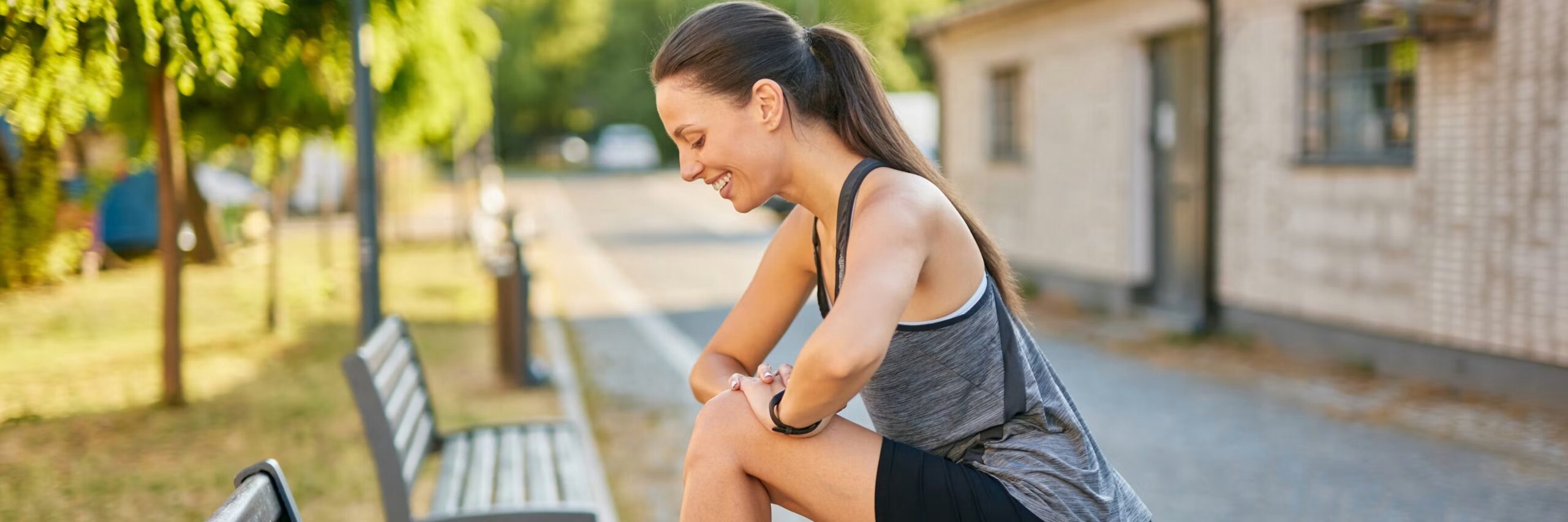
In recent years there has been a drastic increase in sports participation and physical exercise programs by women. However, most of training protocols still based on findings on male athletes. The same is evident on social networks, where influencers physical exercise and sports often share routines and advice that respond to men’s physiological responses.
A key to understanding the differences in the behavior of male and female bodies when we exercise lies in the peculiarities of women’s menstrual cycles. Besides, symptoms may occur that condition these responses.
Four phases with different effects
Women who decide to lead an active life must identify not only the purposes of training, but also logistical aspects such as the time they have, the type of physical activity and the place where they carry it out. It is then recommended that a professional perform an initial evaluation to assess physical abilities, risk factors, and history. This way, goals and appropriate progression of exercise load can be established.
In this context, understanding the influence of the menstrual cycle is key, since it is an indicator of well-being. Regulated by the hypothalamic-pituitary-ovarian systemis a biological process that is influenced by psychoemotional, cultural, sociopolitical and environmental aspects.
This cycle begins on the first day of menstruation and ends at the beginning of the next. Its normal range is between 21 to 35 days, with physiological variations that depend on the age of the woman. It is divided into four phases, each with its physical and psychological effects:
-
Follicular phase (between days 1 and 14). Follicle-stimulating hormone promotes the production in the ovary of 17-β estradiol (the most potent estrogenic hormone in humans) and inhibin B (a hormone that acts as an important marker of the functioning of the ovarian reserve), initiating preparation for ovulation.
At this stage, women often experience increased aerobic capacity, improved vasodilation, mood stabilization and more efficient motor control, as well as an increased capacity for muscle repair. However, some studies also refer increased risk of anterior cruciate ligament injury.
-
Proliferative phase (from day 8 to 12 after menstruation). In an almost parallel manner, 17-β estradiol stimulates the growth of brain tissue. endometrium. At the end of the phase, this layer of the uterus reaches its maximum development and is prepared for a possible pregnancy. During the proliferative phase, Women tend to have more energy and a better mood.
-
Ovulation (14 days before the next menstruation). It is characterized by an increase in luteinizing hormone levels, with estrogen at its greatest. This causes the ovary to release the mature egg, so that it travels to the fallopian tubes with the aim of being fertilized. Some women may experience increased sexual desire or pelvic pain.
-
luteal phase (from the 16th to the 28th). After ovulation, the ovary forms a temporary structure called the “corpus luteum,” which produces progesterone and small amounts of estrogen. These hormones prepare the uterus to receive a possible pregnancy, making its lining thicker and more nutritious. If the egg is fertilized and implanted, pregnancy begins. But if fertilization does not occur, the corpus luteum stops functioning, hormones decrease and the lining of the uterus is shed, giving rise to menstruation.
During this period, the increase in progesterone can cause an increase in body temperature, fluid retention, fatigue, increased dependence on carbohydrate metabolism, changes in mood, and a decrease in energy and appetite.
It is also important to understand that the main influence of the menstrual cycle on the training and recovery processes is related to the metabolismconditioned by different variables; among them, the hormonal action on the body’s cells.
For this reason, physiological responses during and after exercise sessions will depend on the moment of the woman’s menstrual cycle, the level of previous training, body composition and the type of activity practiced, among other factors.
Follicular phase vs. luteal phase
Recent research has focused attention on two specific phases of the cycle: the follicular and the luteal. Both are associated with important changes in responses to exercise.
Firstly, aerobic capacity is higher during the first period compared to the second, although the negative effects derived from hormonal fluctuations during the luteal phase can be mitigated if glucose is ingested during exercise.
In relation to strength, the follicular stage has also proven to be more favorable than the luteal. High levels of estrogen promote muscle growth and inhibit protein breakdown, Therefore, it is recommended to perform strength exercises and take advantage of the physiological conditions that facilitate the body’s response to training. at that stage of the menstrual cycle.
Likewise, several studies describe evident benefits when strength training during the follicular phase in the lower extremities (e.g., quadriceps). Other works suggest that the Arm strength gains can be similar no matter what stage of the cycle you are in.
It is also worth taking into account that strength reaches its lowest point during the luteal phase: progesterone increases and estrogen falls, generating an increase in basal temperature – that is, at rest – and a reduction in the availability of glucose by the muscles, something essential for performing maximum strength exercises. That is why it is suggested to perform low-intensity activities – conscious breathing, Pilates, yoga or walking – and prioritize other physical abilities.
Furthermore, in the context of high performance, women are exposed to specific problems such as so-called female athlete triad (TAF). Defined by the American College of Sports Medicine as a spectrum of interrelationships between energy availability, menstrual function and bone mineral density, it manifests with eating disorders, amenorrhea and osteoporosis.
In short, understanding the menstrual cycle is not only key to female health, but also a powerful tool to optimize physical performance and well-being. Always accompanying it with healthy lifestyles such as balanced eating, good hydration, sleep hygiene, emotional management and regular visits to health professionals.
María Alejandra Angel LagunaProfessor of comprehensive physiotherapy for women, University of La Sabana and Gina Paola Velasco OrjuelaProfessor of Physiotherapy, University of La Sabana
This article was originally published in The Conversation. Read the original.