
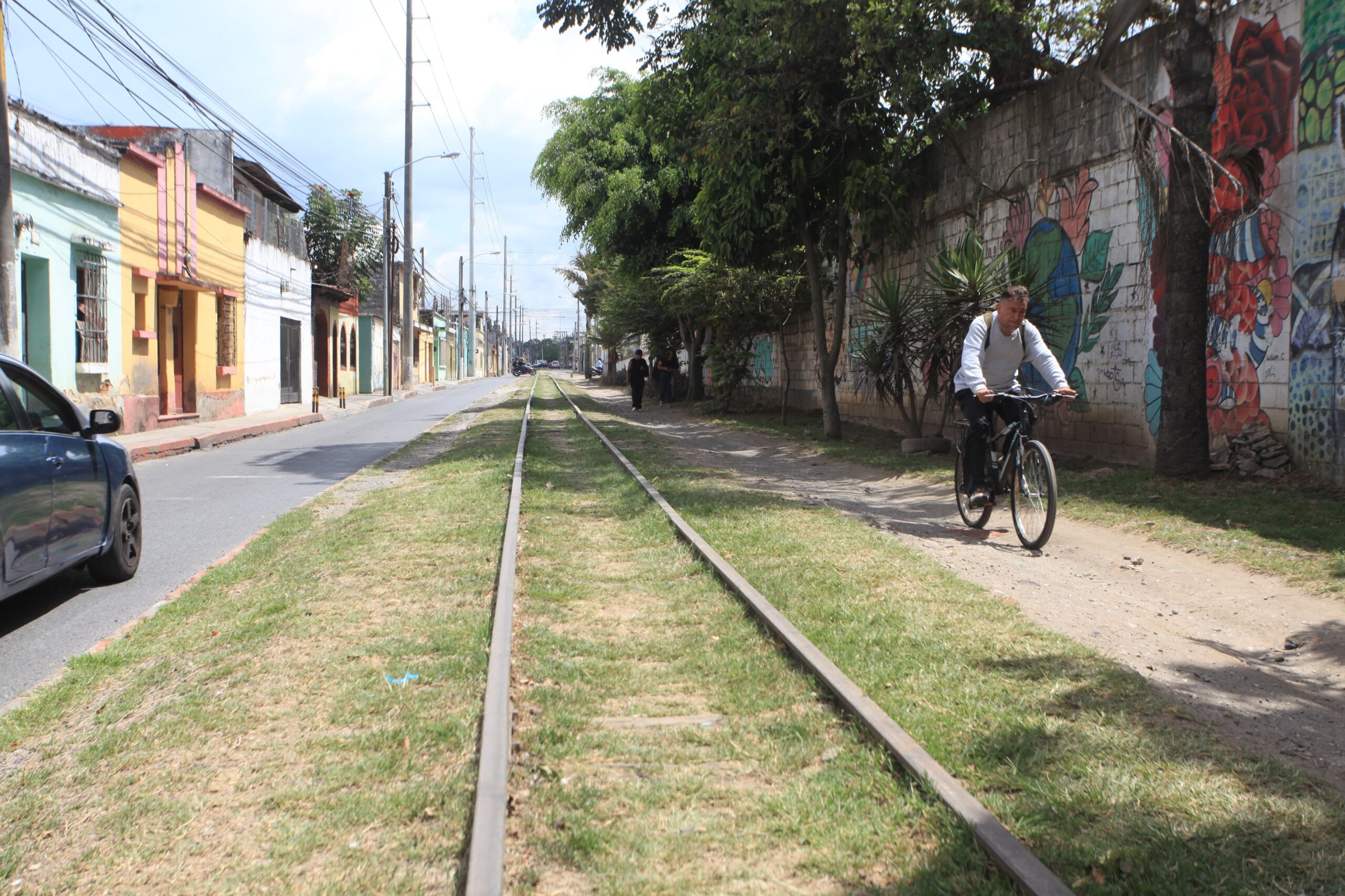
The agreement contemplates cooperation for the planning, technical and financial feasibility studies, as well as for the design, construction and operation stages of the railway system, an official source reported.
The signing of the Memorandum of Understanding between both governments is scheduled for Thursday, July 9 and represents a new step in bilateral cooperation in infrastructure and urban mobility.
As part of the project, it is proposed to connect Centra Sur with Centra Norte, considered the initial priority. However, it will be the British experts who will determine the most viable alternative, whether through total or partial use of the railway right-of-way or other options that may arise from the technical studies.
With this agreement, Guatemala adds a new international cooperation mechanism for the development of strategic infrastructure. The country also maintains a Letter of Acceptance (LOA) signed between the Ministry of National Defense and the United States Army Corps of Engineers (Usace), which contemplates the construction and expansion of the commercial docks of the Empresa Portuaria Quetzal (EPQ), a rail connection between the port and Escuintla, as well as six land logistics corridors.
MetroRiel advances with support from the United Kingdom
Irene Flores, general manager of Ferrovías de Guatemala (Fegua), stated that for more than ten years they have sought to promote the MetroRiel, which would take advantage of nearly 20 kilometers of right-of-way as an alternative to improve passenger mobility in Guatemala City and surrounding municipalities.
The executive explained that the initiative has not been able to advance for various reasons, including the lack of technical capacity and specialized experience in railway infrastructure. He added that the challenge is not limited to building the work, but also to structuring and operating a transportation system that guarantees an efficient, safe and sustainable service.
Flores indicated that the companies with experience in railway projects They rigorously evaluate the technical, financial and operational viability before participating, because these are large-scale investments that involve significant risks for investors.
In this sense, he stressed that an adequate distribution of risks between the parties involved, both in the construction and operation stages, is one of the determining factors to attract investment and ensure the success of the project.
A model of cooperation between governments
The executive explained that during the current administration, an execution mechanism was identified based on cooperation between governments (Government to Government), supported by experience and specialized technical capabilities in railway systems, mobility, structuring of operations and development of large infrastructure projects.
He added that the objective is to guarantee compliance with international standards and have contractual tools that allow appropriately allocate risks during all stages of the project: planning, design, construction and operation.
“They are projects that require a long maturation process from the initial planning phases. It is necessary to identify all the risks that may arise during construction and operation, in addition to designing solid strategies to mitigate them,” he stressed.
In Flores’ opinion, this work should be carried out with specialists in railway infrastructure and transportation project management, technical capabilities that are currently limited in Guatemala.
United Kingdom will provide railway experience
Flores explained that the Government-to-Government scheme will allow for specialized support for the planning, design, construction and operation of a railway system with state-of-the-art technology and international standards.
They are projects that require a long maturation process from the initial planning phases. It is necessary to identify all risks that may arise during construction and operation.
He added that this model incorporates recognized practices in design, construction, environmental and social management, as well as contractual tools to guarantee adequate execution of the project.
“In this commuter train we were looking for a partner that could accompany Guatemala in the planning, design, construction and operation. It is a project that will transcend several administrations, so it was necessary to find an ally with the skills to ensure its continuity and correct execution throughout the life cycle,” he stated.
According to Flores, during the evaluation process several cooperation proposals were analyzed, but the United Kingdom was selected for its extensive experience in Latin America supporting governments in the execution of large infrastructure works. He added that these projects have demonstrated improvements in the quality of works, the provision of services, compliance with deadlines and cost control.
British experts will begin planning
After the signing of the Memorandum of Understanding, an institutional process will begin to develop the different stages of the project.
The manager explained that experts from the United Kingdom will travel to Guatemala to carry out field studies and prepare a comprehensive proposal which will cover the planning, design, construction and future operation of the MetroRiel.
Flores reiterated that the signing of the Memorandum constitutes the first step. Subsequently, the following phases will be activated, in which various technical and administrative milestones must be met before moving towards the construction and operation of the railway system.
He added that the project will also require a socialization strategy to publicize its benefits and promote an urban development model oriented toward sustainable mobility. According to him, this approach, applied in countries with developed economies, will allow planning future urban interventions linked to public transportation and the orderly growth of the city.