
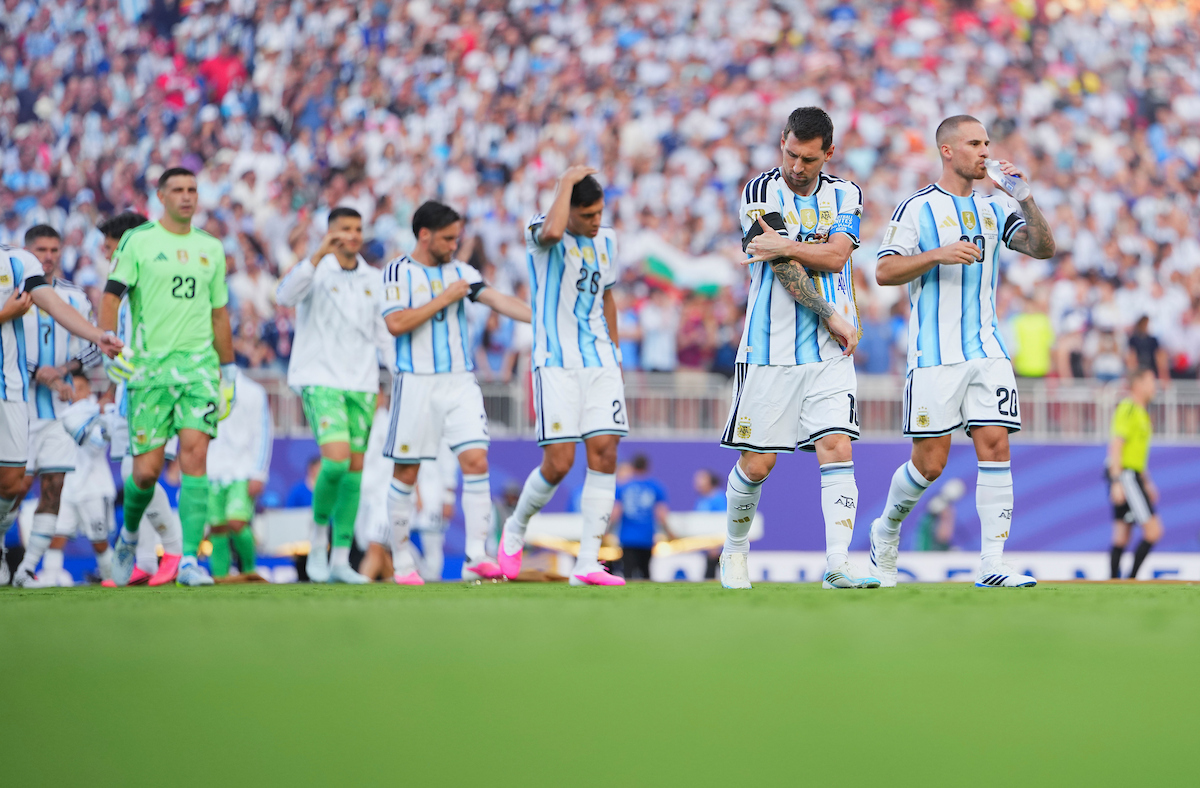
If the Albiceleste advances, captain Lionel Messi will have one more opportunity to play in a final. If he does not reach that goal, the meeting at MetLife Stadium could become his farewell to the World Cups.
Regardless of the result, the tournament has already asked a question that will mark the future of the Argentine team: What will happen to the Albiceleste when the best footballer in its history is no longer here?
The answer is not to find a new Messi. Nor in looking for a player capable of reproducing an unrepeatable career. Argentina faces a different scenario: it is not preparing for a reconstruction, but rather to give continuity to a sports project that Lionel Scaloni began to consolidate eight years ago and that has already produced the most successful stage of Argentine football so far this century.
The greatest strength is on the bench
Argentina’s main advantage in facing the post-Messi transition is not on the field. It’s in the bank.
Since taking over as coach in 2018, Lionel Scaloni has built a playing identity, consolidated a competitive group and led the Albiceleste to conquer the Copa América 2021, the Finalissima, the World Cup in Qatar 2022 and the Copa América 2024.
Unlike other generational changes, the coach began to incorporate new players before the possible goodbye of his captain. This planning allows the transition to occur on a consolidated basis, without the need to start a new project from scratch.
Leadership will no longer be one
For almost two decades, Argentina had an undisputed football leader. The next pick probably won’t have it.
Leadership will be distributed among several world champions who grew up around Messi and that today they are going through the best moment of their careers.
Julián Álvarez appears as one of the main references of the new cycle. At 26 years old, the forward has already established himself as a starter thanks to his mobility, intensity in pressing and ability to respond in decisive matches.
Together with him, Lautaro Martínez will continue, one of the top scorers of the Scaloni cycle and one of the most experienced footballers within the squad.
In the midfield, Alexis Mac Allister and Enzo Fernández represent continuity of the national team’s football model. Both assumed responsibilities in the generation of the game even with Messi on the field and are called to become the axis of the team for the coming years.
More than a new number 10, Argentina seems headed towards shared leadership.
The next generation has already begun to arrive
While the champion base maintains the leading role, another group of footballers He began to join Scaloni’s project.
Nico Paz is one of the players that generates the most expectations due to its ability to lead the game and associate in small spaces.
Franco Mastantuono, considered one of the greatest promises of Argentine football, He already made his debut with the senior team and, although he did not make the final list for the 2026 World Cup, he is part of the replacement that the coaching staff projects for the coming years.
Alejandro Garnacho, Thiago Almada and Claudio Echeverri They also appear among the footballers called to expand internal competition in the next World Cup cycle.
Other young people continue to be monitored by the coaching staff, which expands the room for renewal of a team that began preparing for the replacement before The Messi era will end.
A different transition
Recent history shows that Argentina She did not always arrive prepared to say goodbye to her great references.
After Diego Maradona, the team went through years of searching before consolidating a new identity. Something similar happened after the retirement of several members of the generation led by Javier Mascherano.
This time the context is different.
The backbone of the team remains united, the coach continues to lead the project and a good part of the footballers who will have to assume leadership already accumulate experience in highly demanding matches.
The transition, therefore, It does not begin when Messi stops wearing the albiceleste shirt. It started several years ago, while the captain continued to be the team’s main reference.
Much more than a farewell
The match against England could represent a new step towards another World Cup final or become Lionel Messi’s last match in a World Cup.
But the real story transcends the result of a semifinal.
For almost twenty years, Argentina built a good part of its football identity around Lionel Messi. The next challenge will be to demonstrate that this identity can survive his absence.
More than finding a new number 10, the Albiceleste will try to confirm that the collective project built by Lionel Scaloni is solid enough to continue competing for titles when the best footballer in its history is no longer on the pitch.