
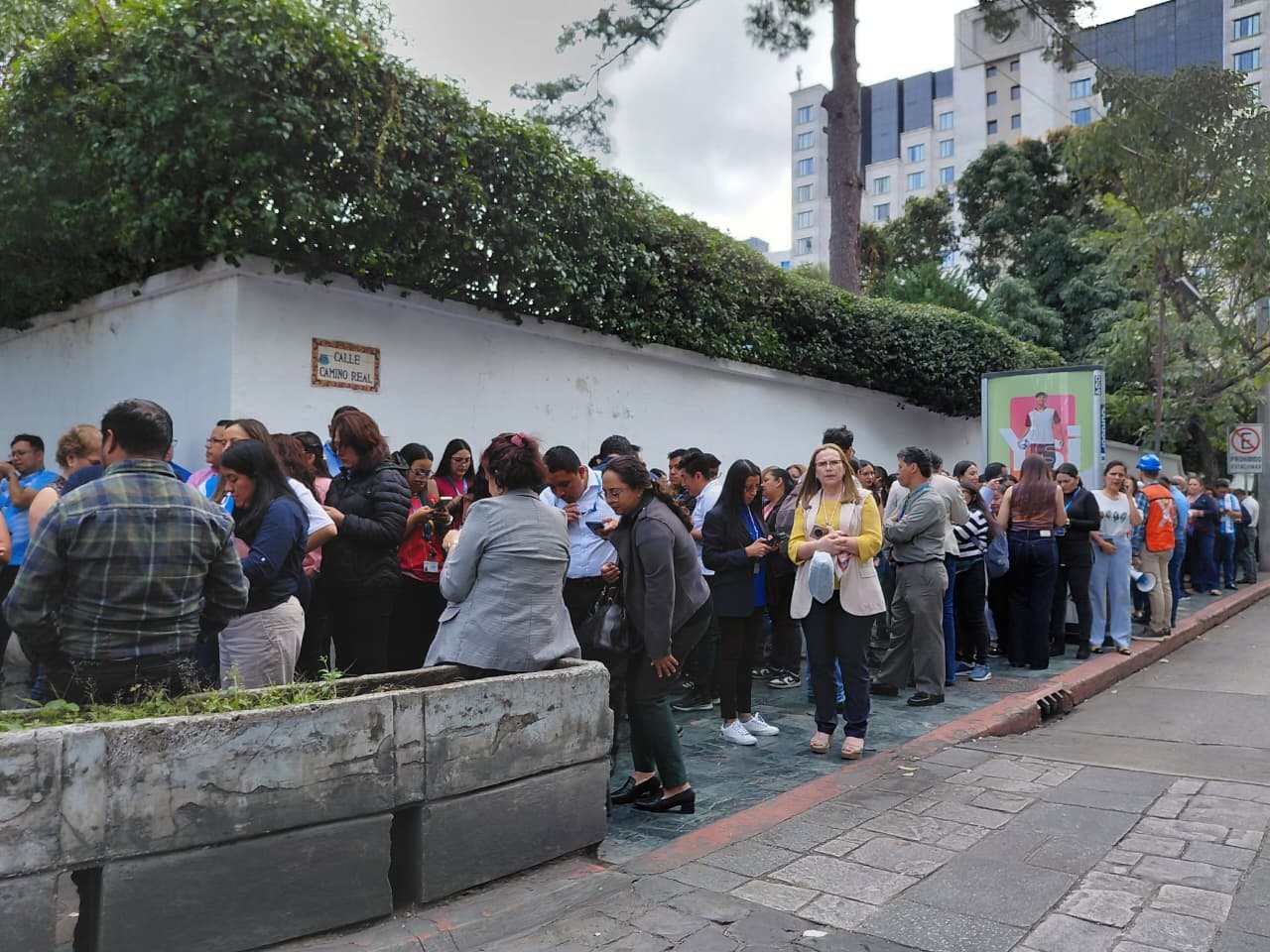
The first earthquake this Friday, July 17, reported by the National Institute of Seismology, Volcanology, Meteorology and Hydrology of Guatemala (Insivumeh), was recorded at 7.20 hours in the epicentral region of the Pacific Ocean, so many Guatemalans consider that this was a warning of what would come later.
After that magnitude earthquake 5.0the Insivumeh reported another magnitude 5.6which was preliminarily registered at 8.48 hours, with epicenter in the department of Quetzaltenango. However, a few minutes later, the institution corrected the information and reported that the earthquake had been of magnitude 7.4 in the ocean Peaceful.
Later, at 10.44 hours, the Insivumeh recorded another earthquake of magnitude 4.7 in the Pacific Ocean, near Saint Mark. These movements could correspond to replicasthat is, seismic movements of smaller magnitude that occur in the same region after a main earthquake due to the readjustment of the earth crust.
Faced with this scenario, after almost three hours without tremors of magnitude greater than 4.6the Insivumeh reported that, according to the Emergency Alert Center Tsunamis of the Pacific, the tsunami warning for Guatemala and Mexico had ended, so the institution recommended activating the protocol for ending the alert in the country.
What happened in the region?
A 7.3 magnitude earthquake shook southern Mexico, with the epicenter near Chiapasand was intensely perceived in Guatemala and El Salvador. This earthquake caused massive evacuations and brief tsunami warnings, but the authorities of the three countries confirmed that there were no victims fatalities or serious structural damage.
In Guatemala, the National Coordinator for Disaster Reduction (Conred) reported that the tremor was felt with great force in the west of the country and in the capitalwhich led to the preventive suspension of classes in the departments of San Marcos, Quetzaltenango and Retalhuleu, where some minor damage to homes was reported.
Read more: Who is Slavko Vinčić? The referee of the 2026 World Cup final between Spain and Argentina
Additionally, the National Institute of Seismology, Volcanology, Meteorology and Hydrology maintained surveillance for waves anomalousalthough the tsunami risk was classified as low. However, although the emergency due to earthquake was ruled out, the protection institutions continue monitoring against possible replicas.
For its part, in Mexicothe president Claudia Sheinbaum confirmed that the states of Chiapas and Tabasco They did not suffer major damage after the earthquake. In addition, the Secretary of the Navy activated tsunami warning protocols on the coast of Oaxacaand recommended that the population stay away from the beaches while the sea it stabilized.
Conred verifies damage after earthquake
The Conred reported that, after the 7.4 magnitude earthquake, with its epicenter in the Pacific Ocean, according to information from the Insivumehthe Executive Secretariat activated the monitoring and verification actions established in the National Response Plan, with the objective of identifying possible effects and provide attention to the Guatemalan population.
In accordance with the Conred, the seismic movement was perceived in different departments of the country. The institution reported strong intensity in Chimaltenango, Escuintla, Huehuetenango, Quetzaltenango, Retalhuleu, Sacatepéquez, San Marcos, Sololá, Suchitepéquez and Totonicapán, where the conditions and will be reported damage.
SEISMOLOGICAL BULLETIN
RECORDED EARTHQUAKE
Epicentral region: PACIFIC OCEAN
July 17, 2026. 08:48:39 hrs. #SomosINSIVUMEH #PassionForScience #AlPuebloDignoSeLeResponde #CIV #TremorGT #SismoGT pic.twitter.com/zBUvwUD6PH— INSIVUMEH (@insivumehgt) July 17, 2026