
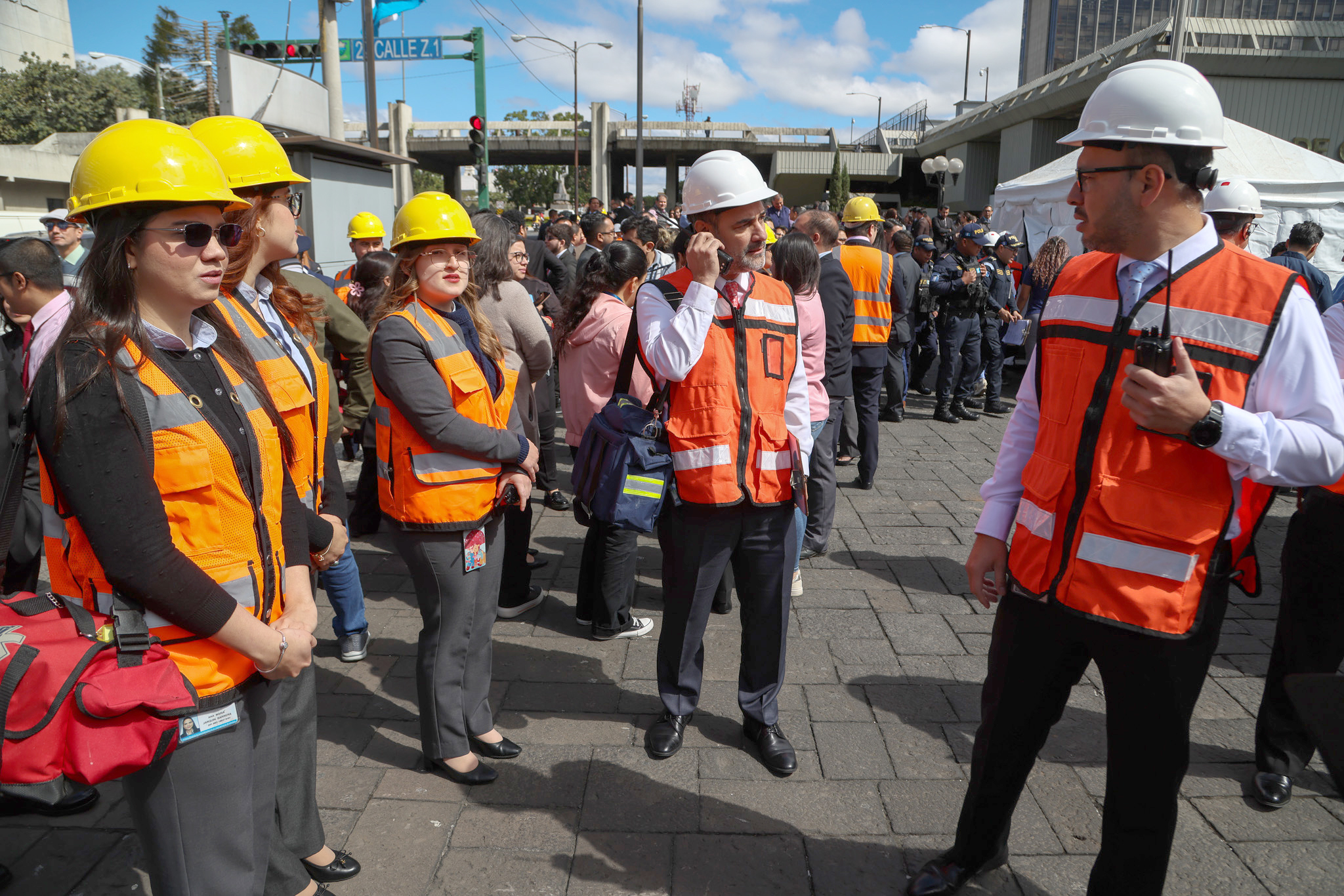
165 kilometers from San Marcos, this Friday, July 17, a magnitude 7.4 earthquakeaccording to the National Institute of Seismology, Volcanology, Meteorology and Hydrology (Insivumeh). The epicenter was located in the Pacific Ocean, off Chiapas, Mexico.
The earthquake was felt throughout much of the national territory and also in Mexico. The movement surprised the population at 8:48 a.m. As the hours passed, the Guatemala Seismological Service has reported various sensitive earthquakes in some departments.
Likewise, the National Coordinator for Disaster Reduction (Conred) has reported on affected homes and collapses resulting from the main earthquake. Although after the earthquake there was talk of a tsunami warning, at 11:04 a.m. the Insivumeh canceled it.
Before 12 noon, Insivumeh counted more than 12 aftershocks, while the Ministry of Education suspended in-person classes in four departments: San Marcos, Quetzaltenango, Suchitepéquez and Retalhuleu.
For her part, Helén Morán, geological engineer and analyst at the Guatemala Seismological Service (SSG), explained to Free press that, due to the location in the subduction zone, its depth and its focal mechanism, the phenomenon could correspond to an interplate event of type thrust.
Due to the magnitude of the mainshock, aftershocks could continue for the next few hours as a redistribution of stress occurs around the rupture area.
What are seismic sequences and aftershocks?
Aftershocks are lower intensity earthquakes that occur after a main earthquake and are generally of a lower magnitude, Morán explained.
These occur because, after the initial rupture, the fault and the surrounding rocks continue to readjust until they reach a new state of equilibrium.
Therefore, aftershocks are part of the normal behavior of a seismic sequence, he explained. Consequently, it would be normal for them to continue appearing, mainly in areas close to the main event.
Explanation of the replicas that have been recorded this Friday, July 17, 2026. (Free Press Illustration: courtesy of SSG)
Why should you be alert to aftershocks?
Although most aftershocks are smaller in magnitude than the main quake, some may be strong enough to be felt and even cause additional damage, the geologist engineer explained.
Morán indicated that the aftershocks could cause damage, especially in buildings that were already weakened by the main event. Therefore, he recommended following the instructions issued by authorities, such as Conred.
Why can they continue to occur?
After the 7.4 magnitude earthquake, Morán highlighted that the stresses in the Earth’s crust are not redistributed instantly, since the readjustment process can last for a variable time, depending on the magnitude of the main earthquake and the geological characteristics of the area.
Likewise, he highlighted that, with the passage of time, the number of aftershocks usually decreases, although some may continue to be recorded sporadically.
Recommendations before an earthquake
- Stay calm and evacuate, if possible.
- If you cannot leave, seek protection in a safe place.
- Stay away from windows and objects that could fall.
- Do not use elevators.
- Carry a 72 hour backpack.
Remember to attend to the following recommendations in the event of seismic activity 👇 pic.twitter.com/boAp27TijK
— CONRED (@ConredGuatemala) July 17, 2026